Grand Central Market opened in downtown Los Angeles in 1917, within the Homer Laughlin Building. Its history is tied to the changing population and commerce of the surrounding city. The market’s interior has accommodated different vendors and food traditions over time, so continuity lies in the ongoing use of a shared market space rather than in a completely unchanged list of businesses.
A market within an older building
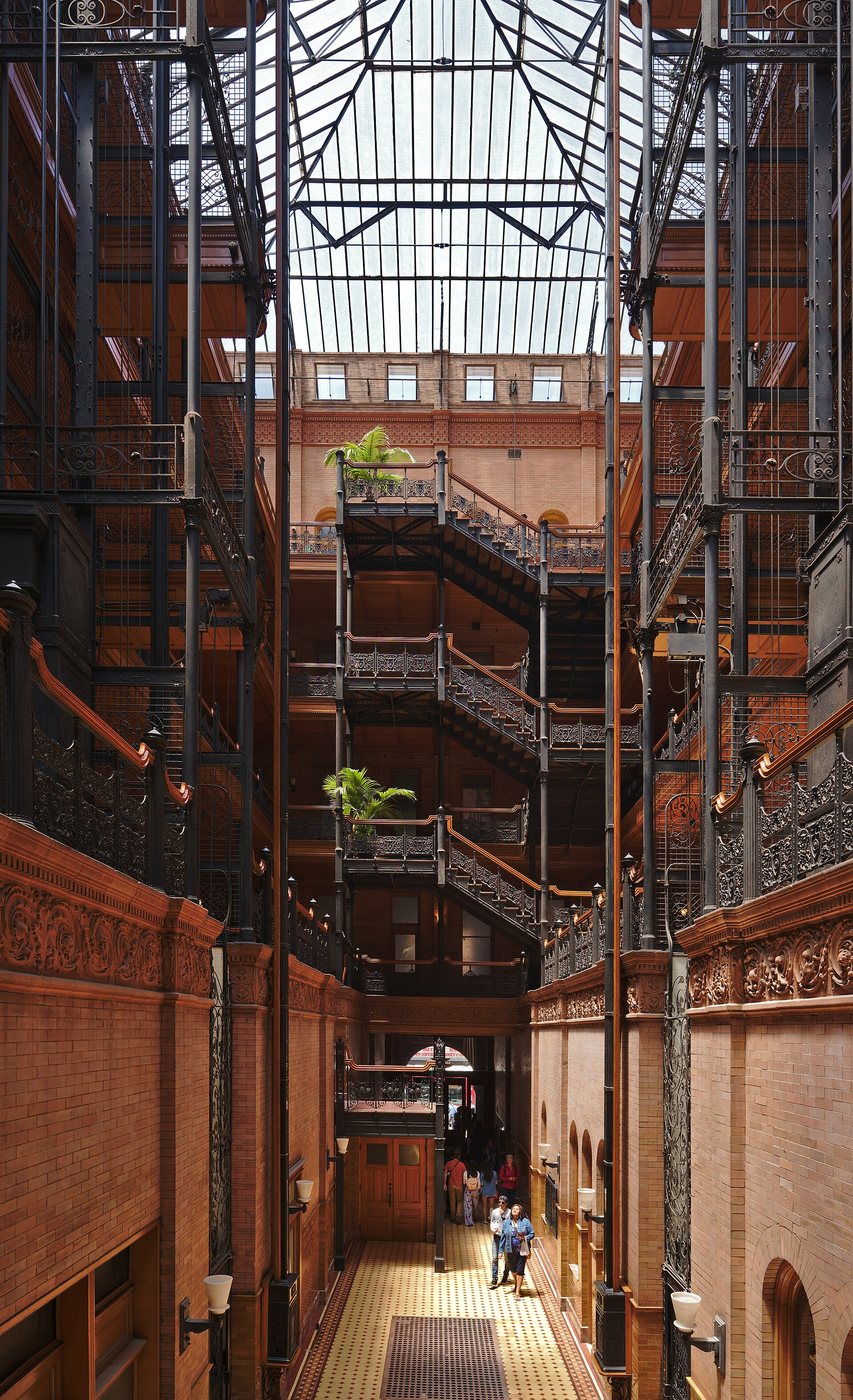
The Homer Laughlin Building predates the market, having been completed in 1898. Adapting part of it for food retail introduced another use into an established commercial structure. The market’s age and the building’s age are therefore related but different facts.
Its downtown position connected it with people living and working nearby. Food markets depend on those everyday relationships: customers need provisions, vendors need reliable trade, and the building needs routes for goods as well as people. The public-facing counters are only the visible part of that operation.
Change is part of the continuity
Over the decades, the market’s businesses reflected shifts in Los Angeles’s population and food culture. Some long-running vendors became associated with particular periods, while newer operations introduced other kinds of prepared food and retail. The market’s official history treats this evolution as part of its identity.
It is useful to distinguish continuity of place from continuity of individual tenancy. A market can remain at the same address while its economic balance changes. The mix between ingredients, household shopping and ready-to-eat meals affects how people use the aisles and how long they remain.
An interior organized by many decisions
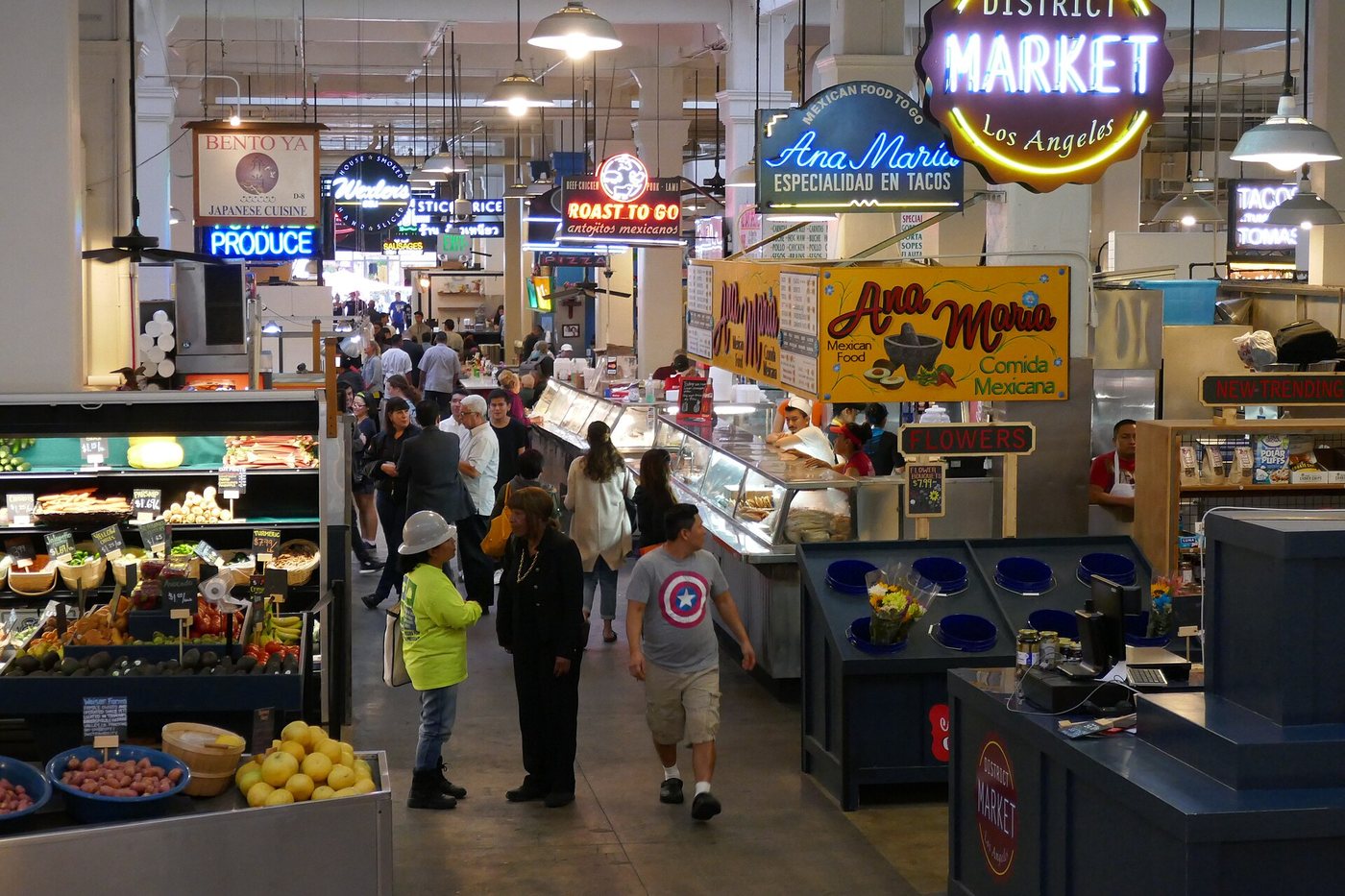
Unlike a single restaurant, the market contains separate counters with their own menus, queues and working arrangements. Seating and circulation have to accommodate customers who are doing different things. Someone waiting for an order occupies the space differently from a person moving directly to a familiar vendor.
The building gives these businesses a common setting, but the market is made through their individual activity. Its historical significance is therefore not confined to architectural details. It also concerns the repeated work of supplying food in a changing downtown. A current vendor directory can identify what is available now, while the market’s history explains why change at the counters does not necessarily break the continuity of the place.