
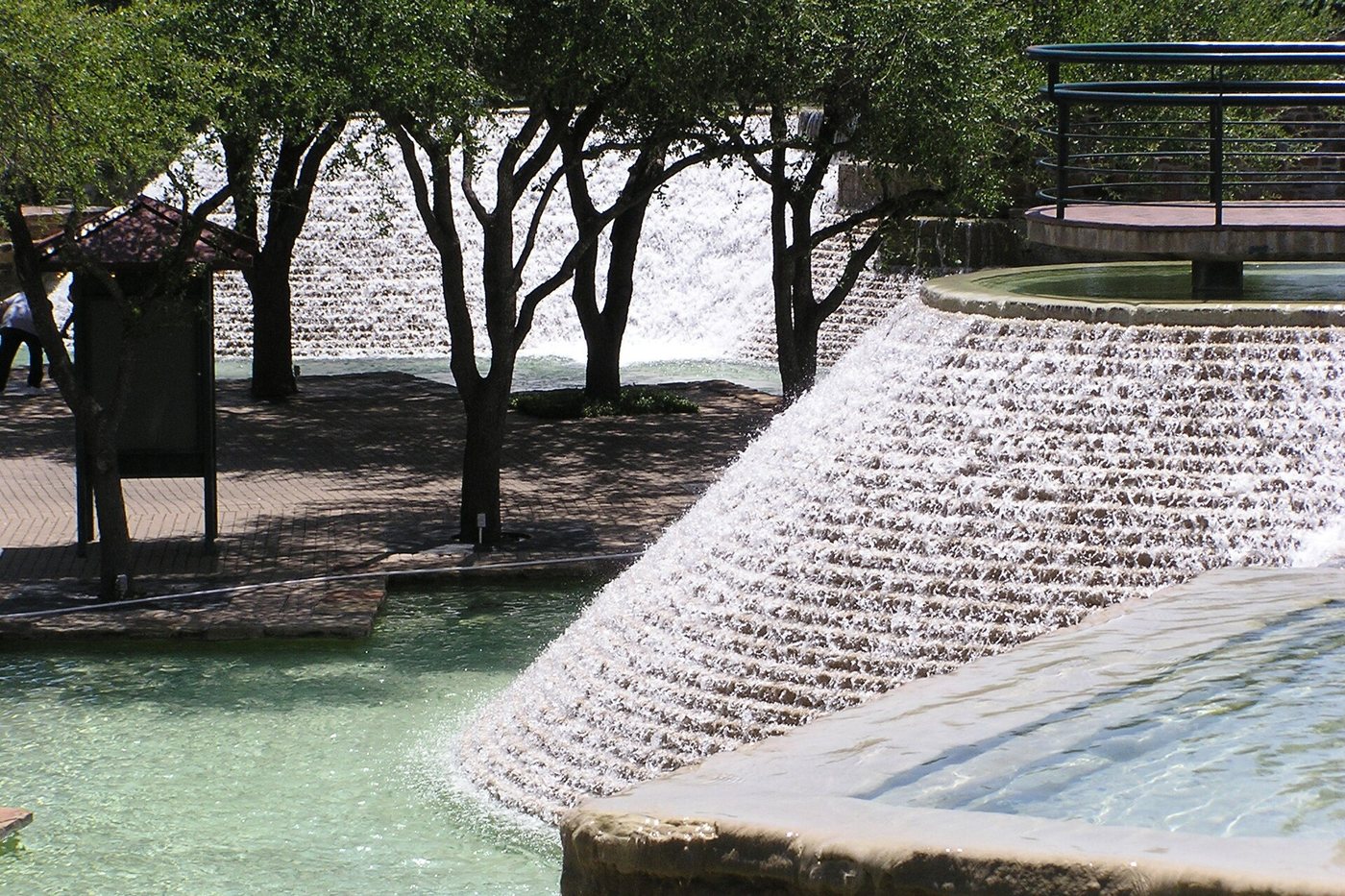
At Hemisfair, small historic buildings, large open spaces, play areas and the Tower of the Americas occupy the same district. Their differences are the point. The site has been reorganized several times, most dramatically for the 1968 world’s fair. Understanding those transformations gives the current parks a context beyond their facilities.
Before the fair, a neighborhood
Hemisfair’s historical account begins with the Payaya people and the river known as Yanaguana. Mission-era cultivation and the Acequia Madre de Valero added another layer. By the nineteenth century, the area contained a densely inhabited neighborhood with families of several backgrounds, businesses and religious institutions.
The name Germantown described part of that history but did not mean that the population was exclusively German. The Texas State Historical Association identifies German, Alsatian, Mexican, Polish and African American residents among the communities associated with the area. This matters because the fair did not arrive on vacant land awaiting a purpose.
The international event had local costs
HemisFair ’68 ran from April to October 1968 and was tied to San Antonio’s 250th anniversary. Its international pavilions and attractions presented the city to a much larger audience. The Tower of the Americas became a lasting skyline marker, while the convention facilities helped shape the district’s future.
Preparing the site required clearance and displaced existing residents and businesses. Some historic buildings were retained, but preserving selected structures did not preserve the former neighborhood as a social network. The historical association records disagreement over how many buildings should be saved and criticism of the urban-renewal process.
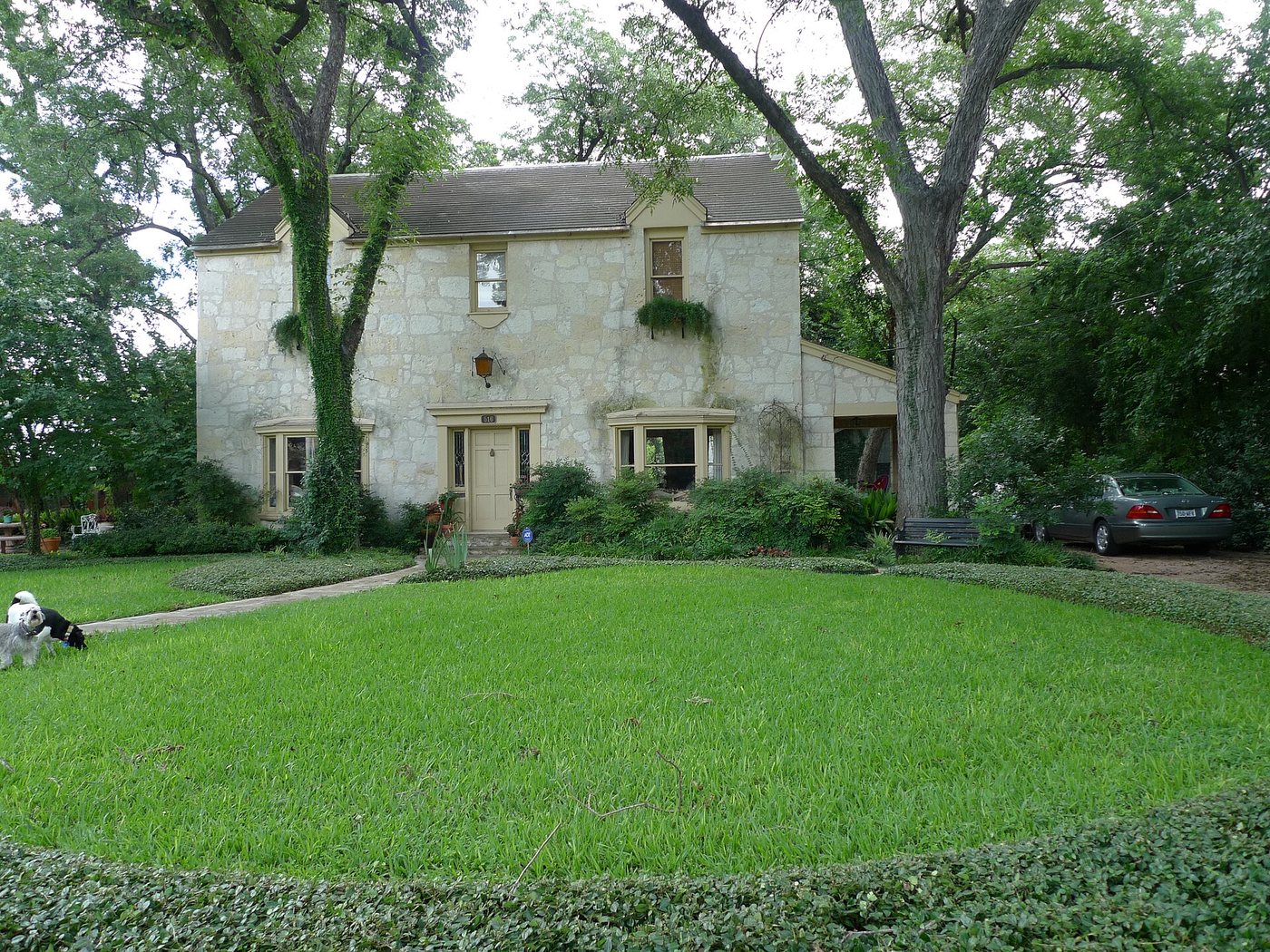
The surviving older houses should therefore be read in two ways. They are individual buildings with their own histories, and they are fragments of a much larger setting that was removed. Their modest scale beside the fair’s monumental elements makes that contrast visible without requiring the visitor to imagine every lost street in detail.
After the gates closed
A world’s fair is designed around an event with an end date. A city district must work on ordinary days for decades afterward. Hemisfair’s post-fair history involved finding uses for permanent structures and, later, demolishing some of them. The arena, for example, served sporting and entertainment purposes before its removal for convention-center expansion in the 1990s.
A new redevelopment organization was established in 2009, and the city approved a master plan in 2012. The contemporary project combines parks, historic preservation, streets and surrounding development. Its challenge is different from staging another fair: it needs to create reasons for residents to return when there is no exceptional event.
Different parks do different jobs
Yanaguana Garden opened in 2015 with play at its center. Sand areas, climbing equipment, splash facilities and games support different kinds of activity. Adaptive equipment broadens participation, while places for adults to sit or play make the park more than an isolated children’s enclosure.
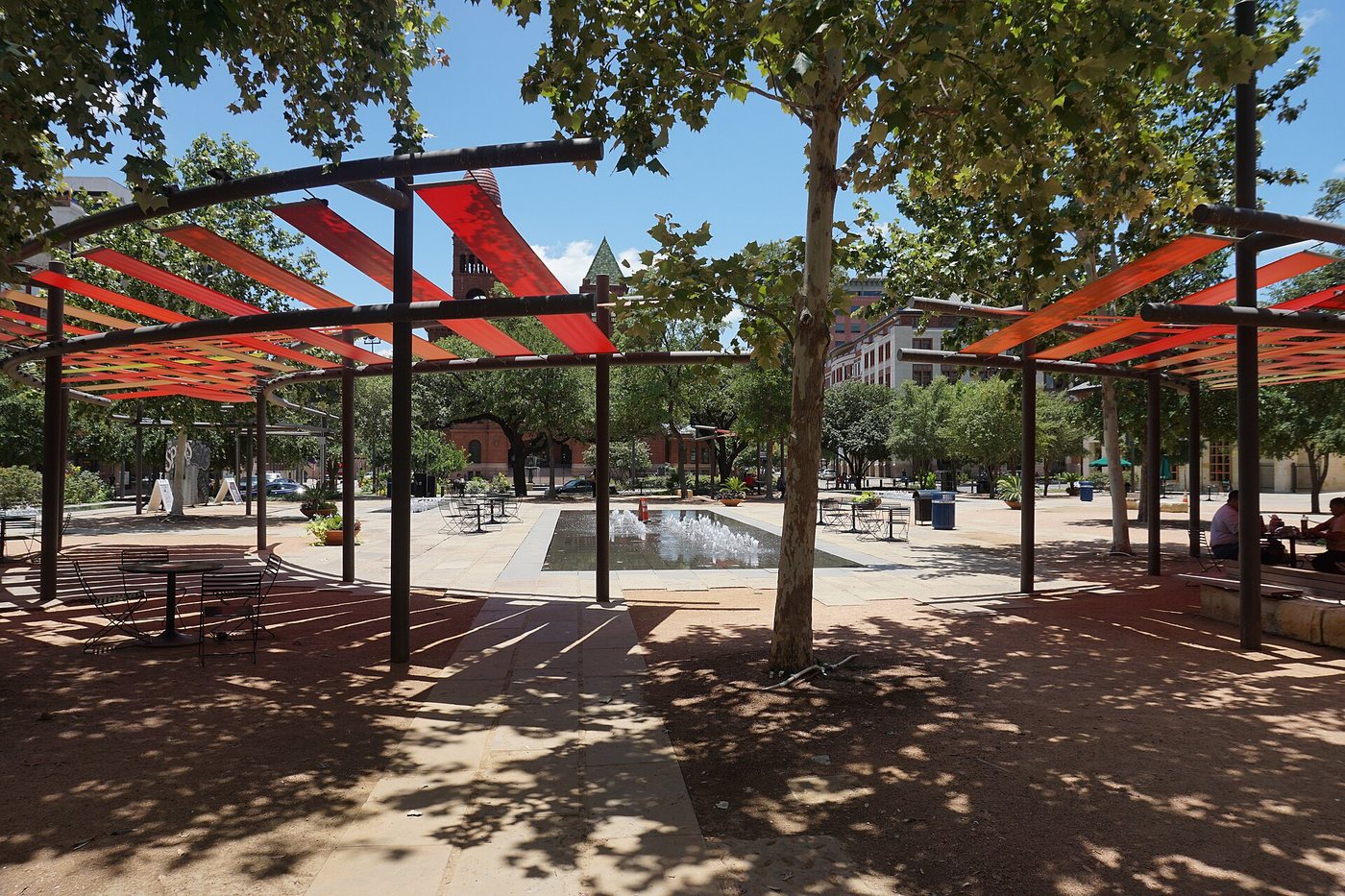
Civic Park, opened in 2023 with a subsequent phase in 2025, provides a different scale of space. The city lists a great lawn and shallow water features called the Springs among its facilities. A lawn can accommodate dispersed everyday use as well as larger gatherings; a play garden needs smaller, more closely supervised spaces. Putting both within the district avoids asking one landscape to serve every purpose equally.
The current site is therefore best understood as a collection of connected public spaces. The tower remains an orienting landmark, but it is not the sole reason to enter the district.
Follow the contrast in scale
A useful visit links a surviving historic building, the play garden and the larger civic landscape. That sequence reveals the difference between domestic scale, neighborhood recreation and event space. Use current park information to choose entrances and available facilities, since redevelopment phases and programmed activities can affect individual areas.
The name Hemisfair carries both the memory of the exposition and the identity of a developing urban district. Keeping the pre-fair neighborhood in the story prevents the present landscape from being read as a simple progression from empty ground to successful attraction. Its history includes gains, losses and continuing choices about who public space serves.

.jpg)
.jpg)