
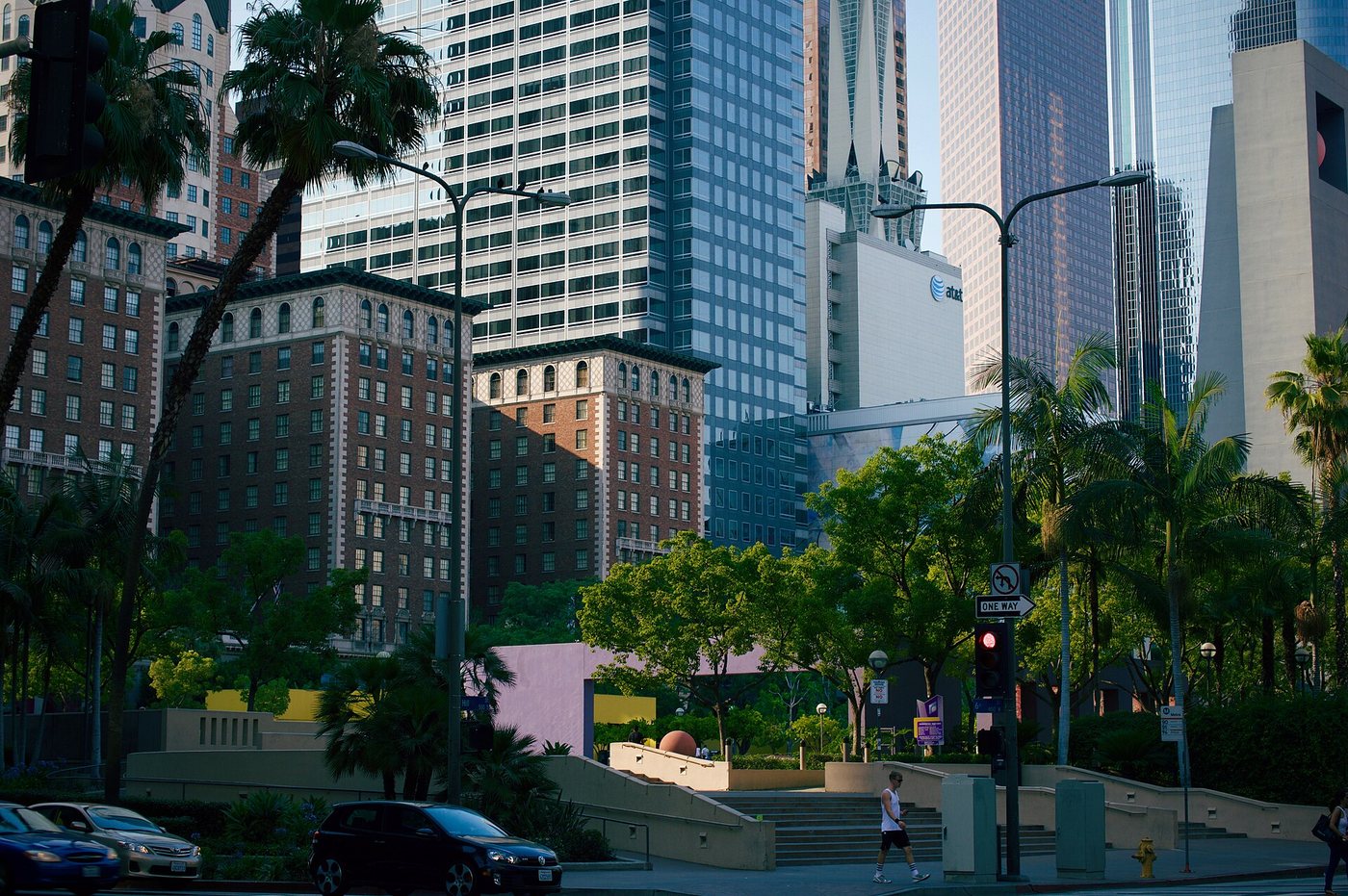
Pershing Square occupies a full downtown Los Angeles block between Fifth, Sixth, Hill and Olive Streets. The public ground dates to 1866, but its name and design have changed repeatedly. Its history is useful precisely because the square has not retained one settled form: planting, monuments, parking and event space have each reshaped the same site.
Several names for the same ground
The early park was known as La Plaza Abaja, or the Lower Plaza. Other names included Sixth Street Park and Central Park before the 1918 dedication to General John J. Pershing. A change in name attached a new commemorative meaning to an existing public place.
The square also hosted public speaking and gatherings. Those activities help explain its significance beyond landscape design. A central open block can become a place where the city assembles, whether or not its planting and furniture remain fashionable.
Parking changed the section
An underground garage was built beneath the park in the 1950s. This intervention made the public space part of a layered structure, with vehicles below and gathering space above. The park’s surface could no longer be considered independently of the construction and access requirements beneath it.
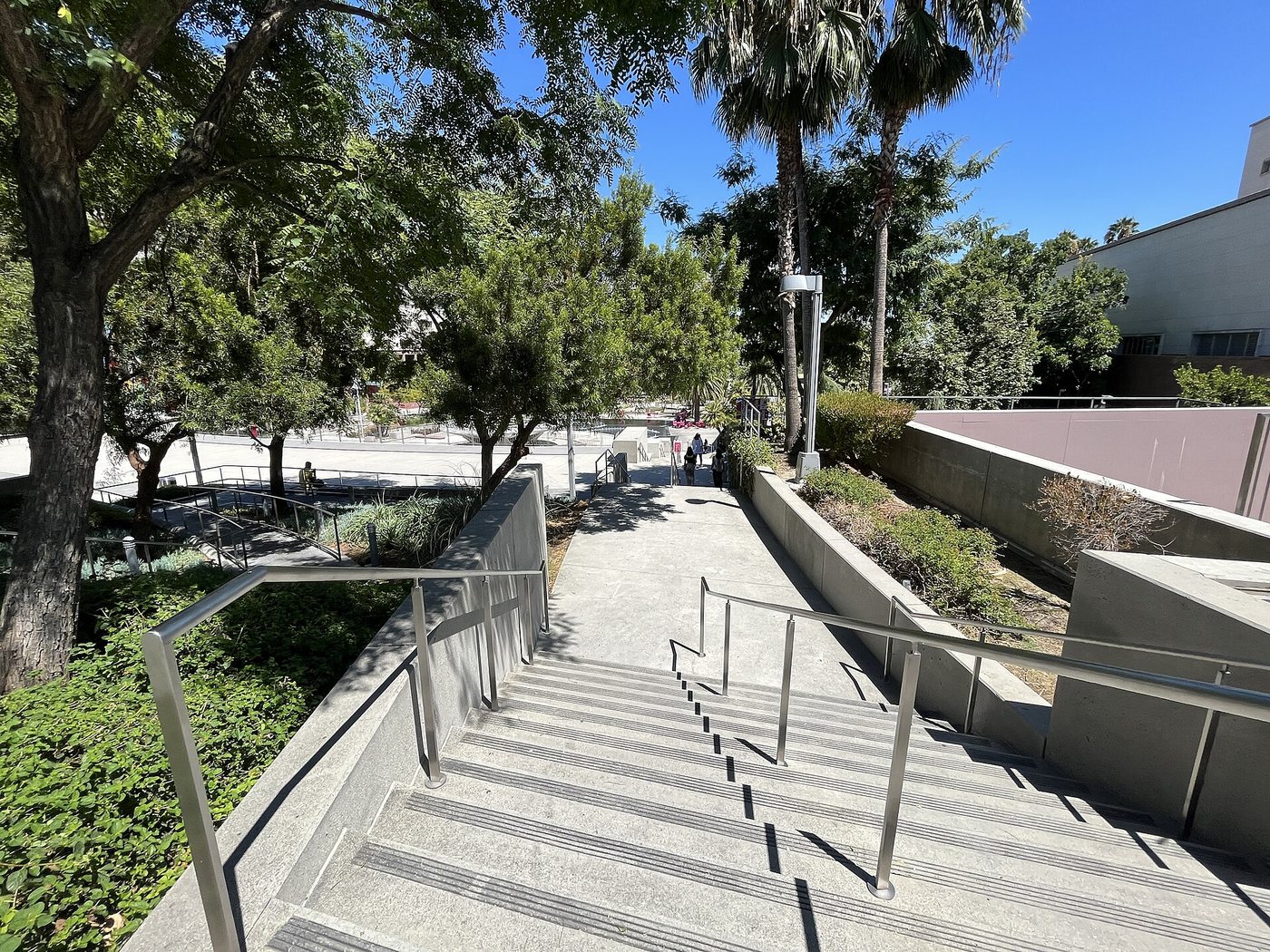
Such a change affects more than what can be seen from a neighboring building. Entrances, perimeter conditions, planting depth and the relationship with surrounding sidewalks all become part of the design problem. The square’s later redesigns inherited those constraints.
The 1994 landscape had its own vocabulary
Architect Ricardo Legorreta and landscape architect Laurie Olin designed the version rededicated in 1994. Strong color, geometric forms and public art replaced the expectation of a conventionally planted park. References included orange groves, an earthquake fault and the systems that bring water to Los Angeles.
These elements treated the square as a designed account of the city rather than a neutral patch of greenery. Whether admired or criticized, the scheme belongs to a particular architectural period and should be understood in that context.
Subsequent proposals and changes continue the square’s long history of revision. Historic photographs in the Los Angeles Public Library show how dramatically the same block has altered. Comparing them reveals that the constant is public ground at a central address, while the physical interpretation of that role remains open to change.
_01.jpg)

