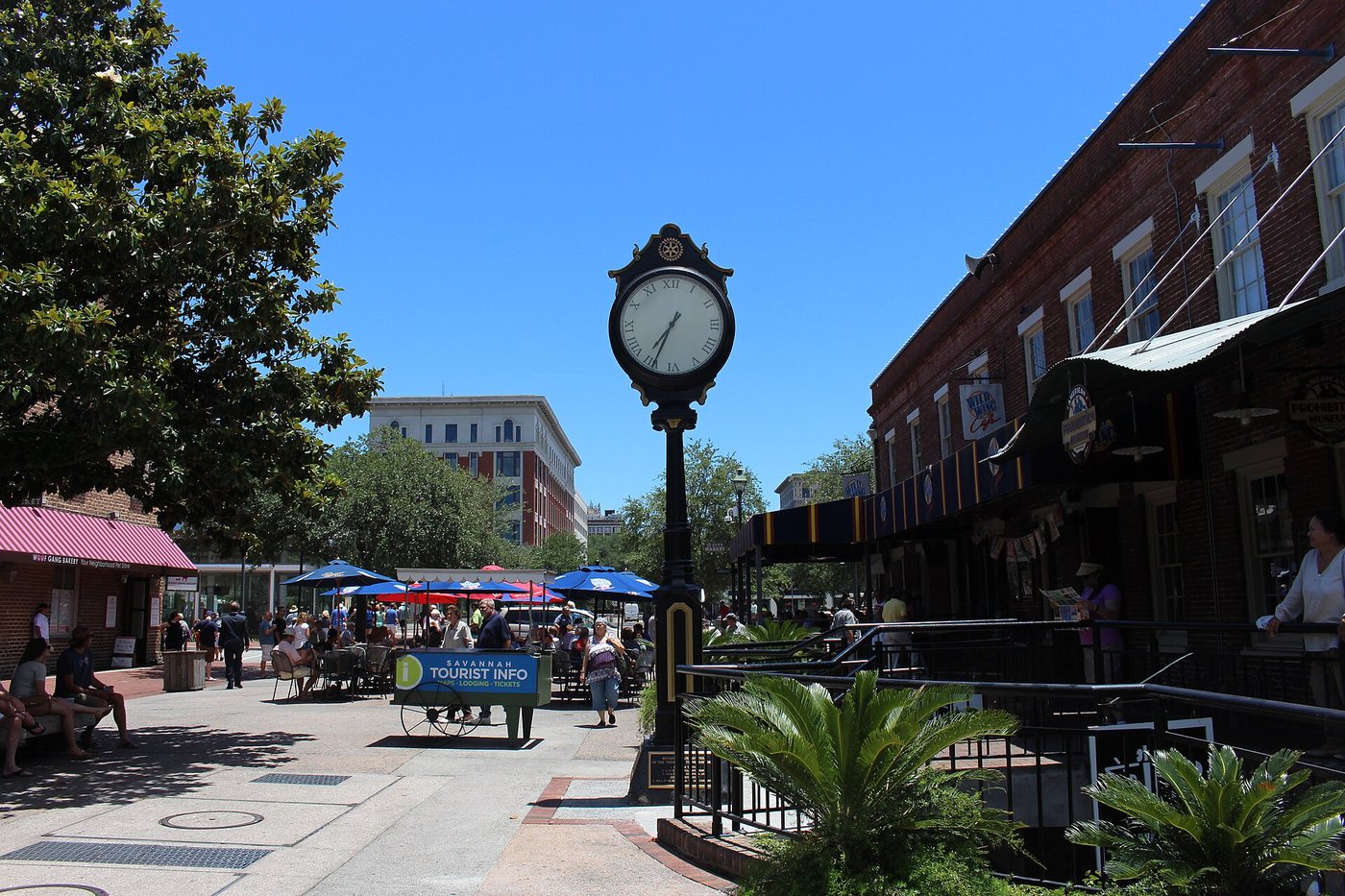
City Market is best understood as a place that has been repeatedly rebuilt and repurposed. Its name preserves a connection with food trading and civic gathering, while its present businesses emphasize dining, art, shopping and entertainment. The continuity lies partly in the location’s commercial role, not in the survival of one original market building.
An everyday trading place
The market’s historical account places its origins in Savannah’s early settlement and describes farmers, fishermen and merchants bringing goods into the city. Food trading also generated news, conversation and transport activity. Enslaved people and free workers participated in the work that sustained the market.
That earlier function differed from a modern visitor destination. Households depended on buying supplies, and sellers needed places to unload and display perishable goods. The market’s social importance grew from those ordinary transactions rather than from a separate program of entertainment.
Demolition changed the center
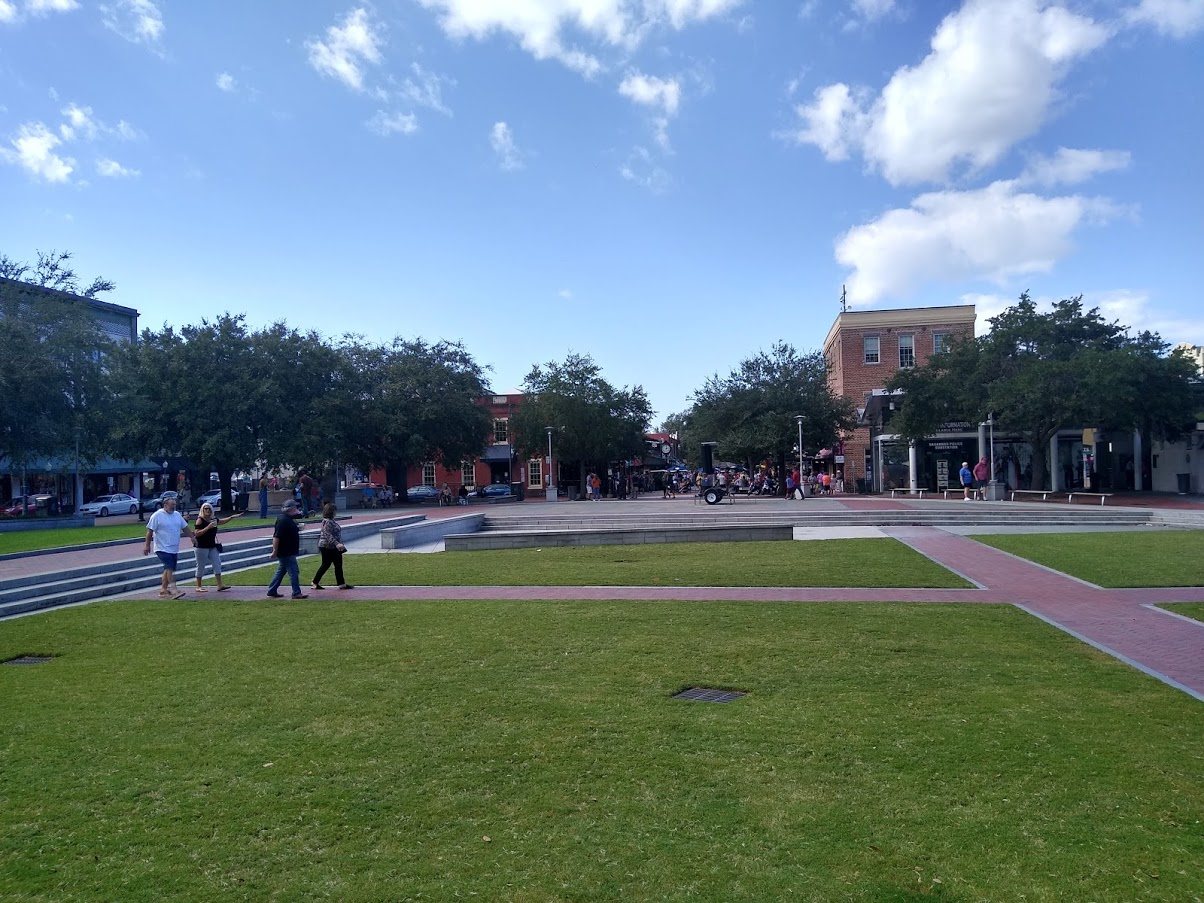
The market organization records the city’s approval of the old market building’s demolition in 1954, followed by a parking garage at Ellis Square. The loss shows that present-day interest in historic urban settings was not an inevitable municipal priority. Space once associated with trading was reorganized around vehicle storage.
Municipal archives also preserve records of proposals from the 1980s for a specialty retail and entertainment complex in the old market area. Those records document a deliberate redevelopment strategy. The current district should therefore be read as an adaptation of the commercial setting rather than a market that has operated in precisely the same form since the eighteenth century.
Use the district at its present scale
The pedestrian experience comes from the relationship among entrances, shared outdoor space and adjacent streets. Individual businesses create different rhythms: a gallery visit, a meal and a music event do not use the same space in the same way. Check specific businesses or the district calendar if one activity is central to your visit.
For a historical walk, connect the present market area with Ellis Square and consider where trading, parking and public gathering have occupied the ground at different times. That comparison is more revealing than searching for an imagined original market interior. The district’s story is about changing commercial uses and the decisions that allowed parts of the area to take on a new life.