
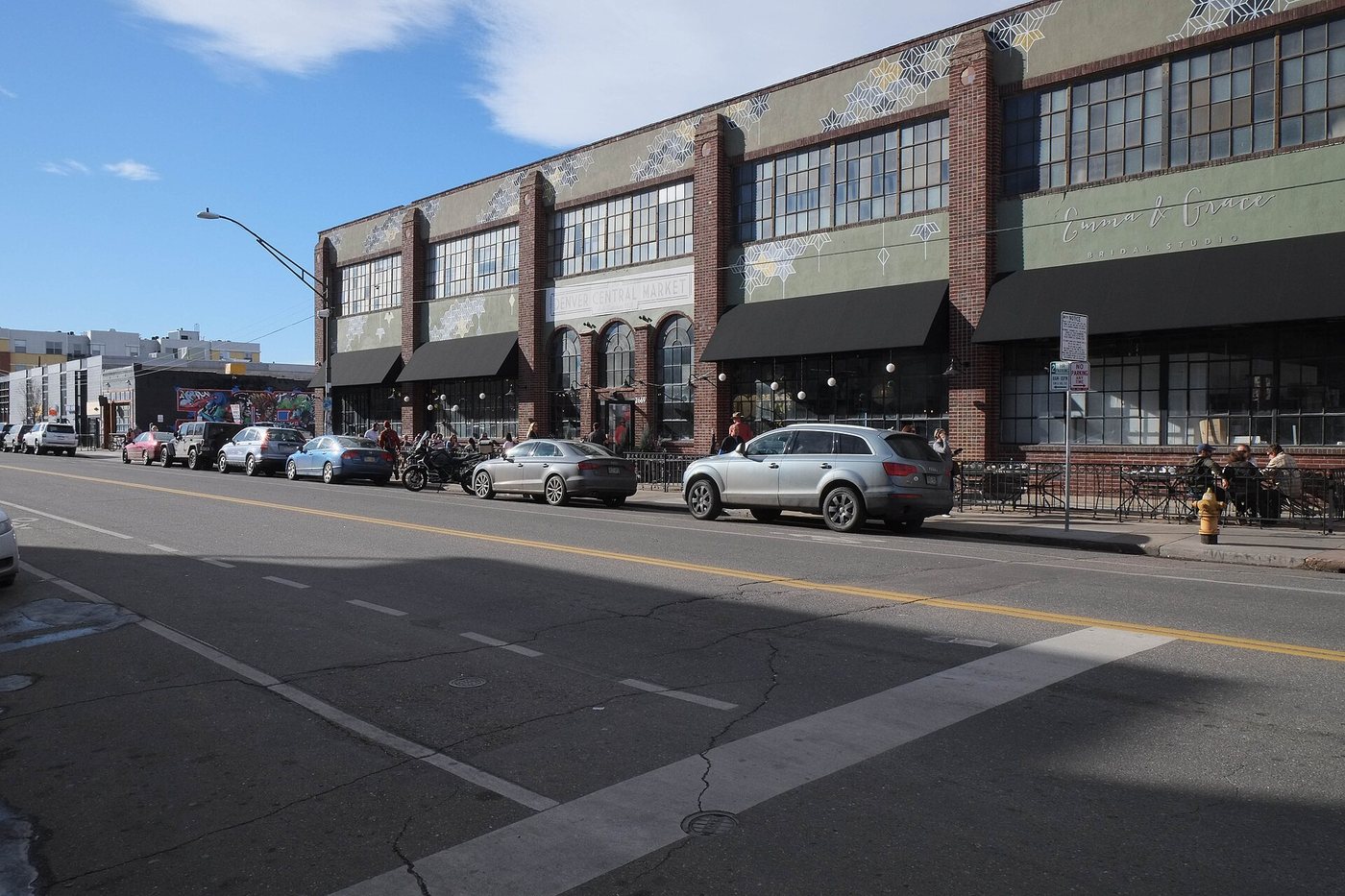
At Denver Central Market, the first choice is not necessarily what to order. It is whether to use the place for groceries, a prepared meal or a brief stop while exploring the neighborhood. The combination of food retail and ready-to-eat counters makes the interior work differently from a restaurant with one kitchen and one menu.
Many counters, one shared room
The RiNo Art District lists the market at 2669 Larimer Street and describes a mix of local vendors, including bakery, coffee, fish, meat and prepared-food businesses. Those categories are a useful starting point, but individual traders and their hours can change. Check the current market directory when a particular purchase is the purpose of the trip.
A shared hall allows people in one group to choose different foods while using the same meeting place. It also creates several small queues rather than a single restaurant entrance. Before ordering, establish where the relevant counter takes payment, where orders are collected and which seating is available.
Groceries and prepared meals introduce different rhythms. Someone buying bread to take home may spend only a few minutes inside; a group eating together needs space for a longer stay. Watching how the circulation accommodates both uses explains more about the market than counting the number of stalls.
An older commercial shell in an arts district
The market occupies an adapted commercial building rather than an isolated suburban shopping complex. Its street frontage remains part of the surrounding block, while the shared interior concentrates several businesses behind one address. The transition from sidewalk to hall is therefore an important part of the building’s public character.
RiNo’s public-art directory also identifies mural space at the Central Market parking lot. Treat such works as individual pieces with their own artists and changing dates, rather than assuming that every wall image is permanent. A food stop can be combined with looking at nearby art without suggesting that the market itself is an art museum.
Match the visit to a purpose
For shopping, start with the goods you can carry and store safely during the rest of the day. For a meal, compare menus before joining a queue. For a neighborhood walk, consider the hall as one stop among surrounding streets rather than the whole of RiNo.
Dietary requirements belong in a conversation with the individual vendor. Shared seating and a common building do not mean that every business uses the same ingredients, preparation practices or service arrangements. The variety is the market’s organizing feature, and it is worth approaching each counter on its own terms.

.jpg)