
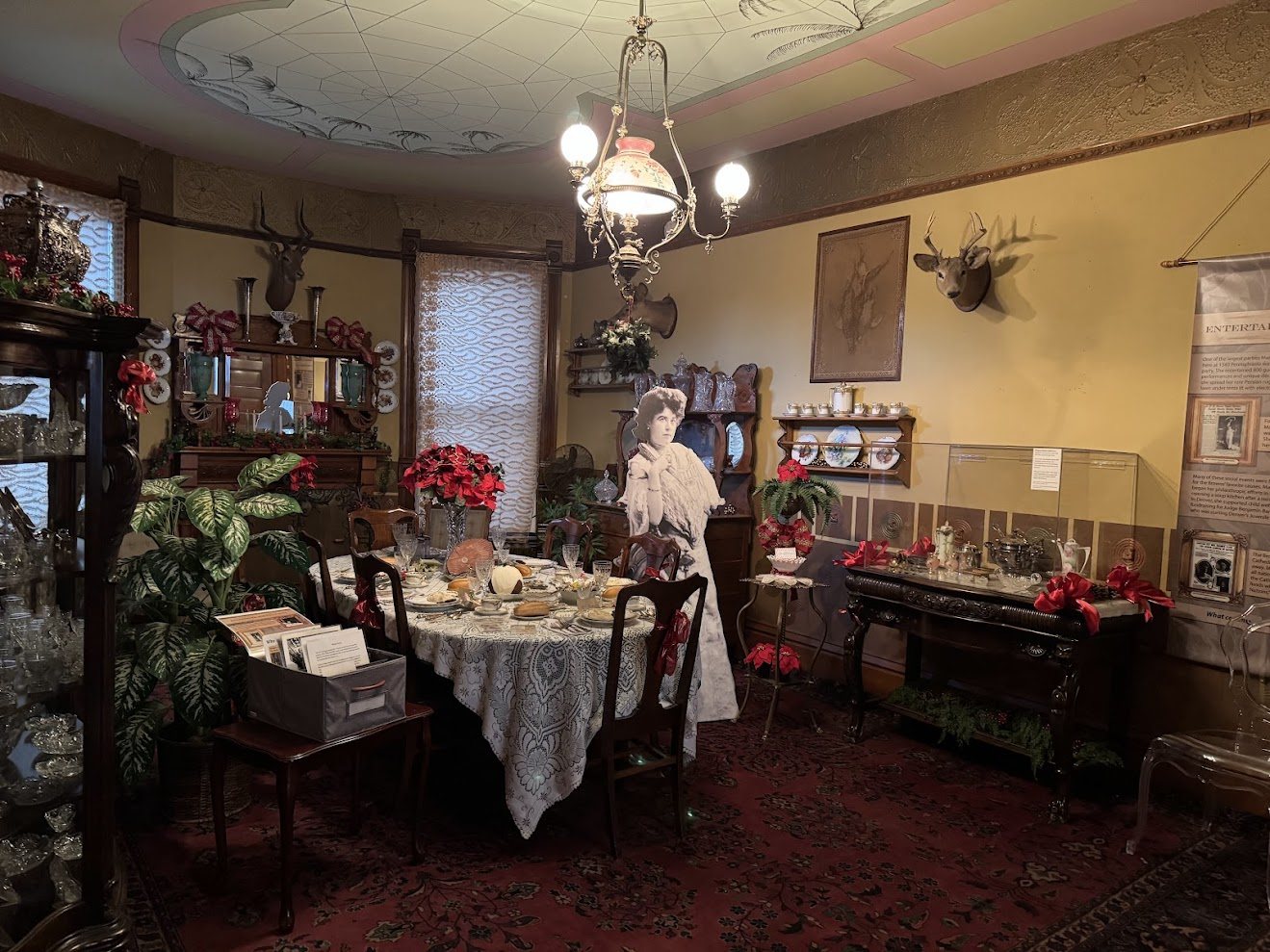
Margaret Tobin Brown’s Denver house contains several histories at once. It was a family residence, later accommodated other occupants, and became a museum through a preservation campaign. The famous name on the entrance can draw people inside, but the building rewards attention to how evidence, restoration and interpretation work.
A house already built when the Browns arrived
William Lang designed the house in 1889, combining Queen Anne and Richardsonian Romanesque features. Margaret and James Joseph Brown bought it in 1894 after their mining-related wealth increased. The distinction between construction and purchase matters: the house was not commissioned as a memorial to Margaret, and its architecture had a history before the family moved in.
The museum’s account of the Browns’ Denver years identifies electricity, indoor plumbing, central heating and a telephone among the house’s modern provisions. These systems are as important to understanding the residence as its decorative surfaces. A fashionable late nineteenth-century home offered both an image of social position and a particular level of domestic convenience.
The front rooms and entrance also organized encounters. A visitor arriving on business or making a social call did not experience the same route through the house as a family member or someone working there. When examining a room, ask who would have entered it, what task it supported and which adjoining spaces it connected.
The building continued after 1932
Margaret Brown died in 1932. The house subsequently changed hands and was altered for multiple occupants, including use as a boarding house. Additional kitchens, bathrooms and partitions changed how the interior worked. Those changes belong to the property’s history even though later restoration sought to recover an earlier appearance.
Historic Denver was formed in 1970 during the effort to save the house from possible demolition. Preservation here therefore has its own historical setting: concern about the loss of older Denver buildings, organizing by local people, fundraising and the technical work of restoring an altered structure.
The museum describes using paint analysis, architectural investigation and photographs taken during Brown’s occupancy. These are different forms of evidence. A photograph can show the arrangement of a room at one moment; a surviving layer of paint can reveal a finish hidden beneath later work; an architectural scar may indicate a removed opening.
Restoration involves interpretation
The museum’s restoration history recounts discoveries made when later plasterwork and partitions were removed. Surviving cornice fragments and covered woodwork helped guide repairs and reproduction. This is more informative than imagining that an intact Victorian interior simply waited untouched for the museum to open.
Objects require similar care. A furnishing may have belonged to the Browns, may be documented in a historic photograph, or may be a period example used to explain a room. Those relationships are not interchangeable. Labels and the museum’s collection records help identify which connection supports a particular display.
For example, the museum’s collection history follows a chandelier through an auction and later donations, while acknowledging uncertainty about its original position in the house. Stating that uncertainty makes the object’s history more useful. A museum does not need to invent a precise original location to explain why an item belongs in its collection.
Give the house a question beyond the legend
A focused visit might follow the boundary between public reception and family space, the technologies of domestic comfort, or the evidence used in restoration. Each approach connects several rooms without requiring every object to become a separate attraction.
Margaret Brown’s Titanic association is part of her biography, but a house cannot be reduced to a single event that occurred elsewhere. Its rooms reveal the material setting of a household, and its survival reveals later choices about whose stories Denver would preserve.
Check the museum’s current tour and access arrangements before arriving. Once inside, allow the guide and object labels to distinguish established facts from reconstructed settings. That distinction is one of the most valuable things a historic house can teach.

.jpg)
.jpg)