Eastern Market is both a historic building on Capitol Hill and the center of a wider pattern of market activity. The distinction is useful: indoor food businesses operate within a permanent hall, while outdoor vendors and events use surrounding spaces on their own schedules. The building’s survival also tells a story about neighborhood continuity through fire and reconstruction.
Adolf Cluss’s neighborhood market
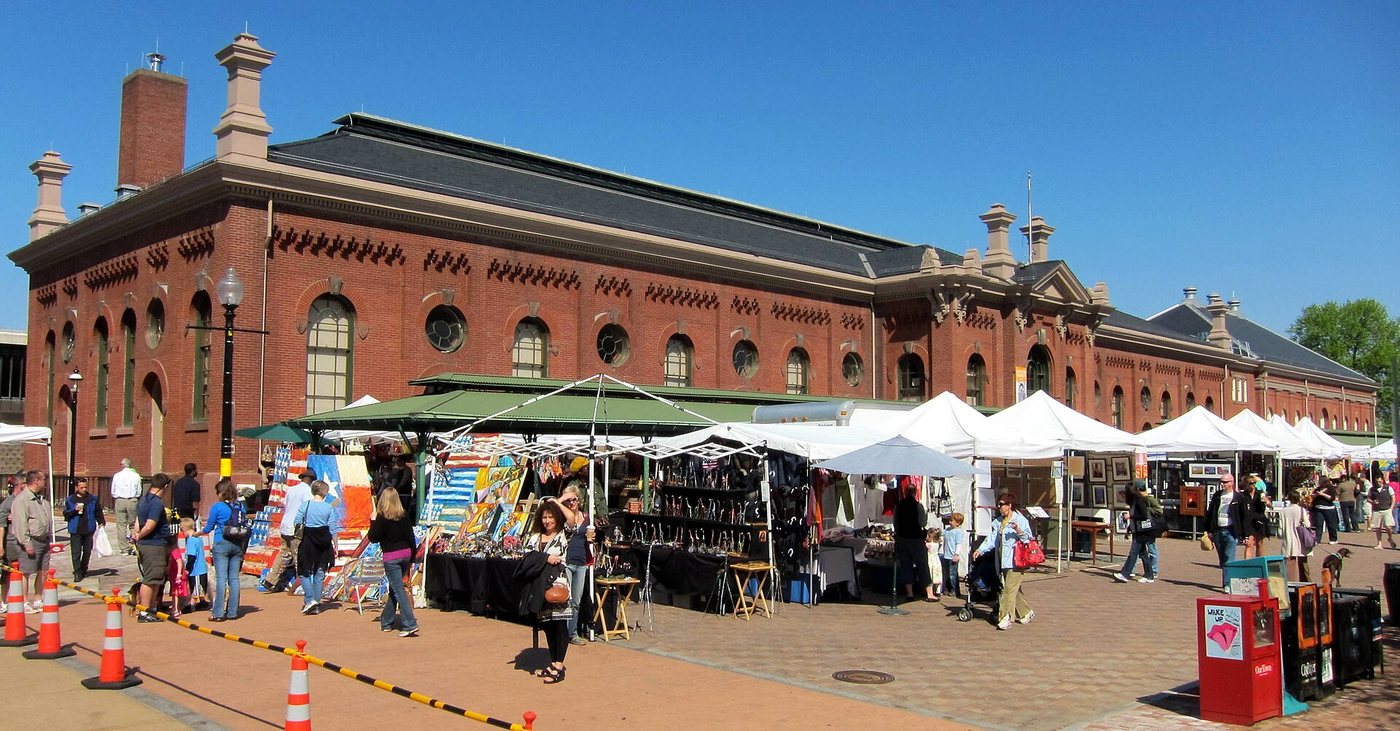
The market opened in 1873 to a design by Adolf Cluss. Its brick architecture gave a public food market a durable and recognizable home. A market hall needed to accommodate movement, counters and supplies, so the interior was organized around repeated commercial activity rather than a single ceremonial room.
Later additions expanded the complex. The North and Center halls belong to the building’s development over time, illustrating how a useful public facility could grow instead of being replaced outright. The market’s historical importance therefore includes adaptation as well as the survival of its earliest fabric.
Fire tested continuity
A major fire on April 30, 2007, damaged the market. Vendors operated from a temporary East Hall during the restoration period. The historic building reopened in June 2009, bringing the indoor market back to its repaired home.
The temporary arrangement matters because restoration is not only a question of masonry and roofs. Businesses need customers and places to trade while a building is unavailable. Maintaining market activity during reconstruction helped preserve relationships that could not simply be rebuilt with architectural materials.
One name, several kinds of activity
Inside the hall, buying ingredients and prepared food takes place at individual businesses. Outside, market stalls can extend the experience into nearby streets, but the outdoor operation has its own arrangements. A weekday visit and a weekend visit may therefore reveal quite different versions of the same address.
The surrounding residential neighborhood supplies another layer of use. Eastern Market is not solely a destination for visitors; it also forms part of local shopping and social routines. Understanding the hall as working infrastructure helps explain why circulation and deliveries matter alongside its appearance.
The most informative way to approach the site is to separate three things: the historic building, the businesses inside it and the changing activity around it. Their histories overlap, but none fully explains the others. Current market information can establish what is operating without reducing the place’s history to a list of stalls.