Georgetown existed as a port before Washington became the national capital. Its streets and waterfront should therefore be read through a history that is not simply an extension of the federal city. Shipping, tobacco inspection, property ownership and labor shaped the town, while later canals, shops and preservation changed how that history appears. The Old Stone House offers a particularly detailed entry into these overlapping stories.
The river before the town
The area had Indigenous histories of trade and use before English colonial settlement. The National Park Service identifies connections with Eastern Algonquian peoples, including communities represented today by the Piscataway and Pamunkey. The river was already a place of movement and exchange before a colonial town was surveyed.
For European commerce, the navigability of the Potomac made the site valuable. Ocean-going vessels could reach the area and take tobacco to overseas markets. Warehouses served inspection, grading and storage functions, turning the waterfront into a point where agricultural production was converted into export trade.
Maryland authorized the town in 1751 on land associated with George Gordon and George Beall. Its establishment preceded the federal capital plan by several decades. This chronology explains why Georgetown’s urban identity cannot be reduced to a picturesque neighborhood created around government buildings.
A small house reveals the property system
The Old Stone House stands on original Lot 3, facing what was then Bridge Street and is now M Street. Early purchasers were expected to improve their lots by constructing substantial buildings. Ownership therefore came with pressure to turn surveyed land into a functioning town.
Christopher and Rachael Layman acquired the lot in 1764. After Christopher’s death, Rachael continued with the property. The building used local stone and timber, materials that connect it to regional resources and skilled labor rather than only to an architectural style.
Cassandra Chew subsequently acquired the property and financed additions. She used it as a source of rental income, and women in her family retained interests in the property for generations. This history makes the house a record of investment and tenancy as well as domestic life. The person who owned a building did not necessarily occupy it.
Prosperity depended on unequal labor
Georgetown’s economy included the labor of both free and enslaved African Americans. The National Park Service estimates that Black residents made up about a third of the town’s population by the mid-nineteenth century. Their contribution to the port’s commercial development belongs at the center of its history.
Some owners of the Old Stone House also enslaved people. The documentary record does not establish precisely whether all those individuals lived or worked on this particular lot. That uncertainty should be stated rather than replaced with an imagined scene. It is possible to recognize the property’s connection to enslavement without claiming details the evidence cannot support.
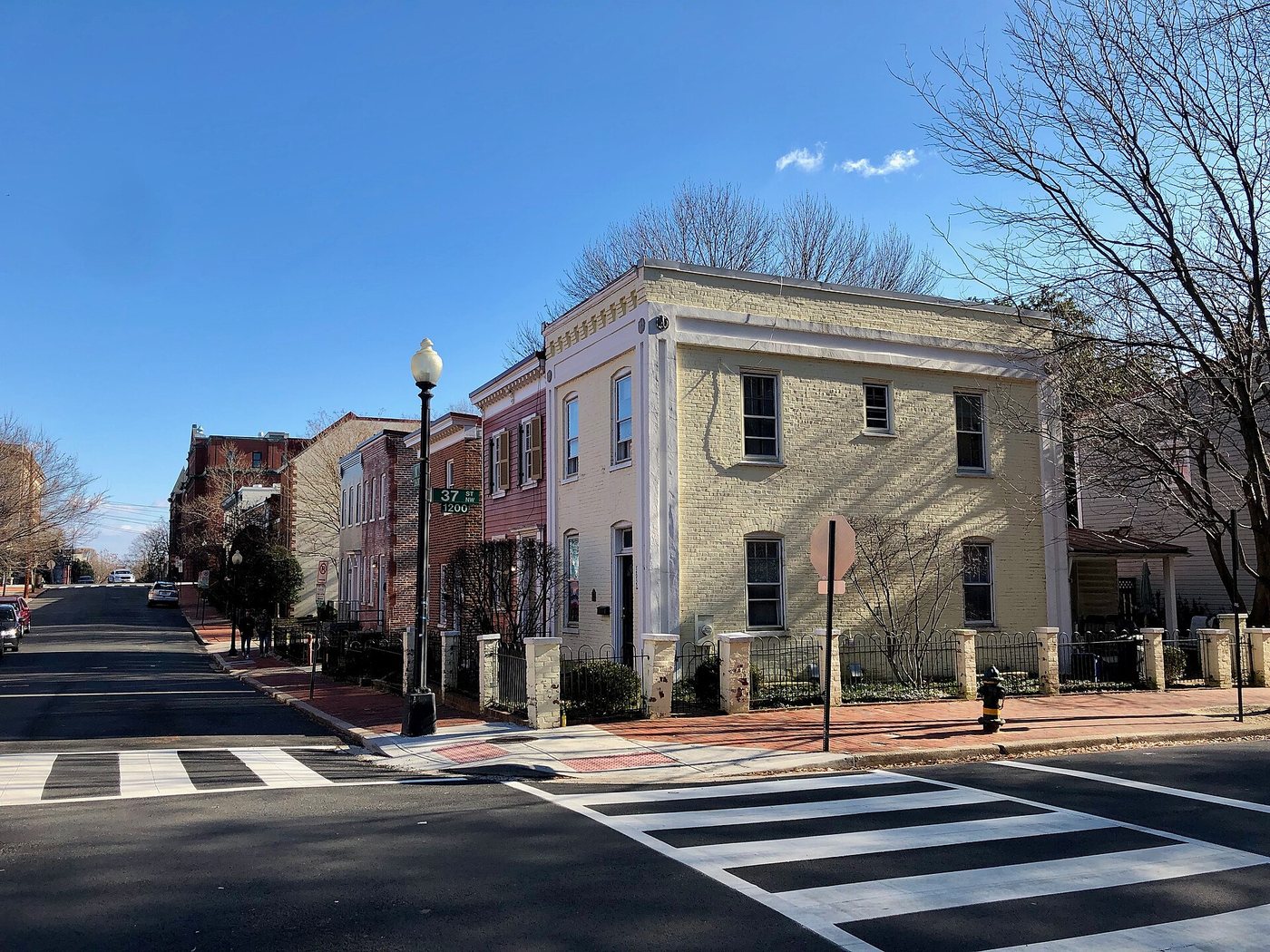
This distinction is especially important in a neighborhood now associated with costly housing and leisure shopping. Present-day appearance can conceal the labor systems and unequal relationships that helped generate earlier wealth. Historic architecture is evidence of those systems, not proof that the past was uniformly comfortable.
A port acquired new infrastructure and uses
The Chesapeake and Ohio Canal introduced another transport corridor through Georgetown in the nineteenth century. Canal boats and their towpath connected the town with inland commerce. The canal’s level water and locks are a different kind of infrastructure from the tidal river beside it, even though both belonged to the same trading landscape.
As commercial functions changed, buildings acquired new uses. The Old Stone House accommodated businesses and residents long after its earliest construction. Its front room served as a paint shop, while other households occupied portions of the property. Such uses are part of its history rather than interruptions between a colonial beginning and a museum present.
Preservation also corrected a story
The house was once promoted as George Washington’s engineering headquarters. National Park Service research showed that this identification confused different people and businesses associated with the Suter family. The mistaken story helped sustain interest in the house, but it is not an accurate account of its use.
Federal acquisition in 1953 and subsequent preservation made another phase in the property’s life. The more securely documented story—women owners, tenants, crafts, commerce and connections to slavery—is richer than the discarded legend. Georgetown becomes more understandable when its buildings are approached through that kind of evidence, rather than through an assumption that every old address must belong to a famous national figure.