
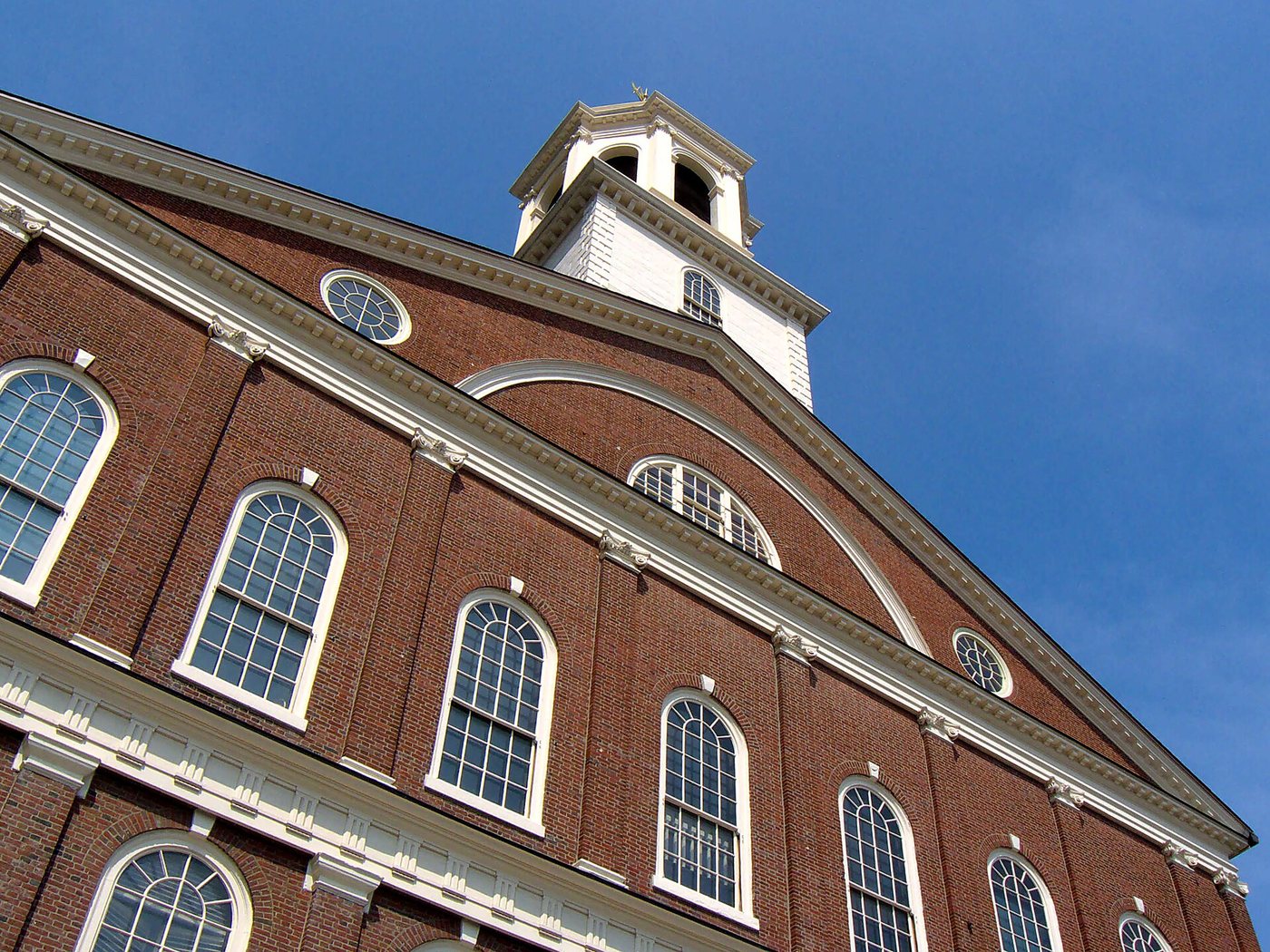
The name Faneuil Hall Marketplace is often used for a group of buildings and pedestrian spaces in downtown Boston. Within that area, Faneuil Hall itself is the historic meeting hall and market building first completed in 1742. Quincy Market and the surrounding commercial ensemble belong to a later expansion. Separating those places makes both the architecture and the history easier to follow.
A market below, government above
Merchant Peter Faneuil offered to fund a permanent market for Boston. To win support for the proposal, he included a meeting hall above it. The resulting building joined two kinds of public activity: the exchange of goods and the discussion of town affairs. Its lower floor served commerce while the upper room accommodated government and assembly.
The building was damaged by fire in 1761 and reopened in 1763. That chronology places its renewed use close to the disputes over imperial taxation that preceded the American Revolution. Figures including Samuel Adams and John Hancock spoke here as opposition to British policies grew.
The hall’s association with liberty should not obscure the source of its benefactor’s wealth. Peter Faneuil owned enslaved people and participated in the trade in human beings. The National Park Service interprets that history as part of the building’s legacy. A place can be significant to movements for freedom while also being materially connected to slavery.
A room used by more than one movement
Faneuil Hall’s political history did not end with independence. Abolitionists later held meetings here, including responses to the capture of people seeking freedom from slavery. Civic ceremonies and public debate continued to give the building a role beyond preservation.
This continuing use changes how the Great Hall should be understood. It is not simply a room in which one famous speech happened, nor a complete reconstruction of a single revolutionary moment. Its significance comes from repeated acts of assembly across generations, sometimes addressing contradictions within the nation’s own ideals.
The building’s present visitor functions are managed within that historic setting. Access to a particular room may depend on events or operating arrangements. Consult the National Park Service and the current operator rather than assuming that the surrounding shops’ hours describe the hall itself.
Quincy Market answered a later commercial need
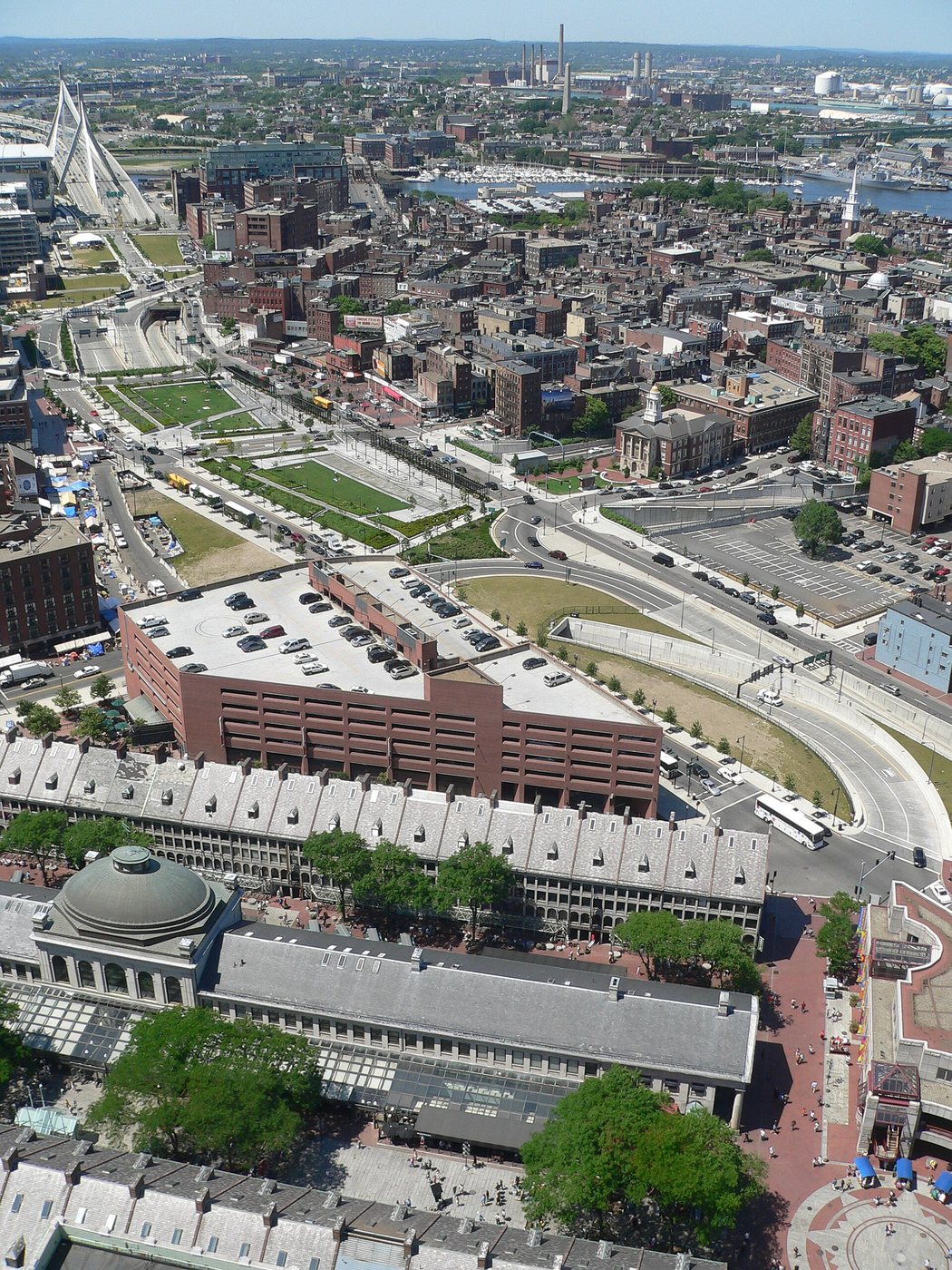
Boston’s growing population required more market space in the nineteenth century. Quincy Market, completed in 1826, expanded the commercial district beside Faneuil Hall. Its long market form differs from the older building’s combination of market and meeting room. The group’s later conversion to retail and dining added another layer.
Walking between the buildings reveals the change in scale. The older hall is a compact civic object; the later market ensemble organizes longer passages and outdoor circulation. The open spaces between them are part of the shopping experience, but also help show how a market district grew beyond one building.
Food stalls, retail tenants and performances can make the district feel like a single attraction. Historically, however, it is a collection of places with different origins. A visit that identifies which building is which will make better use of museum interpretation and avoid attributing every part of the present marketplace to 1742.
.jpg)


