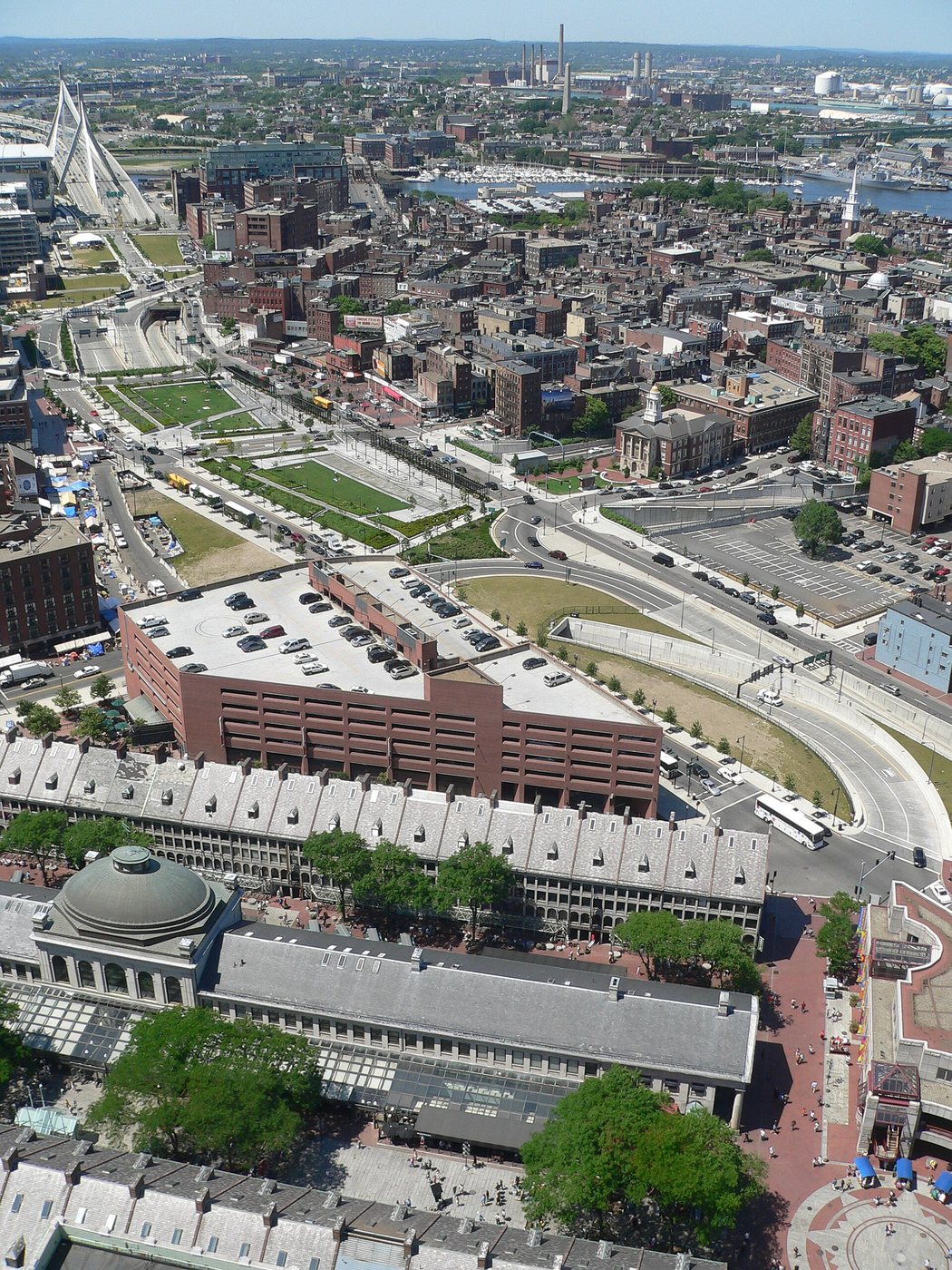
The Rose Kennedy Greenway follows ground once dominated by Boston’s elevated Central Artery. Burying the highway created the opportunity for a surface landscape, but it did not remove the infrastructure beneath. The Greenway is a roof garden over a major road tunnel as well as a public park connecting downtown districts.
A surface reclaimed from an elevated road
The Big Dig changed the relationship between downtown Boston and its waterfront by moving highway traffic below ground. The resulting open corridor could not simply be treated as an ordinary undeveloped site. Tunnel structures, street crossings and connections to surrounding blocks influenced what could be built and planted above.
The Rose Kennedy Greenway Conservancy took over park operations in 2009 under an agreement with the Massachusetts Department of Transportation. That arrangement reflects the site’s layered identity: state transport land supports a landscape managed and programmed by a nonprofit organization.
The former highway line remains readable in the long, narrow sequence of spaces. Unlike a large rectangular park, the Greenway must repeatedly negotiate streets crossing its length. Those crossings are part of the route, not interruptions that a walker can ignore.
Neighborhood edges give the sequence variety
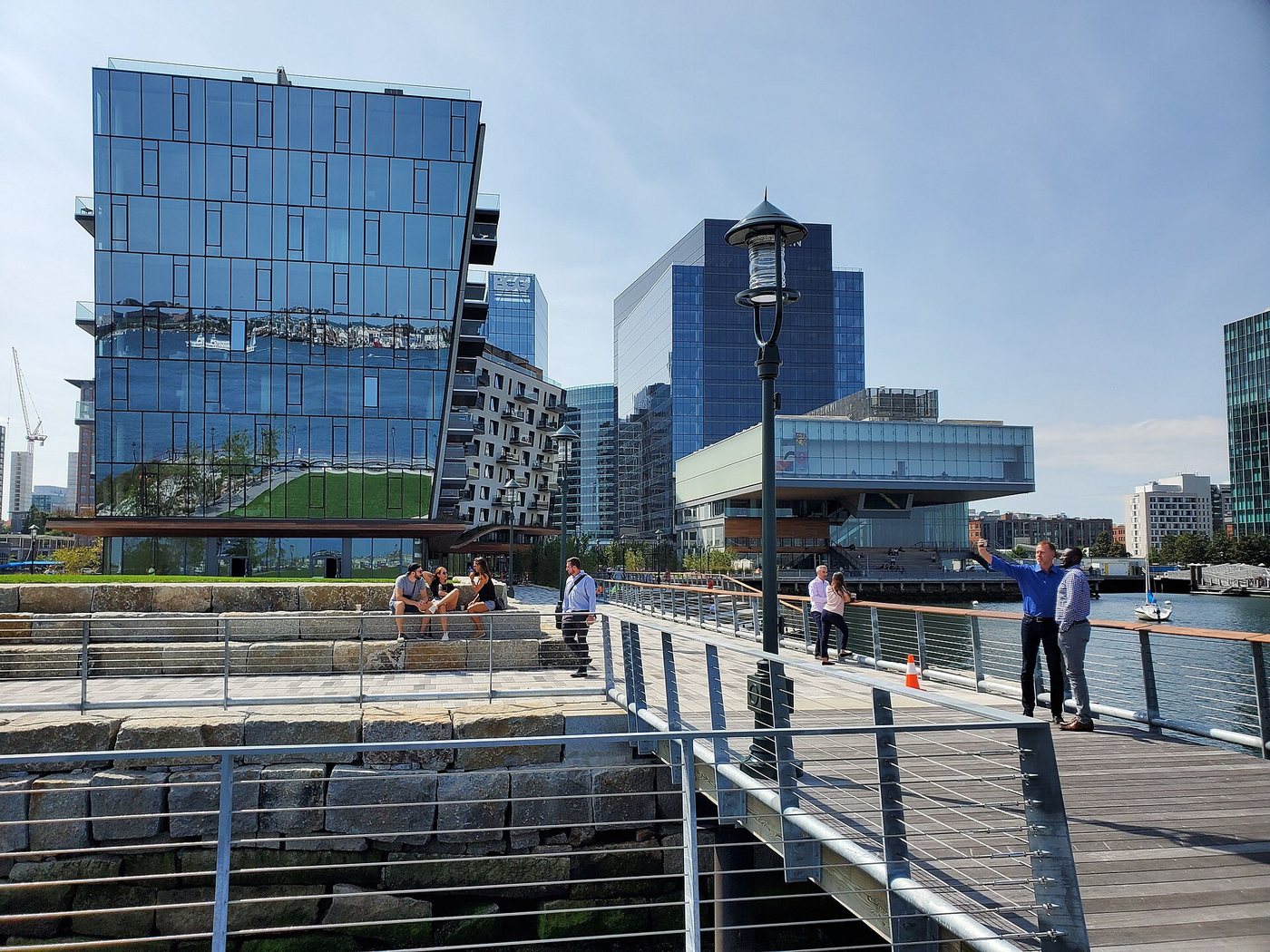
The corridor passes places with different histories and daily rhythms, including the North End and downtown’s waterfront districts. A garden near one neighborhood does not have the same context as a plaza near an office district. The surrounding buildings, entrances and cross streets help determine who uses each segment and for what purpose.
Public art and seasonal programming introduce further change. A temporary installation should not be assumed to be a permanent feature of the landscape. The Conservancy’s current information is the appropriate source when a particular artwork or activity is the reason for visiting.
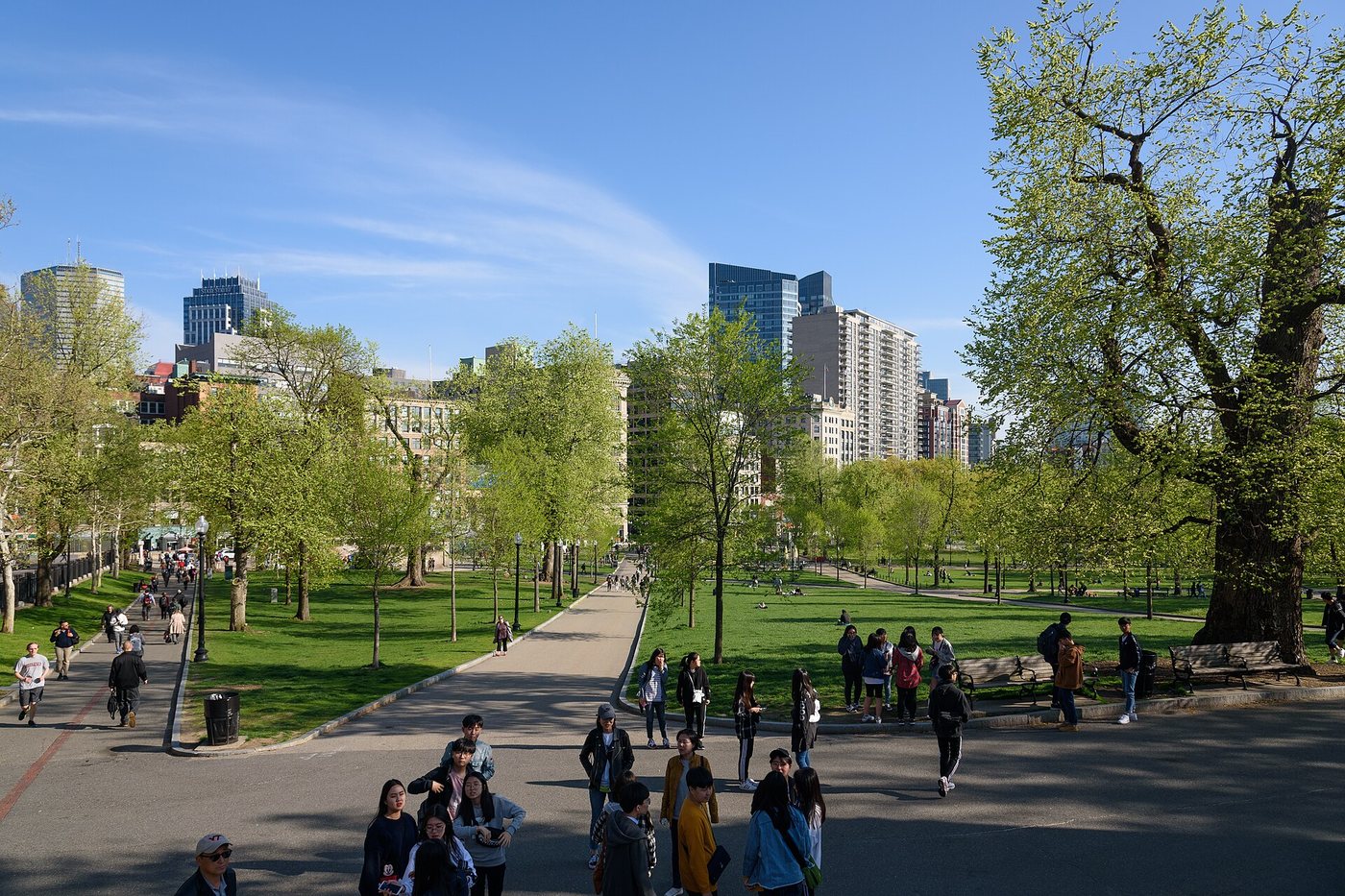
For an introductory walk, choose a short section with two identifiable street crossings rather than attempting the whole corridor automatically. Notice where a path invites movement along the park and where it connects outward toward another district. The Greenway’s value is partly in those sideways links: it turns land that once separated neighborhoods into a place through which people can move between them.