Forsyth Park is often represented by one view: the fountain framed by trees and a straight path. That view is useful for orientation, but it does not describe the whole park. The larger landscape includes open lawns, recreation areas and routes used by residents as well as visitors. Moving beyond the fountain reveals a different scale of public space from Savannah’s smaller ward squares.
A park that grew beyond its first area
The city traces the park’s beginnings to land set aside in the 1840s and describes its growth from an initial ten-acre area to approximately thirty acres. That expansion gave Savannah a public landscape large enough to accommodate activities that would not fit easily within a neighborhood square.
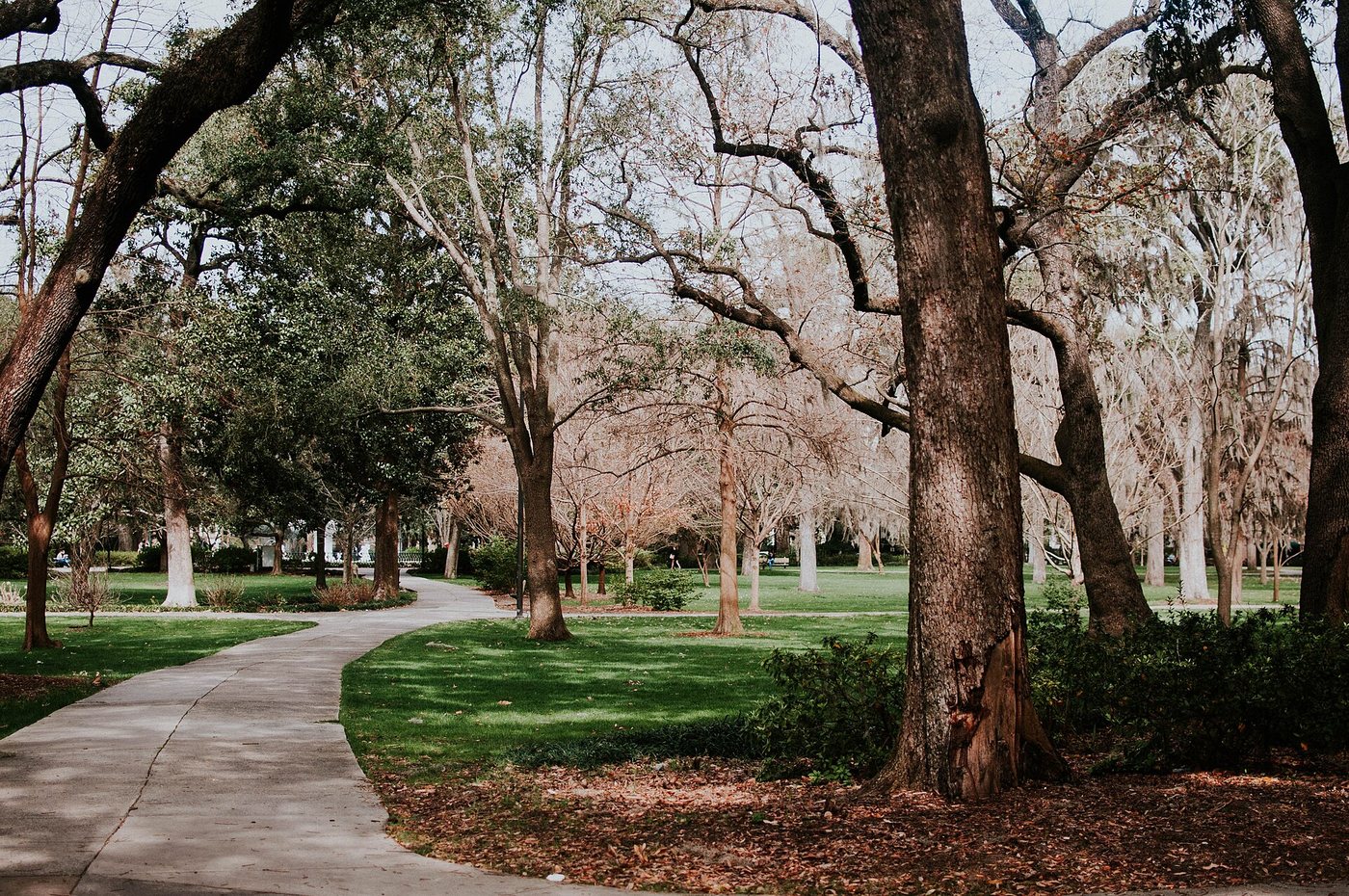
The northern section’s formal approach and fountain create a strong visual center, while other portions allow more dispersed uses. The distinction is functional as well as scenic. A large lawn or sports area needs room that a tightly enclosed historic square cannot supply.
The fountain is a manufactured historic object
Installed in 1858, the fountain was produced in cast iron by Janes, Beebe & Company. Its history belongs to the manufacture and distribution of ornamental public furnishings, not only to local landscape design. The object’s recognizable shape helped give the park a central image.
A city announcement in May 2026 reported that the latest major restoration had been completed in December 2025. That work is a reminder that an apparently permanent landmark depends on repair, coatings, structural care and water systems. Older notices describing the fountain as undergoing restoration should not be treated as current operating information.
Use the full length of the landscape
A walk can begin with the fountain and continue toward the broader lawns and recreation spaces. The change in scale shows how the park accommodates both formal scenery and ordinary activity. A place can be important for its celebrated view and for uses that rarely appear in postcards.
If time is limited, choose one part of the park intentionally rather than assuming a fountain photograph amounts to seeing every section. The city’s park information identifies facilities and current arrangements. Allow people using paths and lawns for their daily routines to remain the primary users of those spaces. Forsyth’s significance lies partly in that coexistence: a civic landmark and a neighborhood resource occupy the same ground.