New Orleans’s French Market is a district of market spaces rather than one building preserved unchanged from its beginnings. Its history includes open-air trading, specialized food halls, hurricanes, municipal regulation and major twentieth-century reconstruction. The present market combines food and other retail uses within that inherited riverfront setting.
Several buildings served different goods
Early food trading took place near the levee. Under Spanish administration, a market building was established in the late eighteenth century and subsequently moved toward the present Decatur Street area. Storms damaged successive structures, so continuity of market use did not mean continuity of every building.
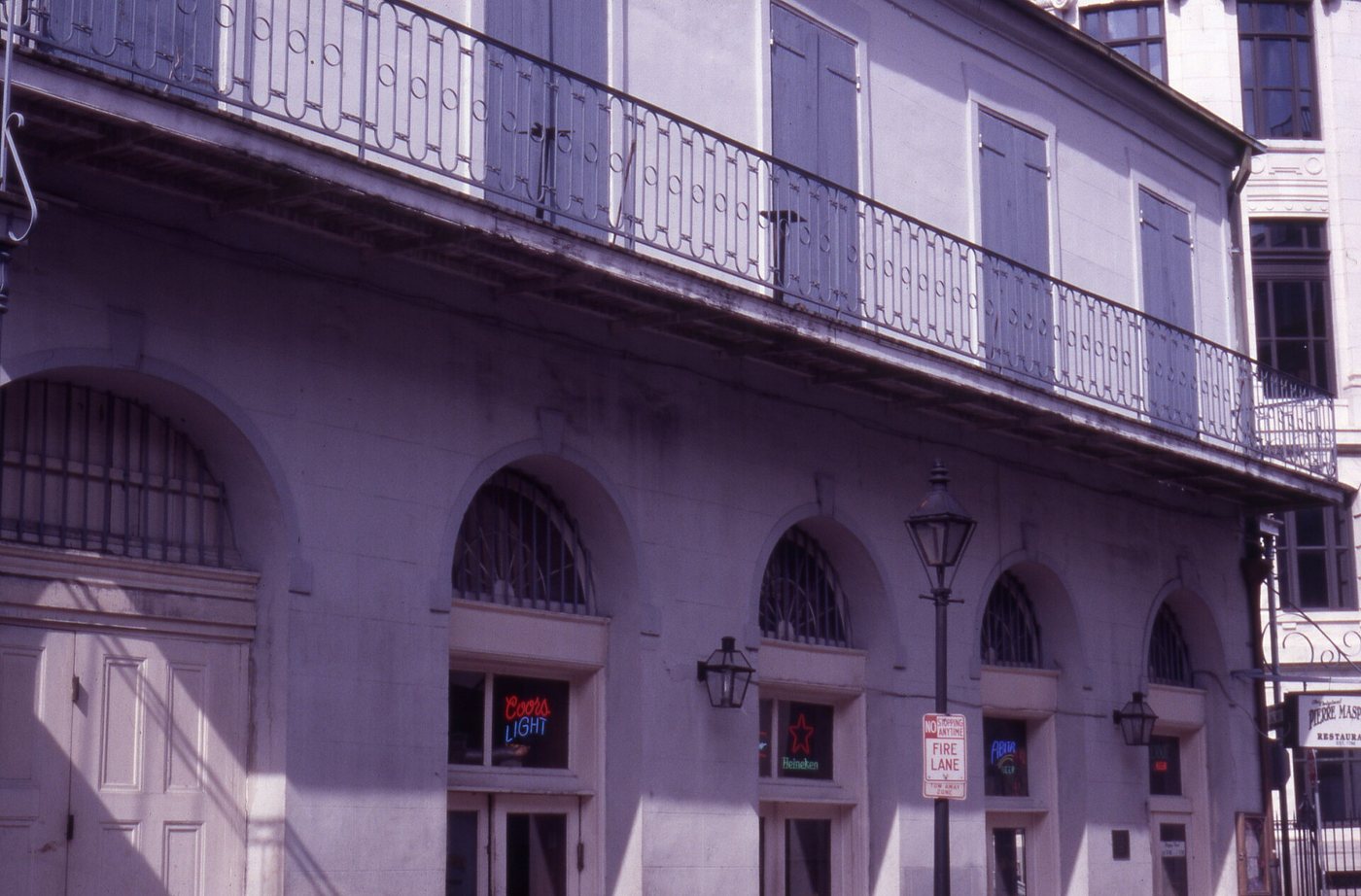
The Meat Market erected in 1813 survived, while a separate Vegetable Market developed in the 1820s. Their different names describe a practical organization of trade. Separating goods into buildings helped structure circulation, storage and the conditions under which food was sold.
A public market required administration
The city regulated stalls and collected revenue through changing administrative arrangements. Market activity was never simply an informal gathering outside government oversight. Fees, sanitation and responsibility for maintenance were part of its operation.
That institutional history helps explain why the market could continue despite physical damage and changing commercial patterns. Buildings matter, but so do the arrangements through which vendors occupy them and repairs are financed.
Modernization altered the historic setting
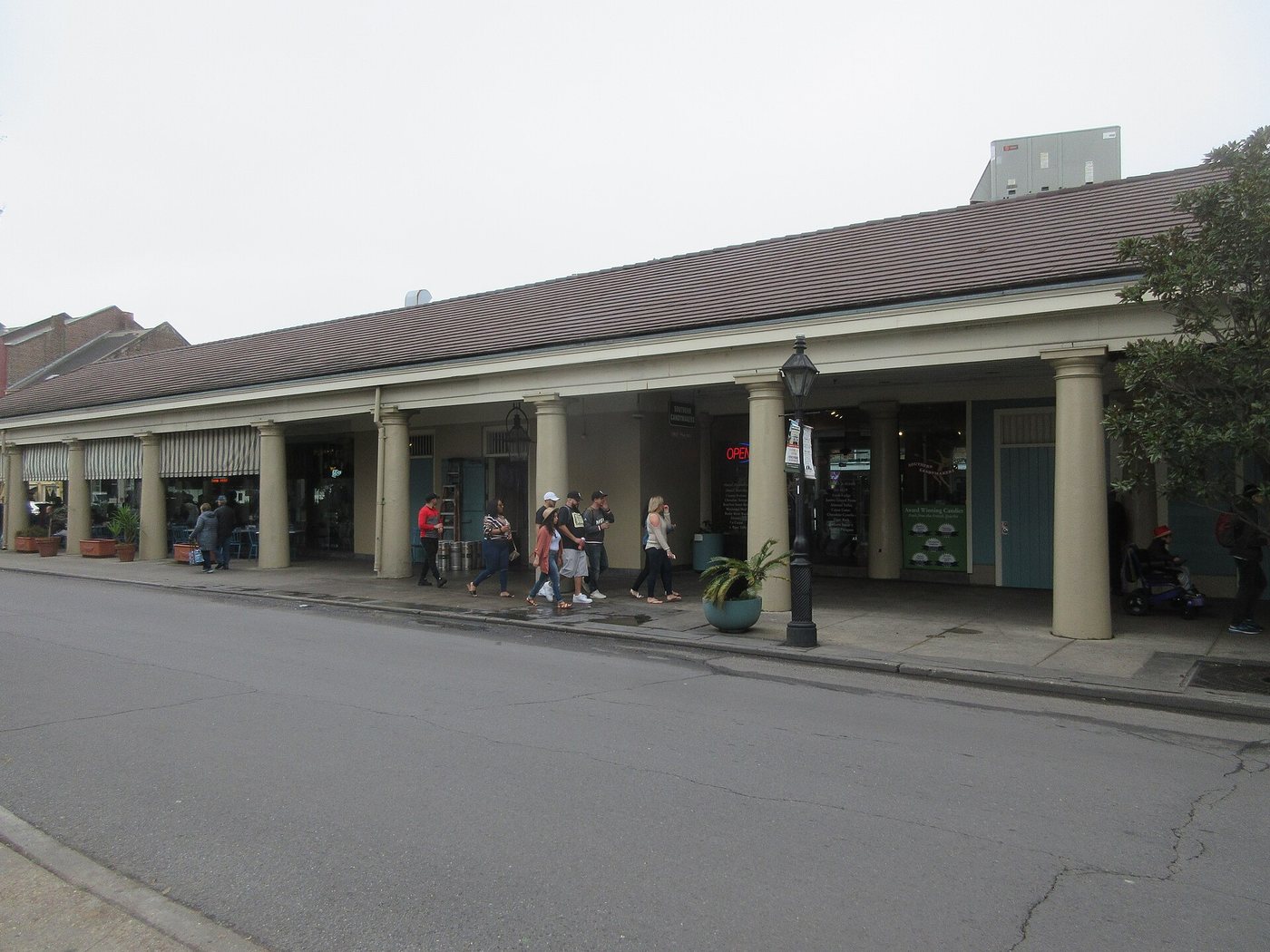
The French Market Corporation was organized in 1932, and a major improvement campaign followed during the 1930s. Existing buildings were rehabilitated, damaged or obsolete structures were removed, and new market facilities were constructed. The project consolidated portions of the wholesale food trade while changing the physical district.
Further renovation in the 1970s introduced another layer. The present appearance therefore reflects several campaigns rather than a single colonial origin. A covered market space may preserve a longstanding function while the structure above it belongs to a later rebuilding.
Food history and present retail are related
The district now includes food businesses and other market vendors. These uses should not be assumed to reproduce the scale or mix of the earlier wholesale and provisioning market. A visitor shopping for a prepared meal or a craft object participates in a different economy from the one that supplied the nineteenth-century city with meat and vegetables.
The continuity is the concentration of trade at a recognizable riverfront place. Understanding the changing buildings and goods makes that continuity more precise. The French Market’s history is not weakened by acknowledging modernization; repeated rebuilding and reorganization are among the reasons it remained a market at all.