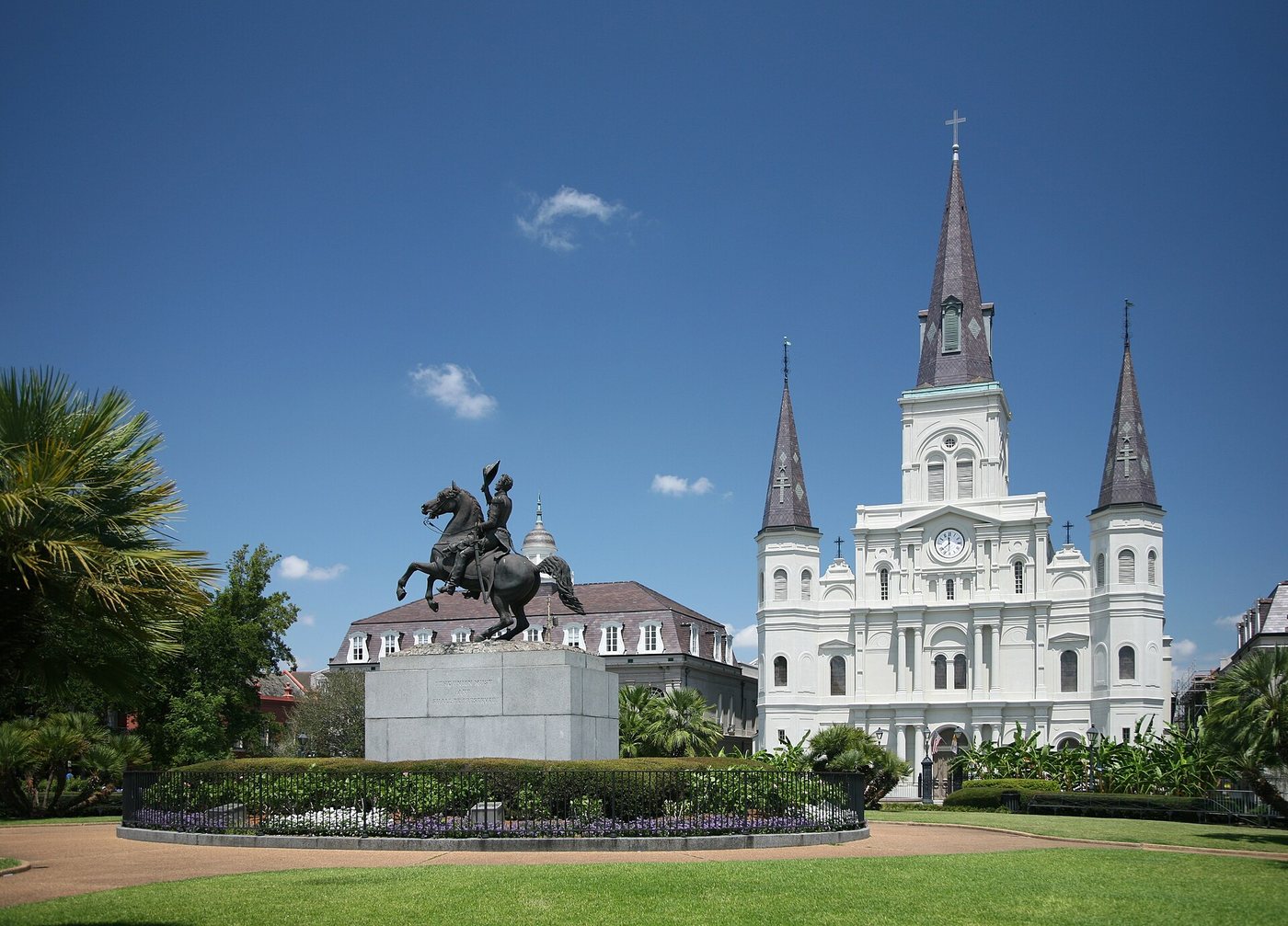
Jackson Square is often seen as a single composed view, with St. Louis Cathedral at the center and the Cabildo and Presbytère on either side. The Pontalba Buildings frame the lateral edges, while the river lies beyond the opposite side. That coherence was produced over time. The square’s buildings and monument have different histories, and their relationship is more informative than treating them as one simultaneous project.
From military ground to a landscaped square
The early Place d’Armes served the colonial city as open civic and military ground near the river. Its position connected government, religion and the port. Later landscaping, fencing and commemoration changed how the space was used and perceived.
The equestrian statue of Andrew Jackson, installed in 1856, gave the square a strong central focus. It commemorates a particular national figure and military history; it is not an original element of the French city plan. The monument’s date separates it from both the early square and some surrounding buildings.
Civic buildings acquired later layers
The Cabildo was a seat of Spanish colonial government and became the setting for the Louisiana Purchase transfer ceremonies in 1803. It later served other governmental functions before becoming part of the Louisiana State Museum. Its role changed repeatedly while its prominent position beside the cathedral remained.
The Presbytère has a related architectural presence, but its construction and uses followed their own course. Both buildings received mansard roofs in the nineteenth century, altering their silhouettes. Their appearance therefore includes later modifications to earlier structures.
The Pontalba Buildings make the edges active
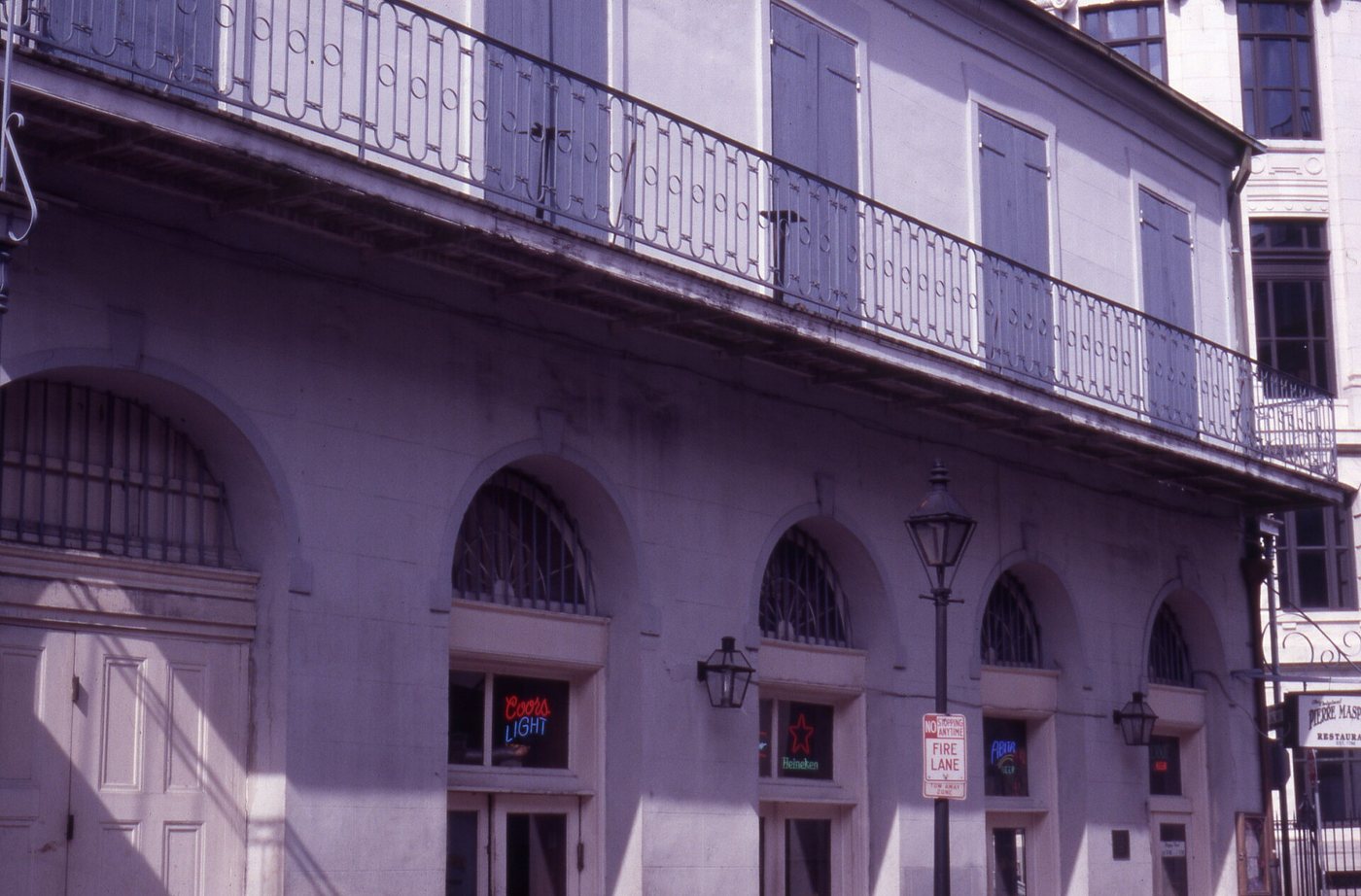
Baroness Micaela Almonester de Pontalba developed the paired buildings in the mid-nineteenth century. Shops below and residences above gave the square’s sides a mixed use that continues in broad form. The long facades create enclosure while their ground floors connect with the surrounding streets.
This arrangement is different from a square bordered only by monumental institutions. Domestic and commercial life contribute to the setting alongside museums and worship. The buildings’ upper floors should therefore not be assumed to be public simply because they appear in a famous view.
Jackson Square’s identity comes from these relationships: a former parade ground, a later memorial, government buildings adapted as museums, a cathedral and inhabited commercial rows. Reading their dates and purposes separately makes the whole composition clearer. The square is a layered civic setting whose unity does not depend on every part having the same origin.