Little Havana is often introduced through Calle Ocho’s food, music and public imagery. Those are important parts of its identity, but the neighborhood extends beyond a visitor corridor. Bungalows, apartment buildings, schools, places of worship and small businesses reveal a longer history of settlement and everyday life. Its preservation involves residents and affordability as well as recognizable facades.
The neighborhood existed before its present name
The University of Miami Libraries’ chronology describes early-twentieth-century subdivisions west of downtown, including Riverside and related developments. Houses and bungalows preceded the neighborhood’s later Cuban American identity. A bridge and trolley connections improved access to downtown and encouraged growth.
The chronology also records Jewish residents, businesses and institutions as a substantial part of the area before the later waves of Cuban migration. This layered history is important: Little Havana was not built all at once to house a single community. Existing streets and buildings became the setting for new residents, businesses and cultural institutions.
Older architecture can therefore preserve one phase of construction while its current use expresses another phase of social history. A building does not have to have been designed by or for a particular immigrant group to become important to that community.
Small building types support daily life
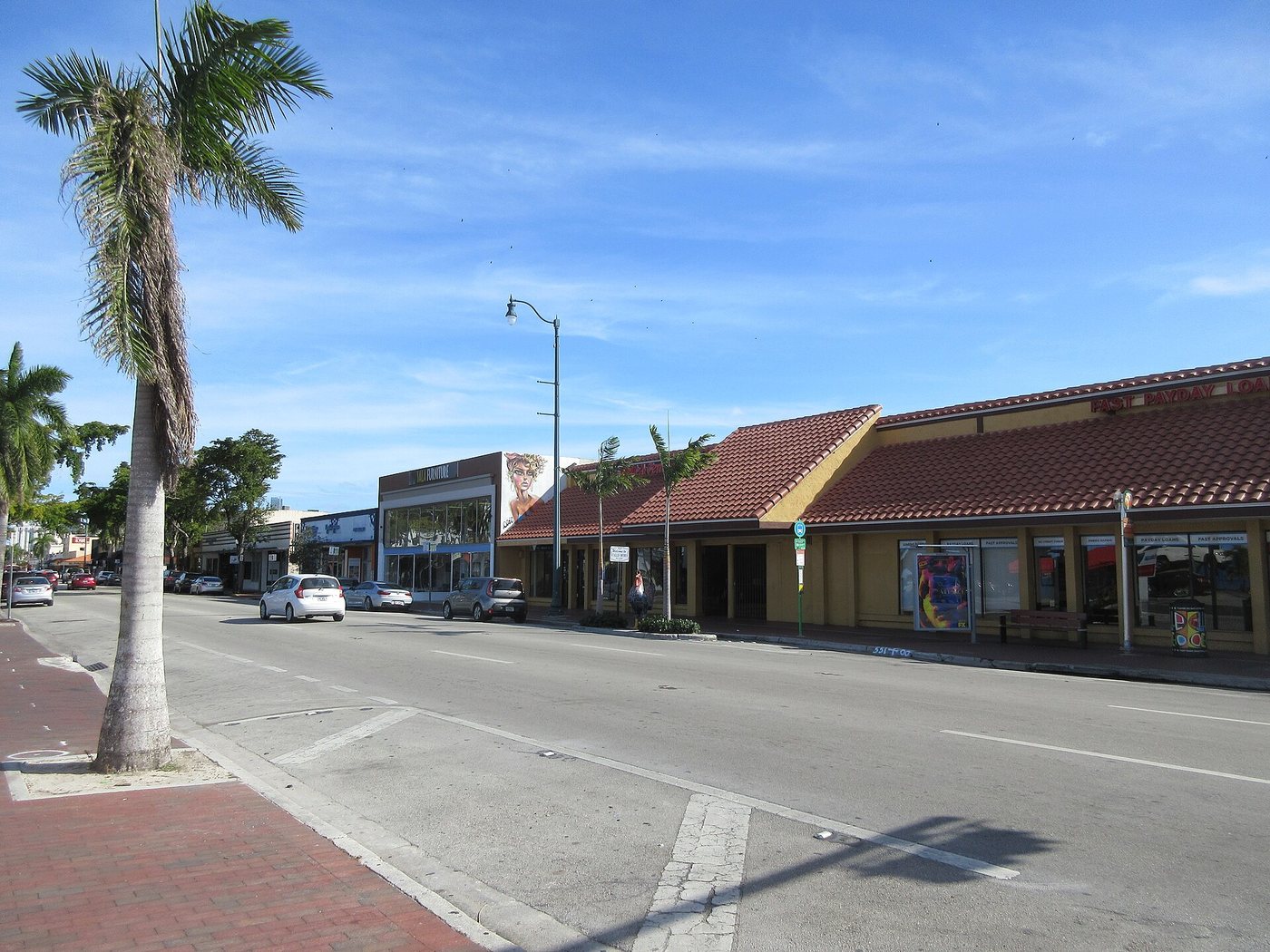
The National Trust for Historic Preservation identifies Mediterranean-influenced bungalows, courtyard apartments and small commercial buildings among the neighborhood’s characteristic forms. These types create a different environment from Miami’s large towers. Housing and commerce occur through many small addresses rather than a few monumental complexes.
Courtyard apartments organize several homes around shared outdoor space. A bungalow creates a more individual relationship between house and street. A corner store can serve nearby residents at a scale quite different from a regional shopping center. These are not merely aesthetic differences; they affect how people encounter neighbors and reach daily services.
The physical variety also complicates a tourist image dominated by one busy street. Calle Ocho is a major commercial corridor, but residential streets supply the population and routines that sustain the neighborhood beyond visitor hours.
Cuban identity and a wider immigrant history
The National Trust places Little Havana’s Cuban American history alongside more recent arrivals from Central America and the Caribbean. The name remains significant without describing every resident’s origin. Cultural continuity and demographic change can occur together.
A visitor can acknowledge the neighborhood’s Cuban institutions without treating everyone encountered as a representative of one national story. Shops and public spaces belong to people conducting ordinary business as well as to the city’s broader cultural image. Listening to how an institution presents its own history is more useful than assigning a story to it from its exterior alone.
Preservation includes the ability to remain
The National Trust identifies redevelopment pressure, demolition and displacement as linked concerns. Its 2019 revitalization plan was developed with community input and local partners. The project addressed livability and the neighborhood’s existing character rather than limiting preservation to a small number of landmark buildings.
This connection is crucial. Keeping a facade while making the surrounding area unaffordable to established residents can preserve an image while weakening the community that gives it meaning. Conversely, continued occupation without building maintenance can leave important housing vulnerable. The planning problem involves both physical fabric and the conditions under which people can stay.
A district’s apparent vitality is therefore not proof that it faces no pressure. Busy businesses and public recognition can coexist with difficult decisions about property, housing and redevelopment.
A respectful neighborhood visit
Choose a compact stretch of Calle Ocho and add nearby public streets only where the route is useful and appropriate. Spend time with a business or cultural institution that interests you rather than trying to collect every recognizable image. Ask before photographing people or activities at close range.
The architectural subject is the connection between modest buildings and sustained urban life. Little Havana demonstrates how ordinary houses, apartments and storefronts can acquire national cultural significance without ceasing to be places where people live and work.