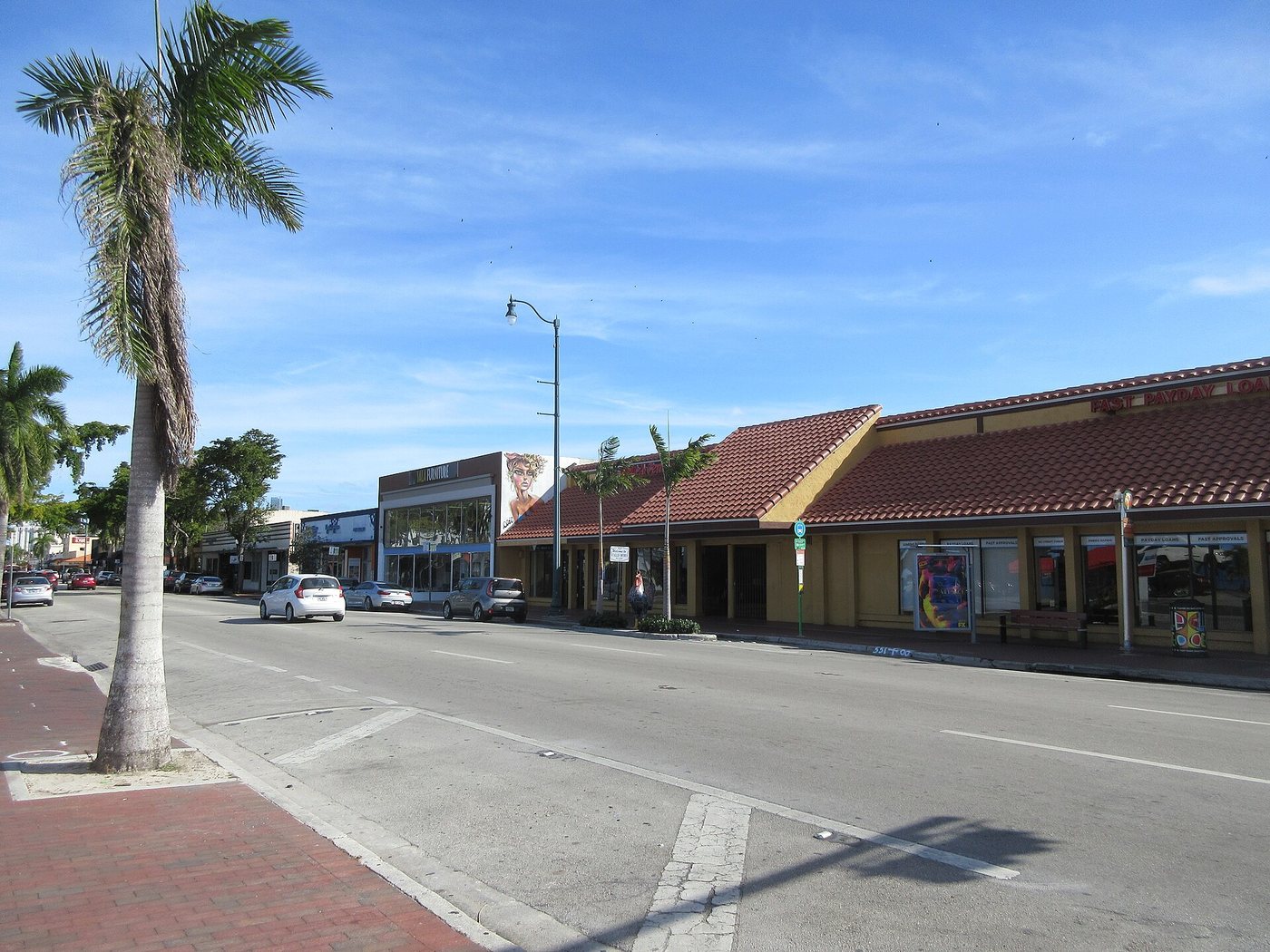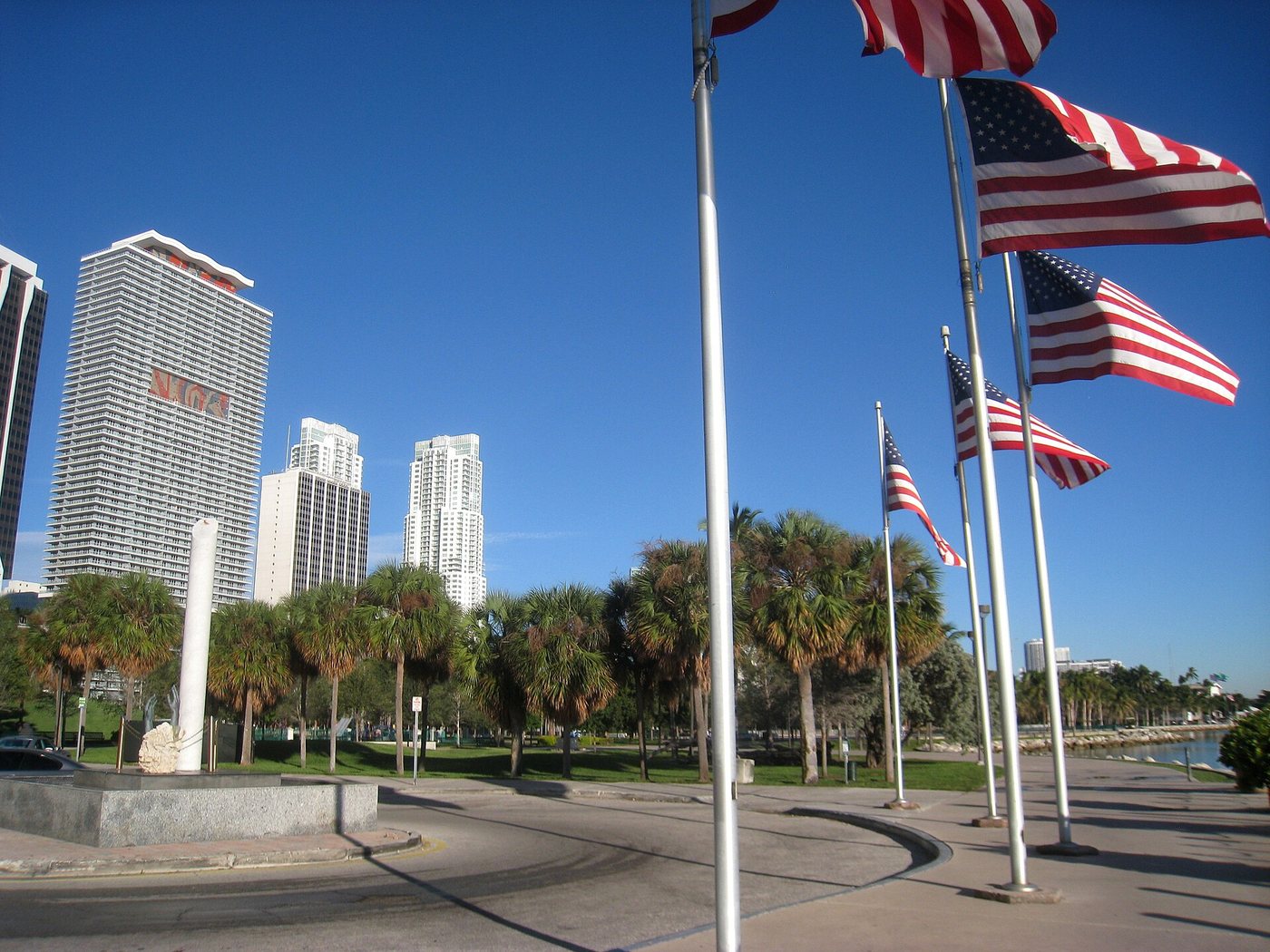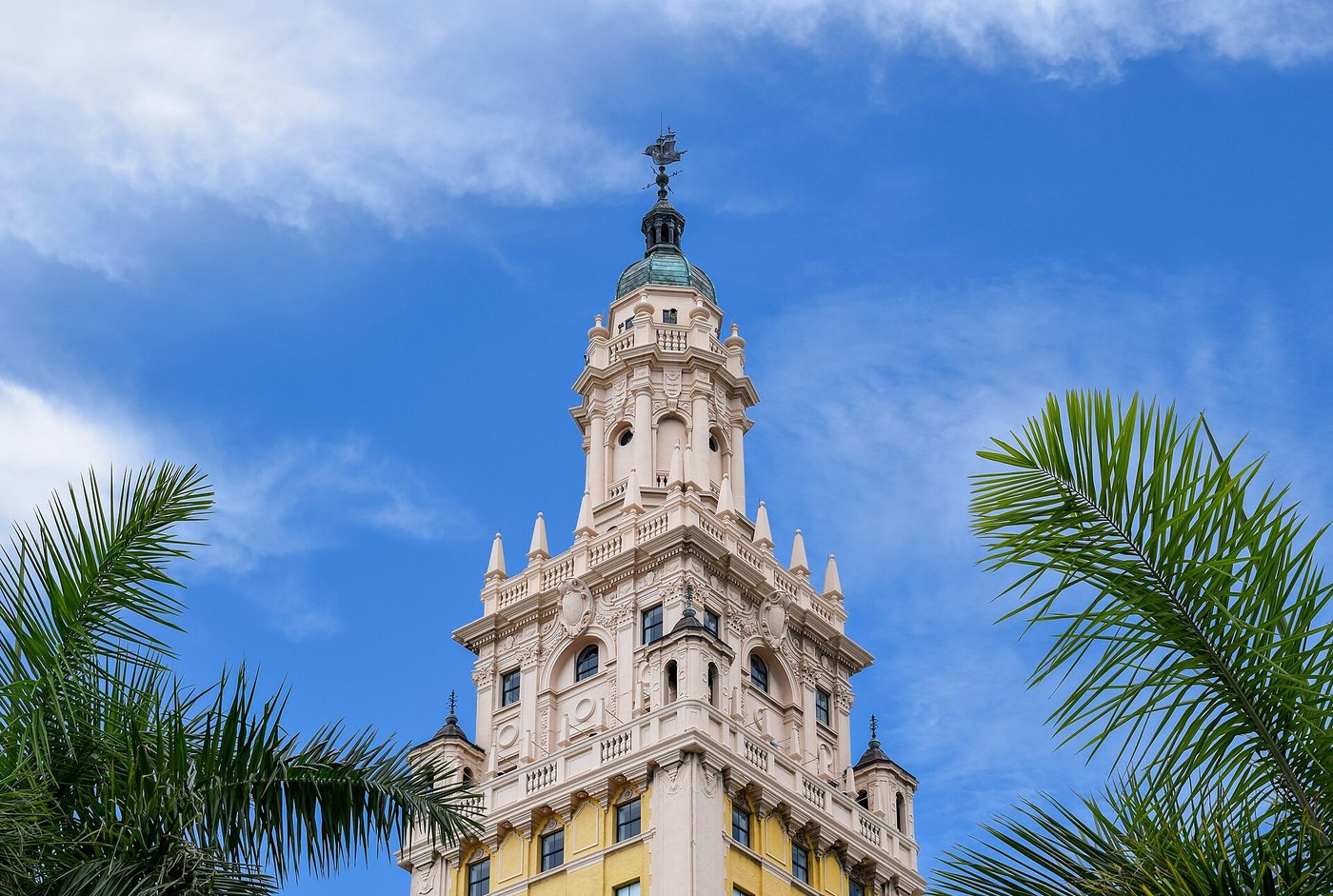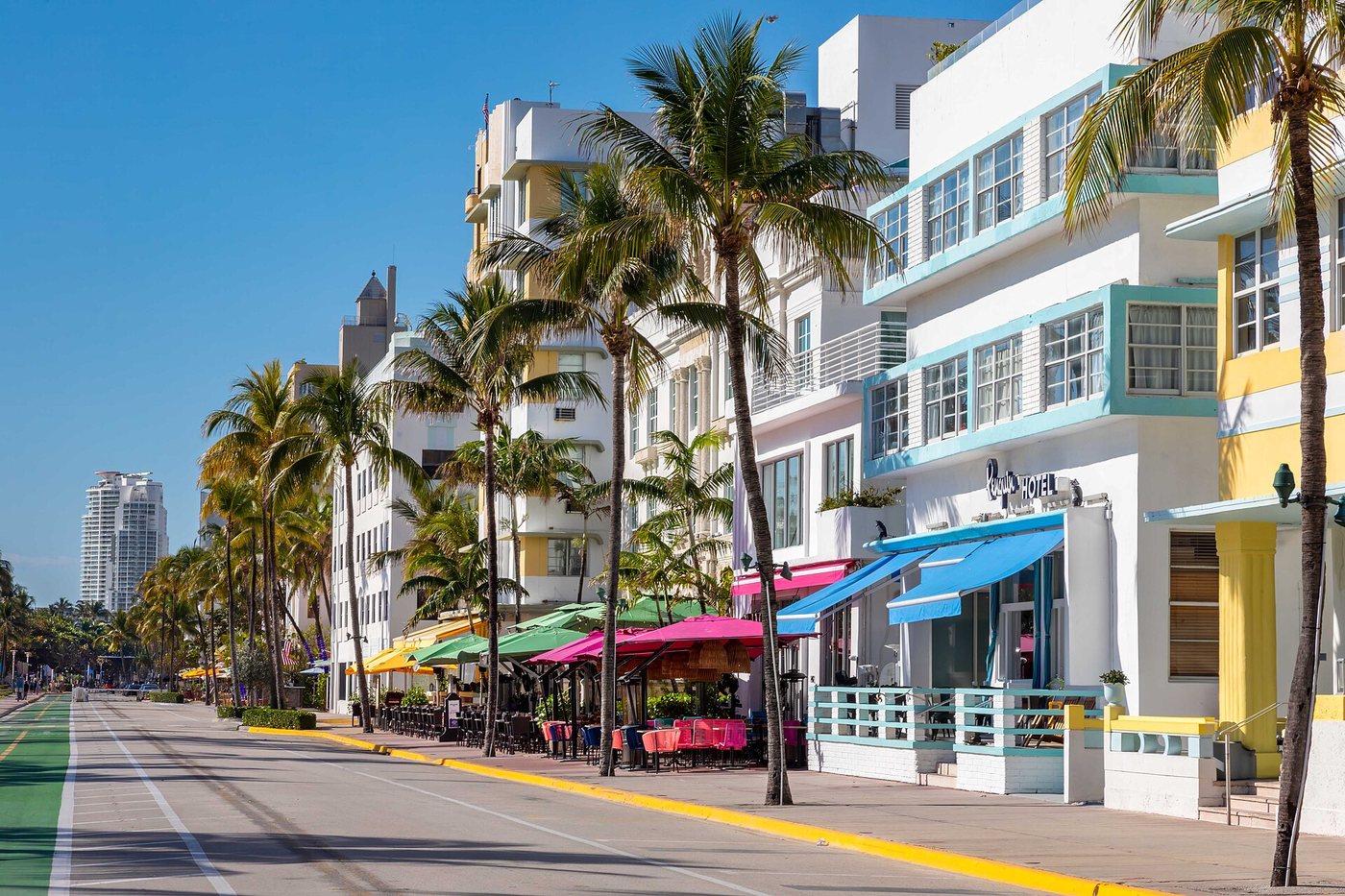
The Art Deco Historic District is easiest to read by comparing buildings rather than identifying a single ideal example. Miami Beach contains Art Deco, Streamline Moderne, Mediterranean Revival and later modern design. Their features overlap in a streetscape shaped by hotels, apartments and changing patterns of tourism. Color can help draw attention, but form supplies the more reliable architectural clues.
Begin with the building’s outline
The Miami Design Preservation League distinguishes the major design languages found in Miami Beach. Art Deco often uses geometric ornament and a strong organization of the facade. Streamline Moderne emphasizes curves, horizontal lines and an association with machines and movement. Mediterranean Revival looks to a different vocabulary of arches, tiled roofs and textured surfaces.
These are useful starting points rather than rules that classify every building from one detail. A curved corner does not explain an entire structure, and a recent paint scheme does not establish a construction date. Compare several features at once: roofline, entrance, window arrangement, projecting shades and the treatment of corners.
Tropical imagery made the style local
The preservation league describes a tropical adaptation in which marine and regional imagery entered modern decoration. Flora, fauna and ocean-liner references could make a building feel connected with its resort setting while using a contemporary architectural language.
This is a more precise description than calling every pastel building Art Deco. Applied imagery and color are only part of the composition. The way a lobby opens to the street, the depth of a canopy and the repetition of room windows also communicate a hotel’s purpose. Architecture here was designed to attract guests and organize their stay, not simply to supply an exterior backdrop.
Small buildings work together as a district
Many of the district’s recognizable views depend on the relationship among adjacent buildings. Similar heights allow separate facades to remain legible, while different entrances and decorative schemes give each property an identity. The street is experienced as a sequence rather than a single monument.
This makes district preservation different from saving one exceptional hotel. If the surrounding scale and spacing change substantially, an individual restored facade can lose much of the context that explains it. The ordinary apartment and commercial buildings therefore matter alongside famous addresses.
Preservation changed the resort’s future
Barbara Baer Capitman founded the Miami Design Preservation League in 1976 and led efforts to protect the district. The league’s memorial to her in Lummus Park places that preservation history within the landscape visitors now enjoy. The buildings’ survival should not be mistaken for evidence that they were always regarded as valuable.
Recognizing twentieth-century architecture as heritage required a change in attitude. Buildings could be relatively recent, associated with popular tourism and still merit protection. The preservation story is consequently part of the district’s significance, not merely a service performed after its important history had ended.
A comparison walk works better than a color checklist
Choose a few consecutive blocks and identify one building whose geometry is strongly vertical, another with a pronounced horizontal treatment and a third using revival details. Record the differences before consulting labels or a guided interpretation. This makes the terminology useful rather than turning it into a guessing game.
Use the preservation league’s current resources for tours and building information. Hotel lobbies and private apartment entrances have different access conditions, so an architectural walk can remain primarily on public sidewalks. The most revealing observations concern how each building addresses that shared public edge.