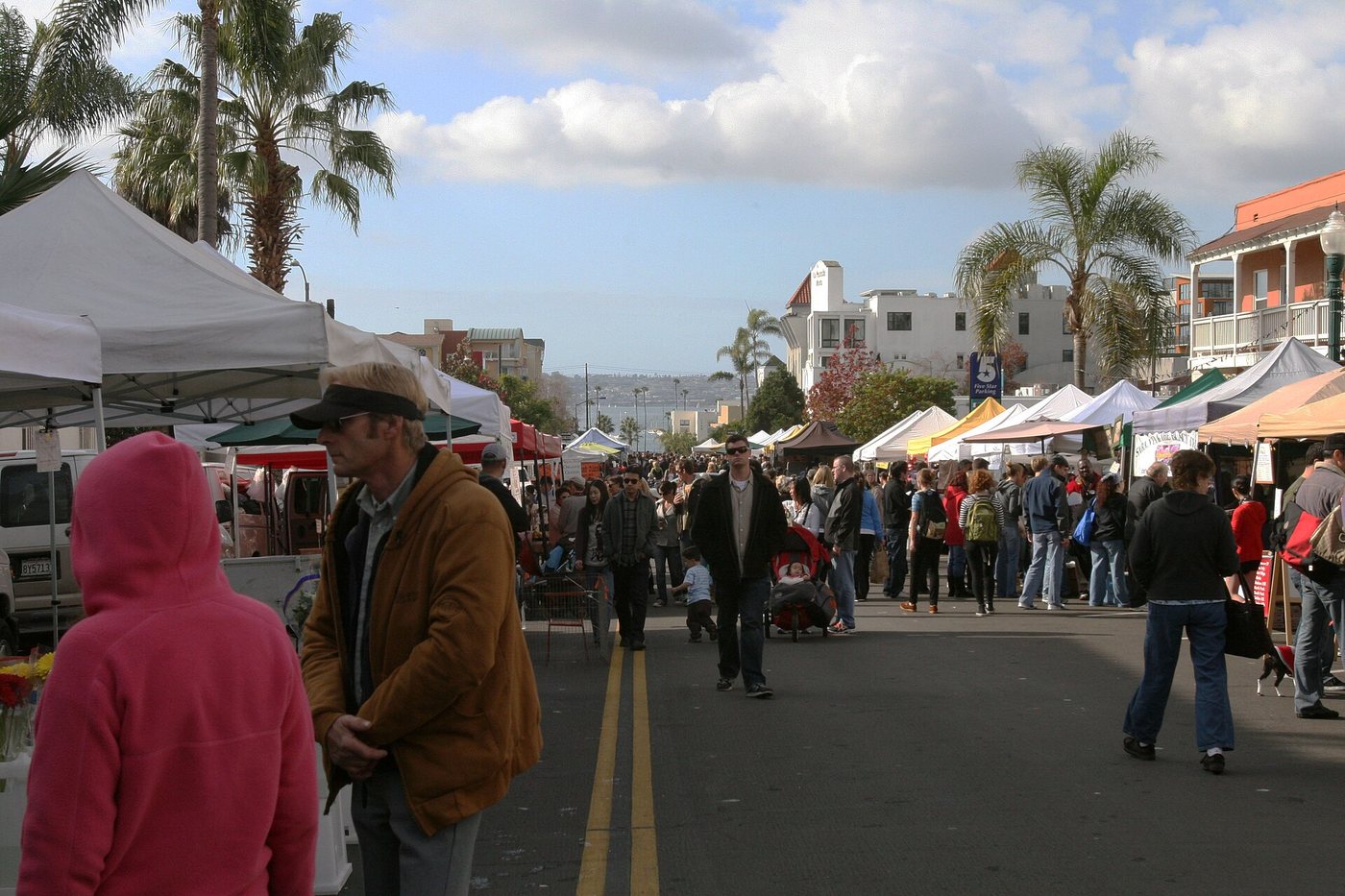
Little Italy Mercato is a farmers market held within San Diego’s Little Italy neighborhood. It began in 2008 through work by Catt Fields White in partnership with the Little Italy Association. The market creates a recurring arrangement of stalls along streets that have other uses between market sessions. Its identity depends on that temporary transformation as much as on any single vendor.
A food-shopping role within the neighborhood
The market was developed to provide a source of fresh food for an urban neighborhood. Produce, prepared foods and other goods bring different kinds of customers into the same street space. Some people arrive to shop for ingredients, while others come for a meal or to browse.
Those purposes should be distinguished from the name of the surrounding district. A market in Little Italy does not imply that every product or vendor is Italian. The neighborhood’s cultural history and the market’s range of goods are related parts of the setting, not identical categories.
A street becomes a market layout
On market days, stalls define aisles, stopping points and queues. The arrangement temporarily changes how pedestrians use the street, bringing attention to tables and counters rather than only to permanent storefronts. Deliveries, setup and removal make that transformation possible.
The permanent businesses remain part of the context. The market does not operate in an isolated fairground; it shares a neighborhood with residents, restaurants and other shops. Maintaining clear entrances and routes is therefore part of making a temporary market work within an inhabited district.
Different sessions have different rhythms
The association lists both Saturday and Wednesday markets. Their hours and vendor lineups should be established from the current market page rather than assumed to be identical. A midweek session and a larger weekend visit can offer different patterns of activity.
For understanding the place, the useful question is how a recurring event becomes part of ordinary neighborhood life. The Mercato adds opportunities for food shopping and direct contact with sellers without requiring a permanent enclosed market building. Its continuity lies in the repeated organization of public street space and the relationships that form around it.