Pittsburgh’s Market Square has outlived several buildings that once defined it. Its history runs from a combined place of government and trade to an open-air gathering space. The pavilion introduced in the 2026 modernization adds another layer, recalling the old market houses without reconstructing one of them.
From enclosed market to open square
Surveyor George Wood laid out the square in 1784. During the following decade, a courthouse and a horseshoe-shaped market occupied it. Their replacements in 1852 combined a market with City Hall; another market house followed in 1914 and was demolished in 1961. The name therefore survives a series of very different physical arrangements.
A market building concentrates activity beneath a roof and makes entrances important. An open square distributes movement across its surface and makes the surrounding frontages more prominent. Removing the last market house changed the relationship between the middle and the edges, even though commerce continued around the space.
The 2026 pavilion and the ground beneath it
The Pittsburgh Downtown Partnership announced completion of the latest modernization on April 22, 2026. Designed by Field Operations, it introduced an open-air steel-and-glass pavilion, expanded seating and dining areas, and smoother precast paving. Blue and green canopy panels give the shelter a different appearance from the masonry market buildings that preceded it.
The changes extend below and around the visible structure. Utility, drainage and irrigation work support events and planting; a curbless shared streetscape changes how the square meets surrounding movement. These are functional decisions. A public space used for ordinary lunches and occasional large gatherings needs both places to sit and infrastructure that can accommodate temporary activity.
Reading the edges
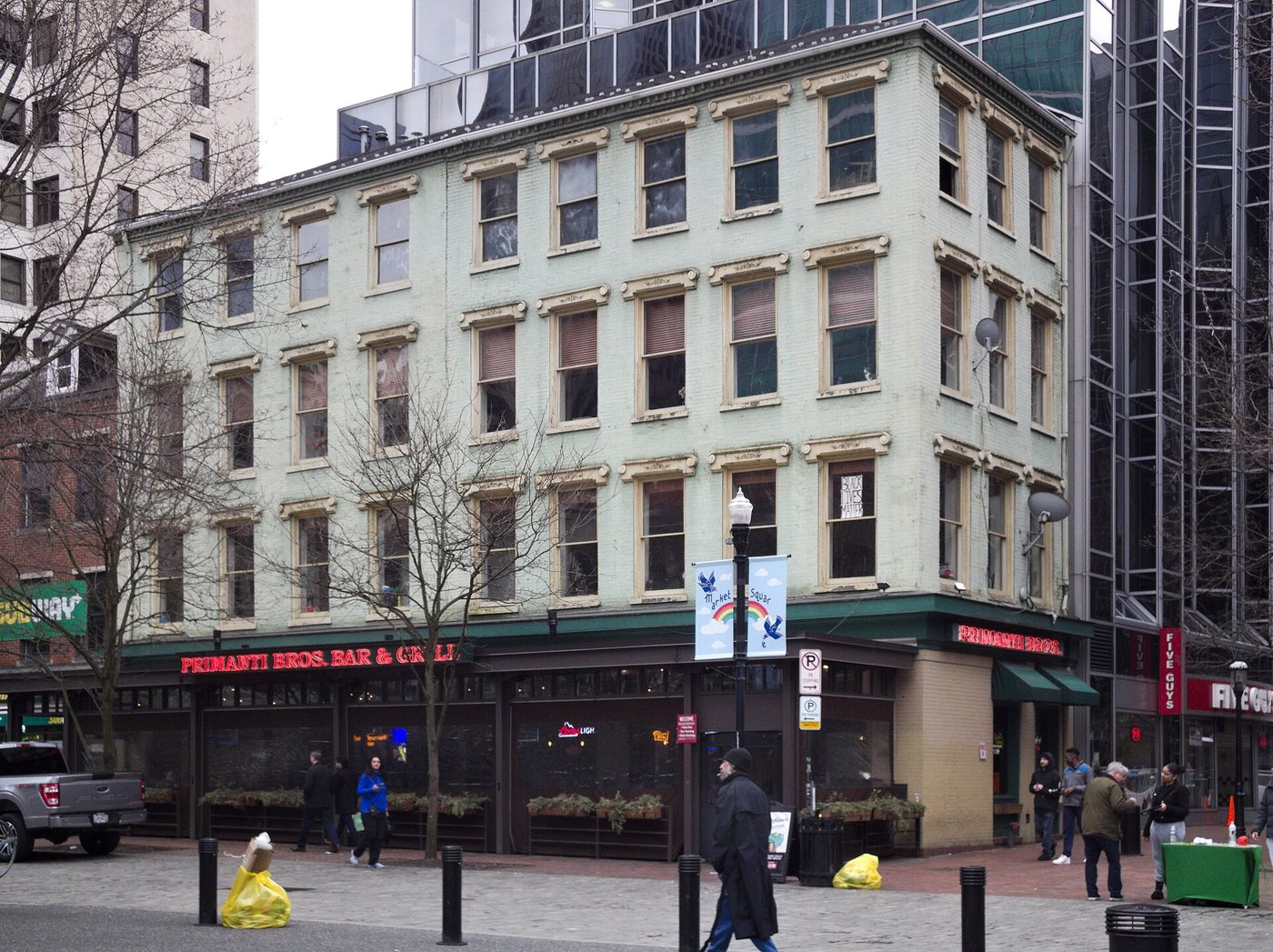
The square’s perimeter is essential to its character. Restaurant entrances and outdoor tables supply activity at a smaller scale than a major event. A visit during an ordinary part of the day can make that relationship clearer than a festival, when temporary stalls and crowds reorganize the space.
It is useful to distinguish public seating from tables operated by a business, and the open plaza from any area temporarily reserved for an event. The square works because several kinds of use fit close together. Its long history is visible less as a single surviving artifact than as a continuing negotiation between a common gathering place and the commerce surrounding it.