Pittsburgh’s Strip District is often approached as a food-shopping destination, but its buildings describe a much broader system of production and distribution. Industry, wholesale produce, immigrant businesses and newer offices have occupied the same narrow urban corridor at different times. The resulting streetscape is an accumulation of uses, not a preserved market from one date.
Trade at more than one scale
The Pittsburgh History & Landmarks Foundation identifies industry and regional produce distribution as central stages in the Strip’s development. Wholesale trade moves goods in bulk before they reach individual consumers. It requires storage, delivery space and connections to transportation, whereas a small food shop depends on a visible entrance and frequent pedestrian customers.
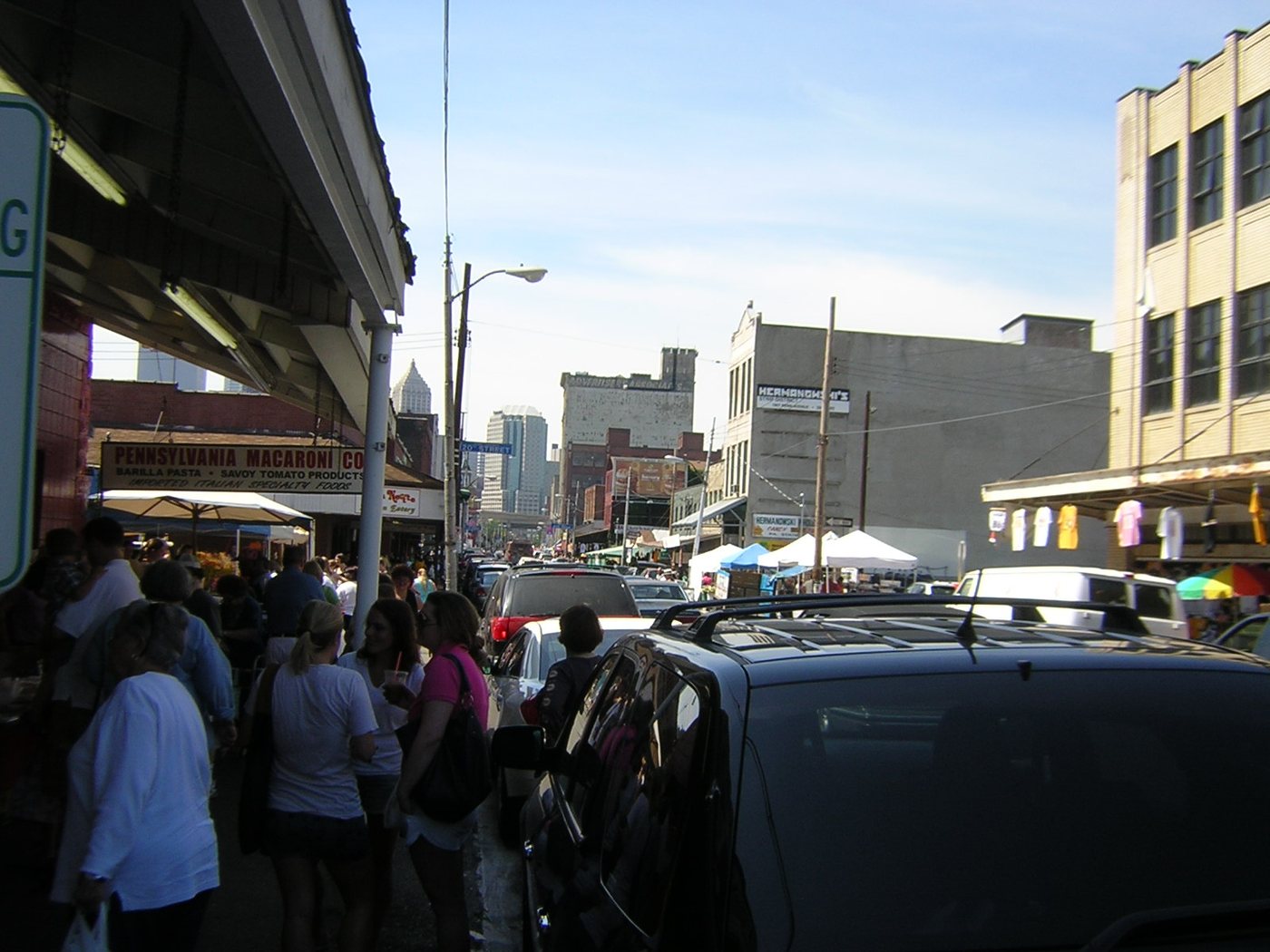
That difference helps explain why a neighborhood associated with intimate shopping experiences also contains buildings and blocks of industrial scale. A large opening or a long frontage may be a remnant of handling goods rather than a feature designed for leisurely browsing. The commercial atmosphere comes partly from that overlap between the machinery of distribution and the experience of buying food.
Historic district and changing neighborhood
The foundation describes the Strip Historic District as extending from 15th to 22nd streets between Liberty and Railroad avenues. This is a defined historic area within a larger neighborhood, not a claim that everything outside those lines lacks history. Its walking-tour interpretation emphasizes preservation and the reuse of older buildings alongside new construction.
The organization also connects food businesses with the neighborhood’s immigrant history and notes more recent technology-sector activity. Those uses operate at different hours and draw different kinds of movement. A block can therefore retain its older walls while changing the reasons people arrive there. Architectural survival alone does not mean that its economic role has stayed constant.
A walk organized around buildings and work
For a focused visit, give attention to the spaces between shops as well as their displays. Service access, loading areas and changes in building depth help explain how the street works. They also distinguish the Strip from a shopping street designed as a single retail development.
Food purchases can provide one thread through the neighborhood, but they need not be the only one. Comparing a small storefront with a reused warehouse brings the former distribution landscape into view. Allow space for deliveries and everyday business: the continuing work of the district is part of the subject, rather than an interruption to sightseeing.