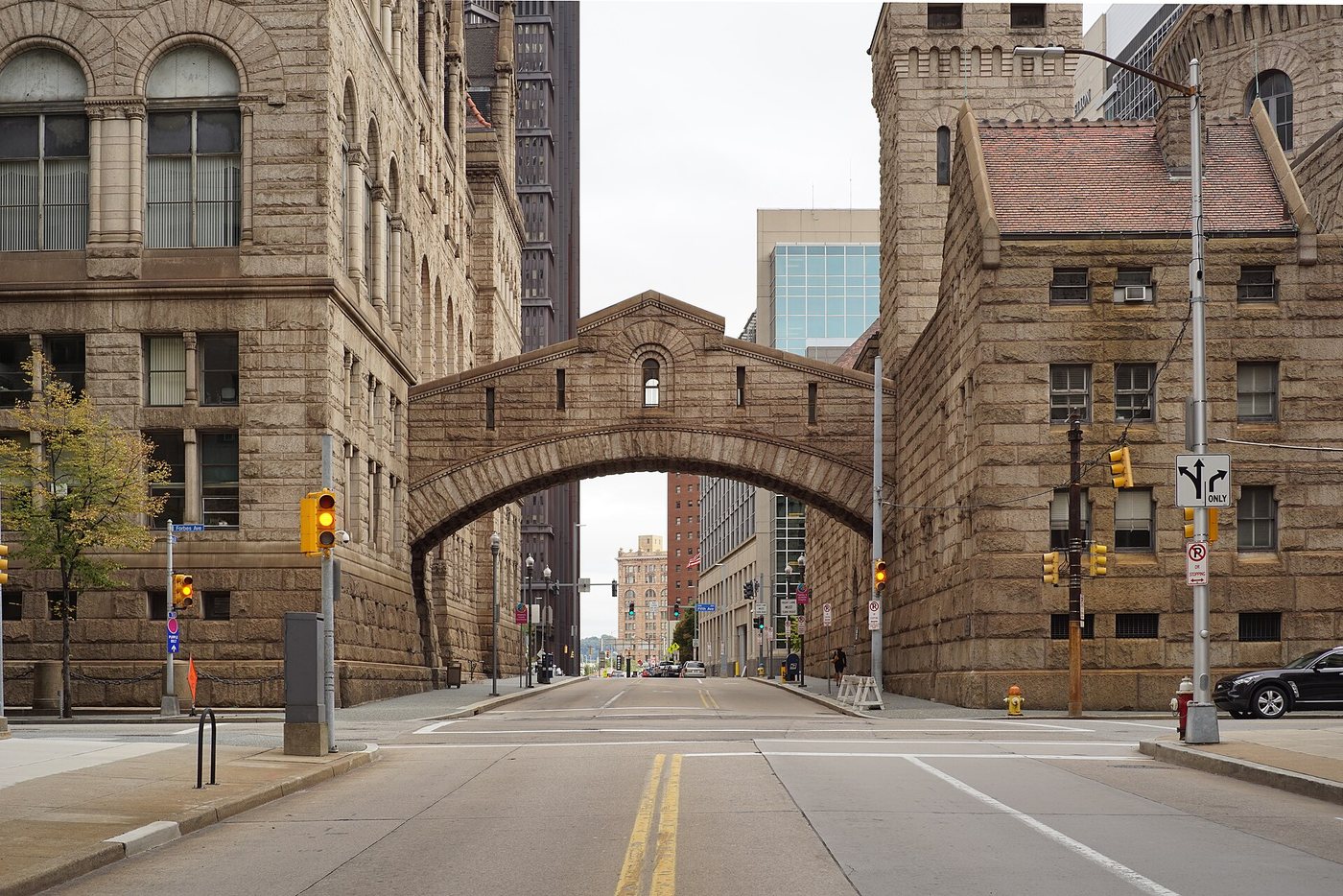
Pittsburgh’s Union Station rotunda was designed to make arrival feel consequential. The great covered entrance belongs to the former Pennsylvania Railroad station, while today’s Amtrak passenger facilities occupy a different part of the complex. Understanding that separation prevents the landmark’s most dramatic feature from being mistaken for the present-day boarding entrance.
A station organized vertically
Daniel Burnham’s firm designed the station built between 1898 and 1903. Its functions were separated by level: baggage handling below, passenger spaces above that, and railroad offices in the taller building. The rotunda provided a sheltered carriage drop-off, connecting city traffic with the main passenger interior.
This arrangement explains the scale of the entrance. It was not just a doorway for people on foot; it mediated between vehicles, passengers and a railway timetable. A covered turning and arrival space could make the journey into the station more orderly while announcing the railroad’s presence in the city.
The dome and its supports
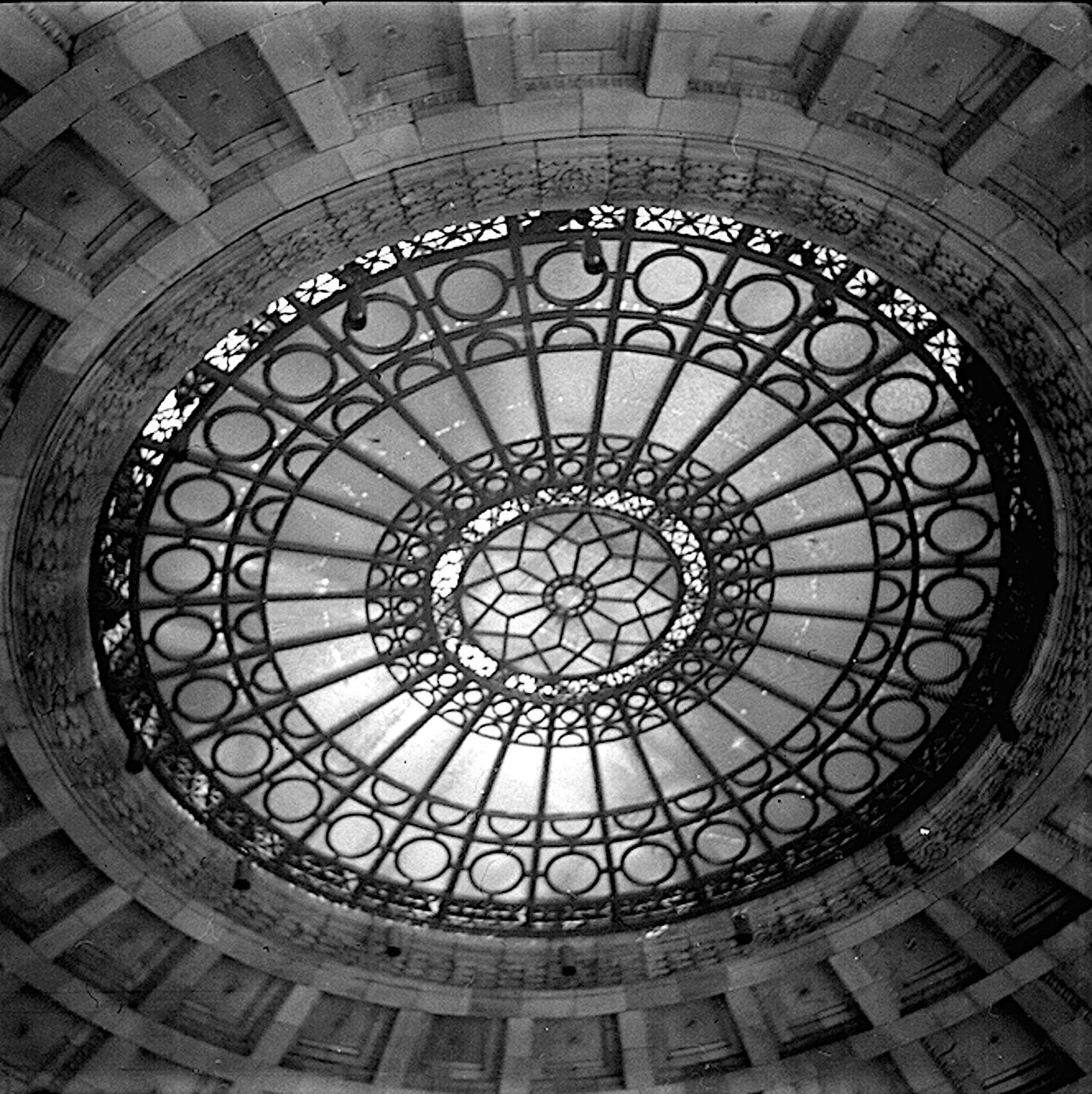
A coffered dome and central skylight cover the rotunda. Four large arches and corner pavilions give it a structure that can be understood from outside, while ornamental terra cotta adds detail around the openings. City-name panels refer to major points in the railroad’s network; the Pittsburgh panel uses the historical spelling without the final h.
The contrast between the open arches and the weight of the upper building makes this more than a decorative canopy. The rotunda creates a sheltered volume that still belongs visually to the street. From different approaches, its openings frame either the building behind or the city outside.
Historic entrance, contemporary station
Amtrak’s history records the move into new passenger facilities at the rear in 1989, following conversion of the older building. Its current station instructions should guide an actual rail journey. Architectural sightseeing and catching a train consequently involve different points of orientation within the same complex.
The rotunda can be appreciated without assuming access to private interiors. Its former purpose remains legible in the drive, shelter and relationship to the taller block. That survival is particularly revealing: even after the main rooms changed use, the exterior still describes the sequence by which passengers once moved from a city street toward a train.