
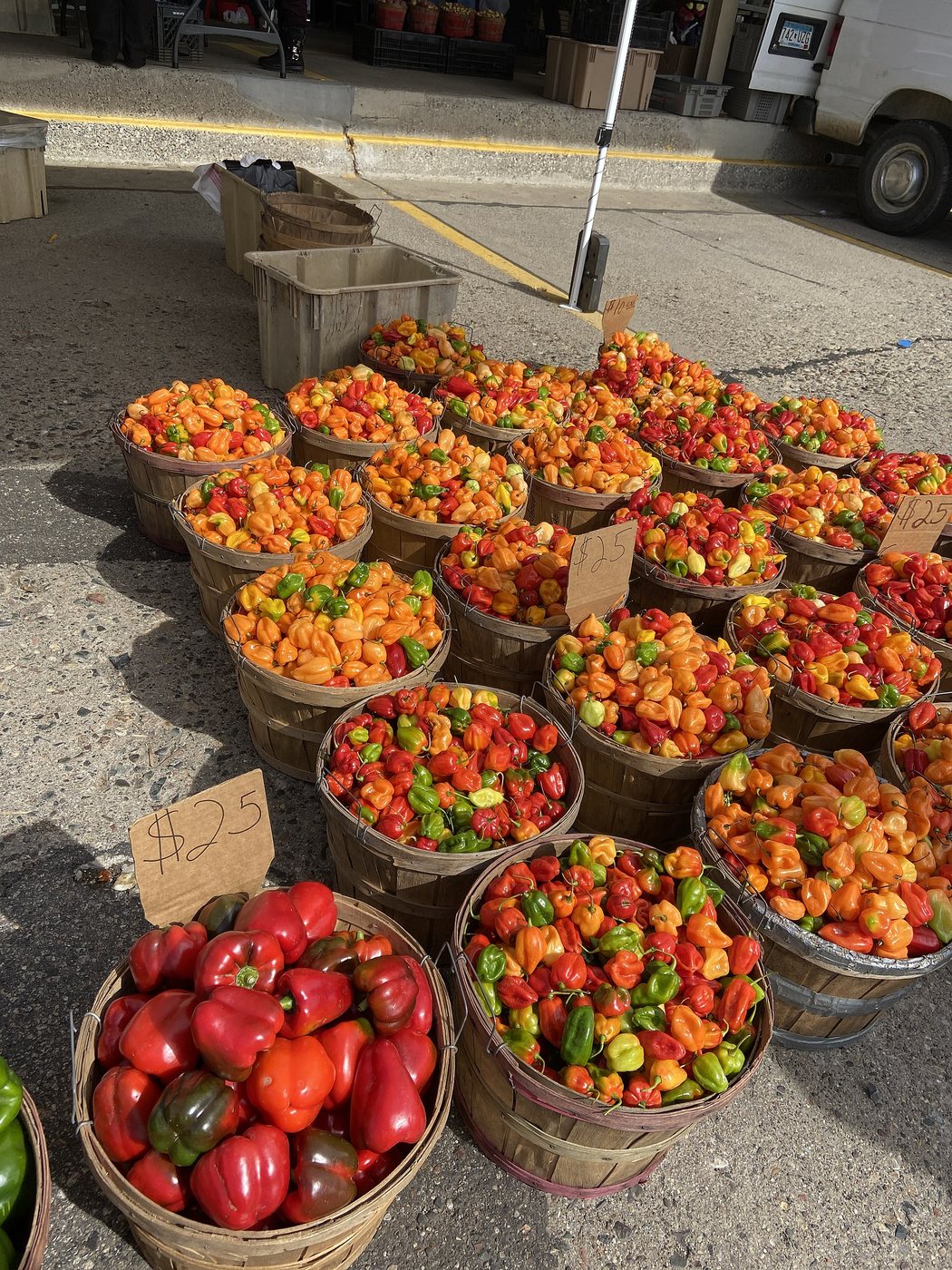
The Minneapolis Farmers Market’s red sheds are a recognizable part of its identity, but the stalls beneath them are not all interchangeable. Growers, food makers and certified resellers participate in the market. Understanding that mix makes a visit more informative than assuming that every item was grown by the person selling it.
A market with a changing address
The market traces its origins to 1876 at First Street and Hennepin Avenue. Its flagship location at Lyndale and Glenwood opened in 1937, with the three red sheds that remain identifying features. The move connects the market’s long history to a particular surviving physical arrangement.
Covered rows provide a framework rather than a fixed indoor shop for every seller. The market describes vendors alternating among its stalls. A familiar aisle can therefore present a different selection on another visit, depending on attendance and season. The building is the stable part of an operation whose inventory and participants change.
Ask what a vendor actually does
The official vendor directory identifies different kinds of businesses, including certified resellers. A useful question is therefore where a product came from, followed by whether the seller grew, made or sourced it. These questions describe the supply chain without treating one stall’s model as the model for the whole market.
For produce, variety, harvest timing and storage can matter as much as appearance. A conversation with a grower can explain why a crop is available now or how it differs from another variety. A food maker can explain ingredients and preparation. The information worth asking for depends on the business in front of you.
Shop with the season in mind
Begin with a quick pass through the available rows before making purchases that depend on a comparison. Then return to the stalls that fit your needs. This is especially useful for plants and produce, where quantities, maturity and intended use may differ even when the labels sound similar.
The market’s own calendar and vendor information are better guides to a particular day than an old event listing. Bring a way to carry fragile or perishable purchases, and make room for other shoppers while discussing a product. The sheds create a shared shopping space; the conversations beneath them provide the detail that a photograph of the market cannot.


.jpg)
.jpg)
.jpg)