
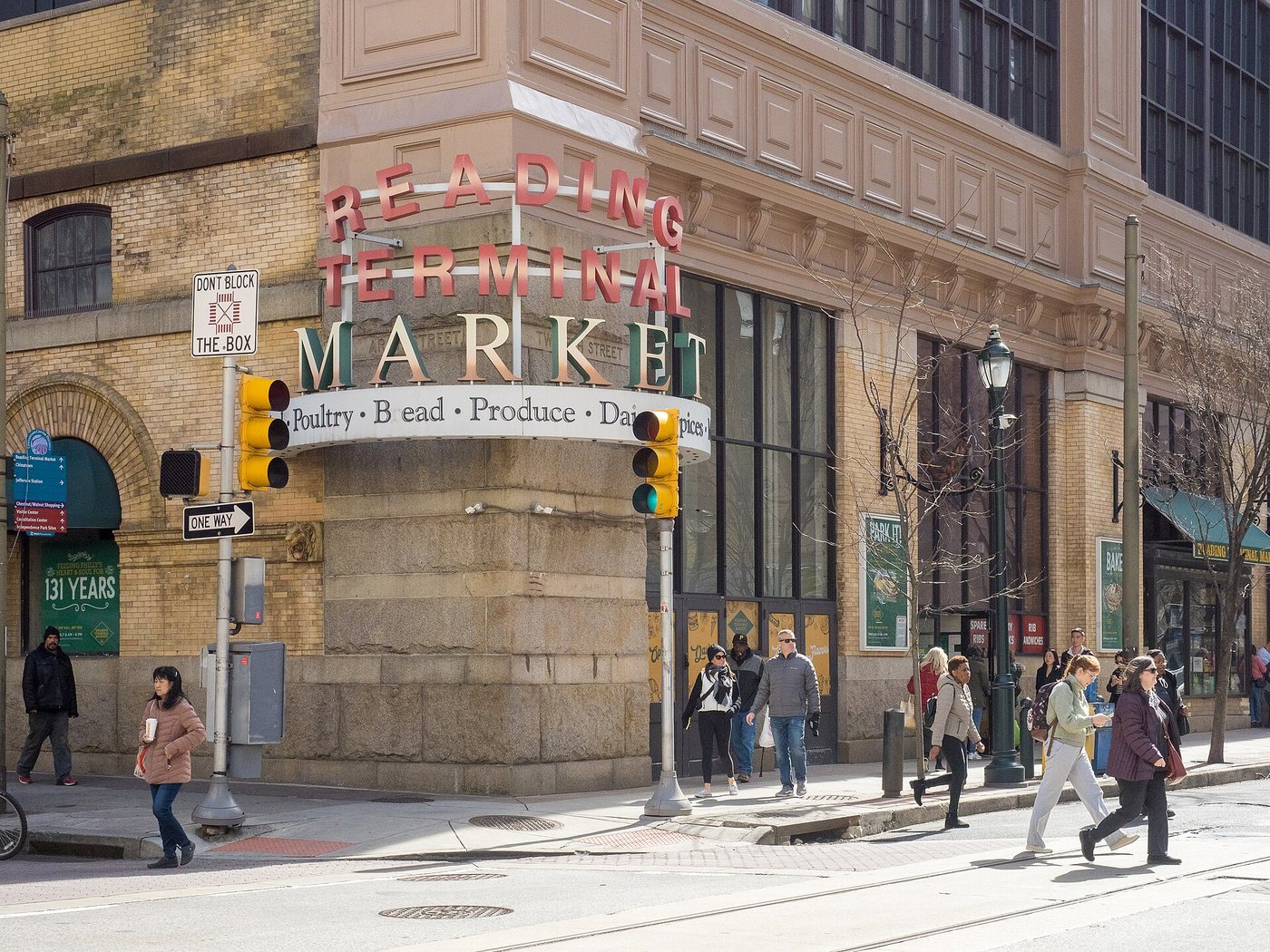
Reading Terminal Market occupies the lower part of a former railway complex in central Philadelphia. Its name can suggest a station restaurant, but the market’s origins are broader: existing food markets and a new rail terminal were brought together on the same urban site. The result is a place where the structure of transport infrastructure and the everyday business of selling food remain closely connected.
Markets beneath the tracks
In the early 1890s, the Reading Railroad developed a terminal at Twelfth and Market Streets. The project affected markets already operating in the area, including the Butchers’ and Farmers’ Market and the Franklin Market. Their relocation into the new complex made food retail part of the railway development rather than a later decorative addition.
The arrangement made sense in a city where transport, storage and selling were closely related. A railway terminal concentrated movement at one address, while the market provided a destination for people who needed produce, meat and other provisions. The two uses shared a building complex without being the same operation.
A market is a collection of businesses
Inside, aisles organize movement between individual vendors. The experience differs from a single restaurant because customers are making many kinds of purchases at once. Some buy ingredients to take home; others buy a prepared meal. Deliveries, storage and cleaning support activities that may appear informal from the customer side of a counter.
That distinction is useful when deciding how to use the market. A food stall’s queue, a produce display and a shared seating area have different purposes. Standing in an aisle to consider a meal can obstruct someone trying to reach a shop or move goods. The market’s liveliness depends partly on allowing these activities to coexist.
The railway role changed, the market continued
The terminal’s original rail function belongs to the history of the building, while the food market remains an active use. That separation is a form of urban adaptation: a large infrastructure complex can lose one function without every part becoming obsolete.
The surviving market also prevents the building from being read only as a railway monument. Its history includes the merchants who worked beneath the trains and the customers who sustained them. The architecture provides the frame, but ongoing trade gives that frame a daily purpose. For current vendor names and opening arrangements, the market’s own directory is more useful than assuming every business follows an identical schedule.
.jpg)


