
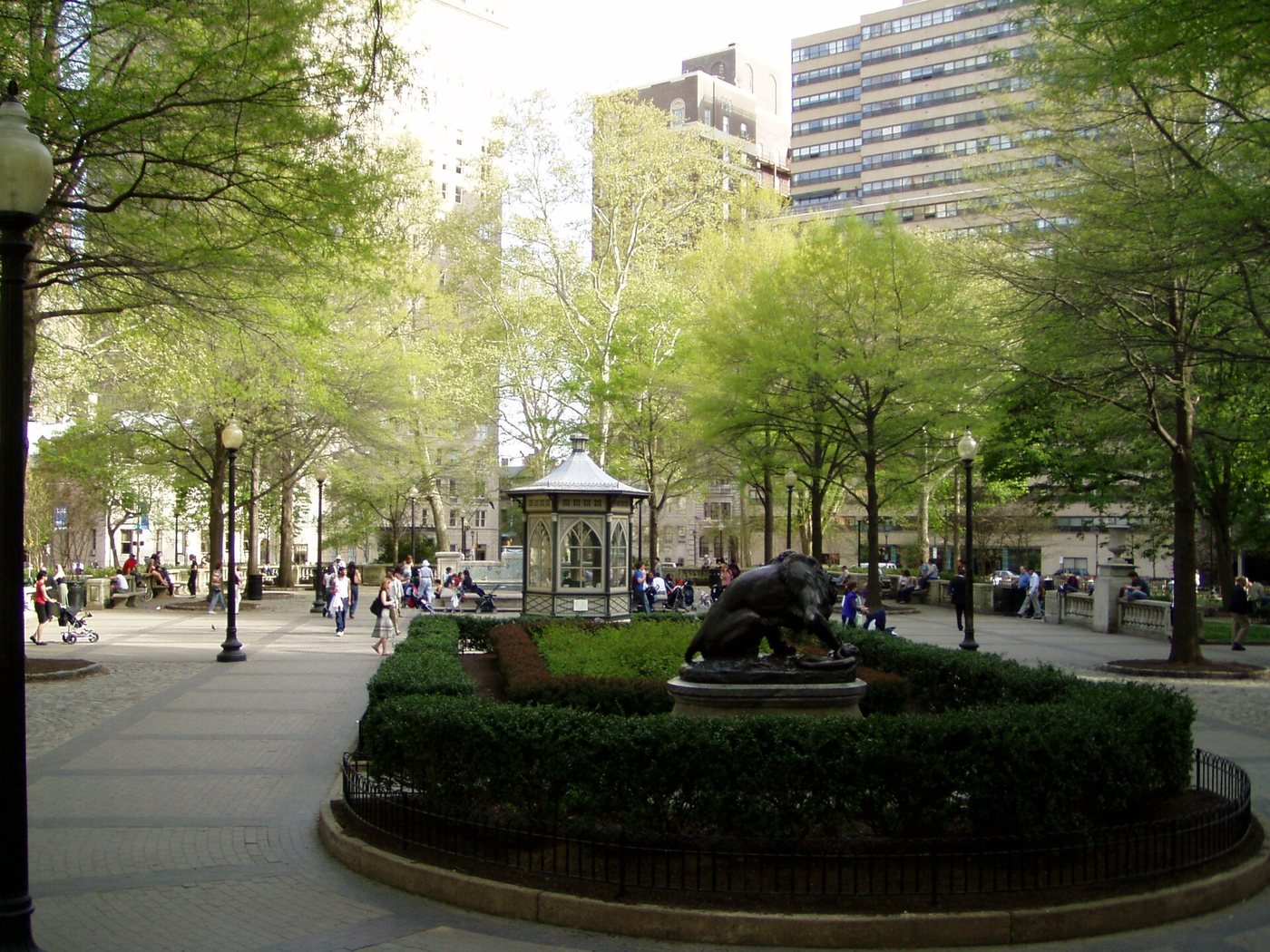
Rittenhouse Square is one of the public spaces inherited from Philadelphia’s early plan, but its present character was made over many generations. The square’s paths carry people across the neighborhood, while benches and planted areas invite them to remain. Its relationship with surrounding housing, shops and workplaces helps explain why the same ground can support short crossings, long conversations and quiet individual use.
A planned space that took time to become a park
The square appeared in William Penn’s 1682 plan, long before it acquired its present landscape. Neighbors improved the ground in the early nineteenth century, and it was renamed for astronomer and inventor David Rittenhouse in 1825. Those dates describe different events: reserving public ground, improving it and naming it were not a single act.
Architect Paul Philippe Cret was commissioned to redesign the square in 1913. His work helped establish the formal arrangement still associated with the park. The result combines defined entrances, paths and places to sit with planted ground. A person crossing the square and someone occupying a bench can use the same designed framework in different ways.
Benches create a second network
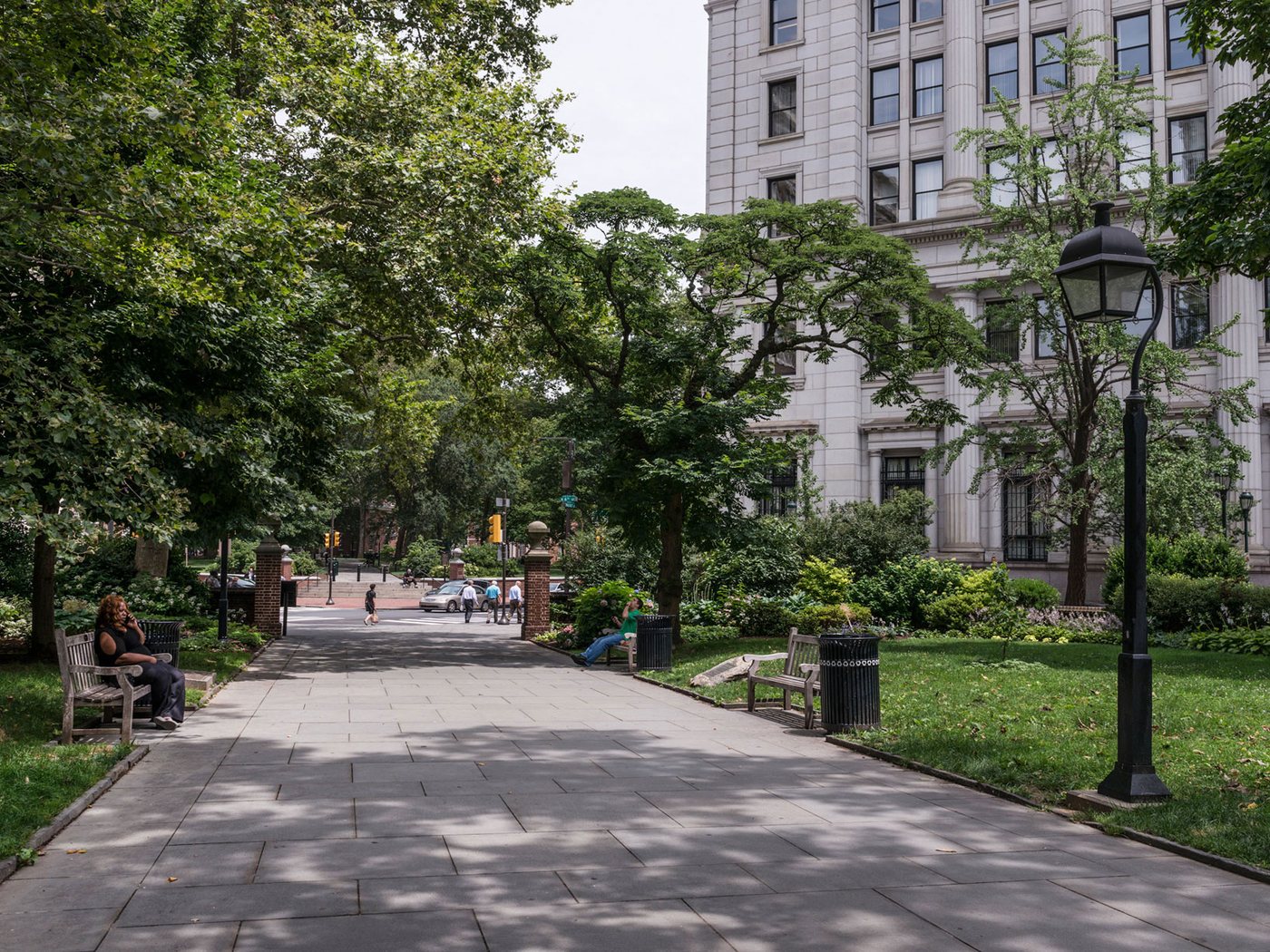
Paths explain movement, but seating explains duration. A bench beside a busy route offers a different experience from one facing planting or an open area. The position of a seat determines whether its occupant watches passing pedestrians, faces a companion or looks into the park.
The Friends of Rittenhouse Square’s work on benches illustrates how small objects contribute to long-term stewardship. Furniture wears out and is repaired or replaced; a historic park depends on those ordinary interventions as much as on major redesigns. The visible landscape is maintained through repeated decisions about materials, comfort and use.
The boundary is part of the square
The streets around Rittenhouse Square supply many of its users. Residents, workers and shoppers arrive for different reasons and at different times. That mixture matters because a park does not generate all its activity from within its own boundary.
The square also remains public ground within a neighborhood associated with expensive housing. Its social value cannot be inferred from surrounding property alone. The ability to enter, cross or sit without participating in nearby commerce is an important distinction between a public square and a landscaped private forecourt.

.jpg)
