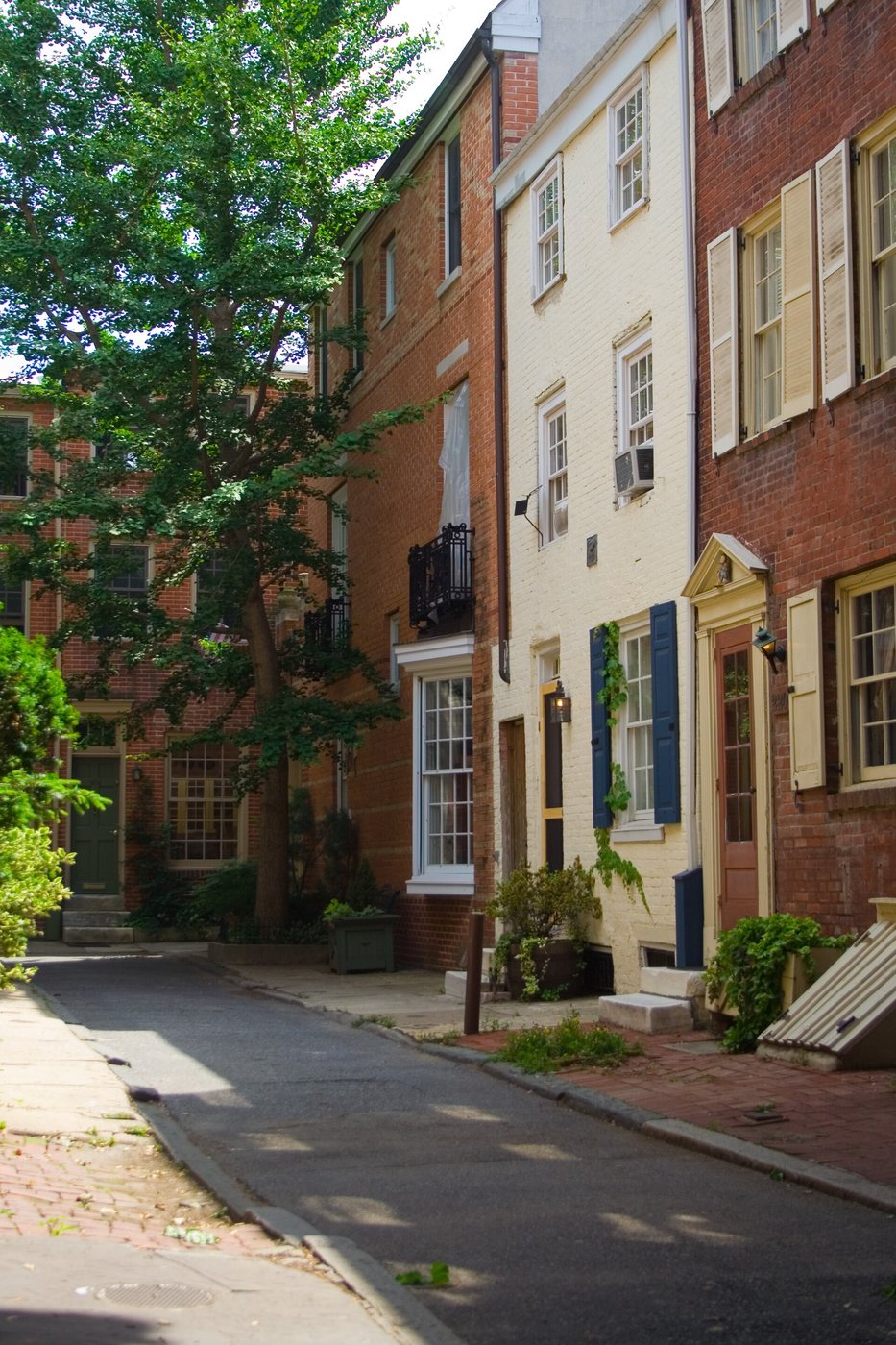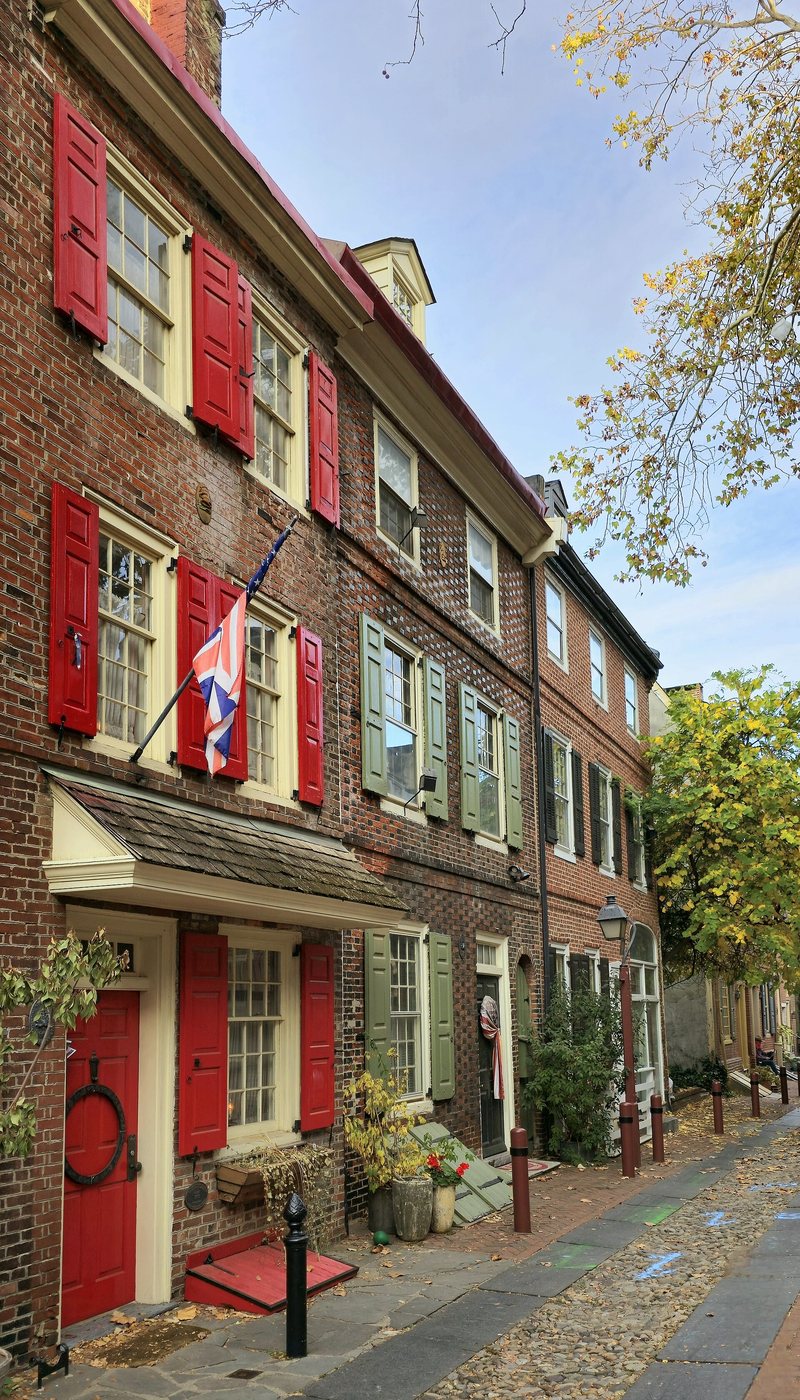
Elfreth’s Alley began as a useful route rather than a planned historic attraction. In 1703, landowners John Gilbert and Arthur Wells created a passage that improved access between properties and the developing waterfront economy. The lane’s later houses give it an unusually concentrated historic appearance, but its origins belong to work, movement and small urban plots.
A working street at a small scale
The surviving houses date from the eighteenth and early nineteenth centuries. Their narrow frontages reflect the subdivision of valuable urban land near the port. A small frontage did not necessarily mean a building had only one purpose: households, workshops and commercial activity could occupy closely connected spaces.
That relationship between home and work is central to the alley’s history. Artisans and other residents did not live in a district separated neatly from economic activity. The street formed part of a city in which making, selling, storing and living often occurred within short distances of one another.
Preservation required organization
The Elfreth’s Alley Association was established in 1934, when the street’s survival could not be taken for granted. Preservation turned a collection of old buildings into a recognized historical resource, but it did not freeze every house at an identical moment. Repairs, ownership changes and interpretation have continued to shape the place.
The museum occupies numbers 124 and 126. Those addresses provide a way to explore documented domestic and working histories in more detail. They should not be confused with the rest of the street, where buildings include private homes. A recognizable historic facade does not imply that its doorway, windows or interior are open to visitors.
What the lane can and cannot represent
The alley is valuable evidence of the scale of an early residential street, but it cannot stand in for every Philadelphian’s experience. Its surviving buildings represent particular property histories, while other streets and structures disappeared or changed more dramatically.
Walking the public lane with that limitation in mind makes the experience more informative. The close spacing of entrances, the narrow carriageway and the modest scale of the houses explain a form of urban living that differs from later large blocks and broad roads. The continued presence of residents adds another layer: preservation here includes an inhabited street, not only a set of museum rooms.