Society Hill is often approached as a surviving fragment of old Philadelphia. Its early houses are important, but the neighborhood’s appearance also reflects a major twentieth-century redevelopment program. Preservation, demolition, new construction and population change occurred together. The district is therefore a particularly useful place to examine how a city can preserve buildings while profoundly changing the community around them.
A historic neighborhood selected for renewal
The Washington Square East Urban Renewal Area was established in 1958. Unlike projects that cleared almost everything within their boundaries, redevelopment here made historic preservation a central strategy. Early buildings were identified for restoration, while other structures were removed and new construction was introduced.
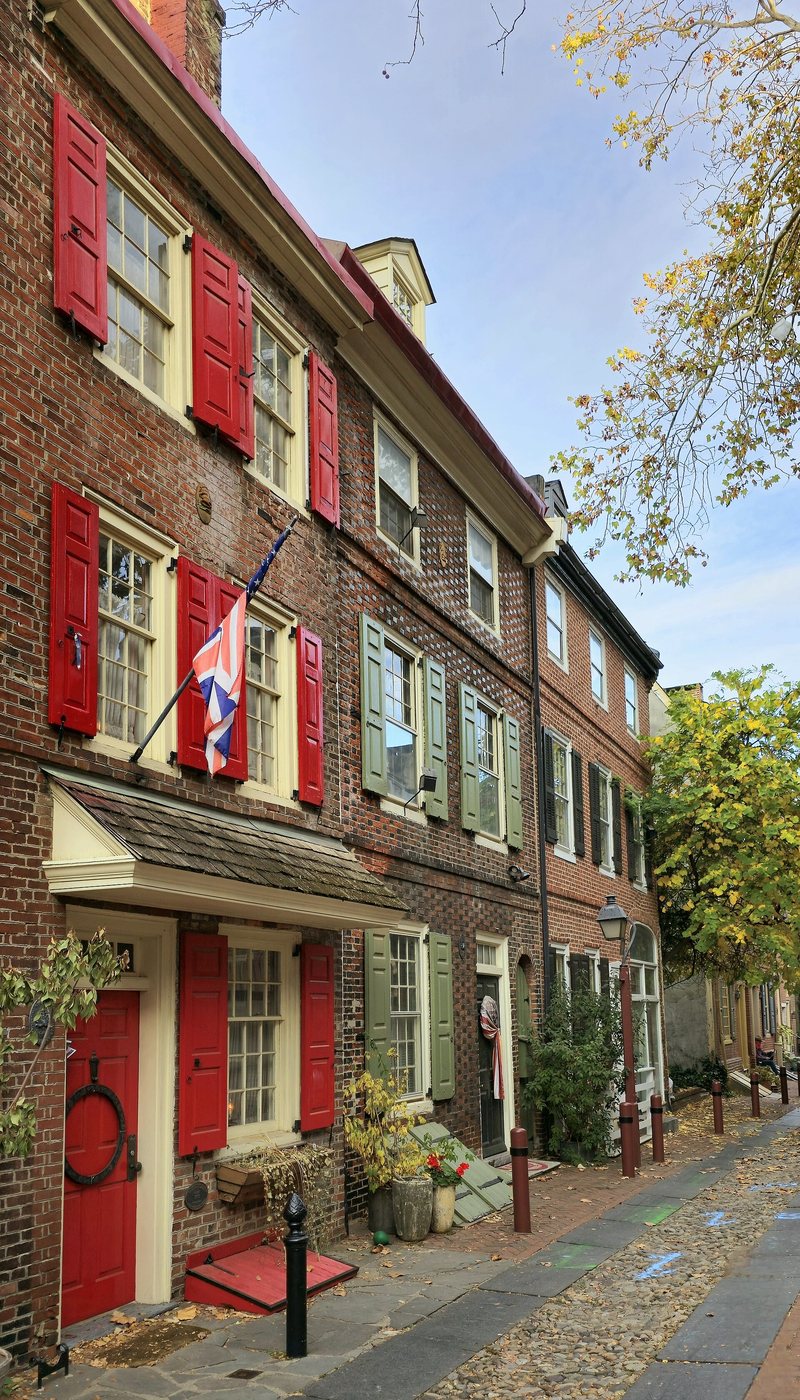
This approach helped retain a substantial concentration of eighteenth- and early nineteenth-century architecture. Yet retaining buildings did not mean leaving the district alone. Decisions about which structures deserved restoration, which features should be removed and what new uses should replace older ones all shaped the resulting neighborhood.
The official historic-district documentation makes clear that the restored environment should not be treated as untouched evidence. Some later architectural features were stripped away to emphasize an earlier period. In certain cases, reconstructed details did not accurately reproduce the original design. The visible “historic” appearance therefore includes both surviving fabric and twentieth-century interpretations of the past.
What selective restoration makes visible
A building can hold evidence of several generations: an early masonry shell, later windows, a nineteenth-century storefront and twentieth-century interior alterations. Choosing to present one period may make that phase easier to understand, but it can obscure the people who occupied the structure afterward.
In Society Hill, this issue is especially important because the neighborhood’s history did not stop after the early republic. Later residents and businesses used older buildings in ways that redevelopment sometimes classified as deterioration rather than as another stage of urban life. Physical repair was necessary in many places, but the language of improvement did not capture every social consequence.
Historic designation and restoration are thus different kinds of work. Designation identifies significance and establishes a framework for reviewing change. Restoration makes material choices about a particular building. Neither automatically guarantees that all periods or all residents receive equal attention.
Modern buildings inside the historic district
Society Hill Towers, designed by I. M. Pei and completed in the 1960s, make the redevelopment period impossible to miss. The three high-rise buildings introduce a scale that differs sharply from the surrounding houses. Their grouping and open ground also interrupt the older pattern of small lots and continuous street edges.
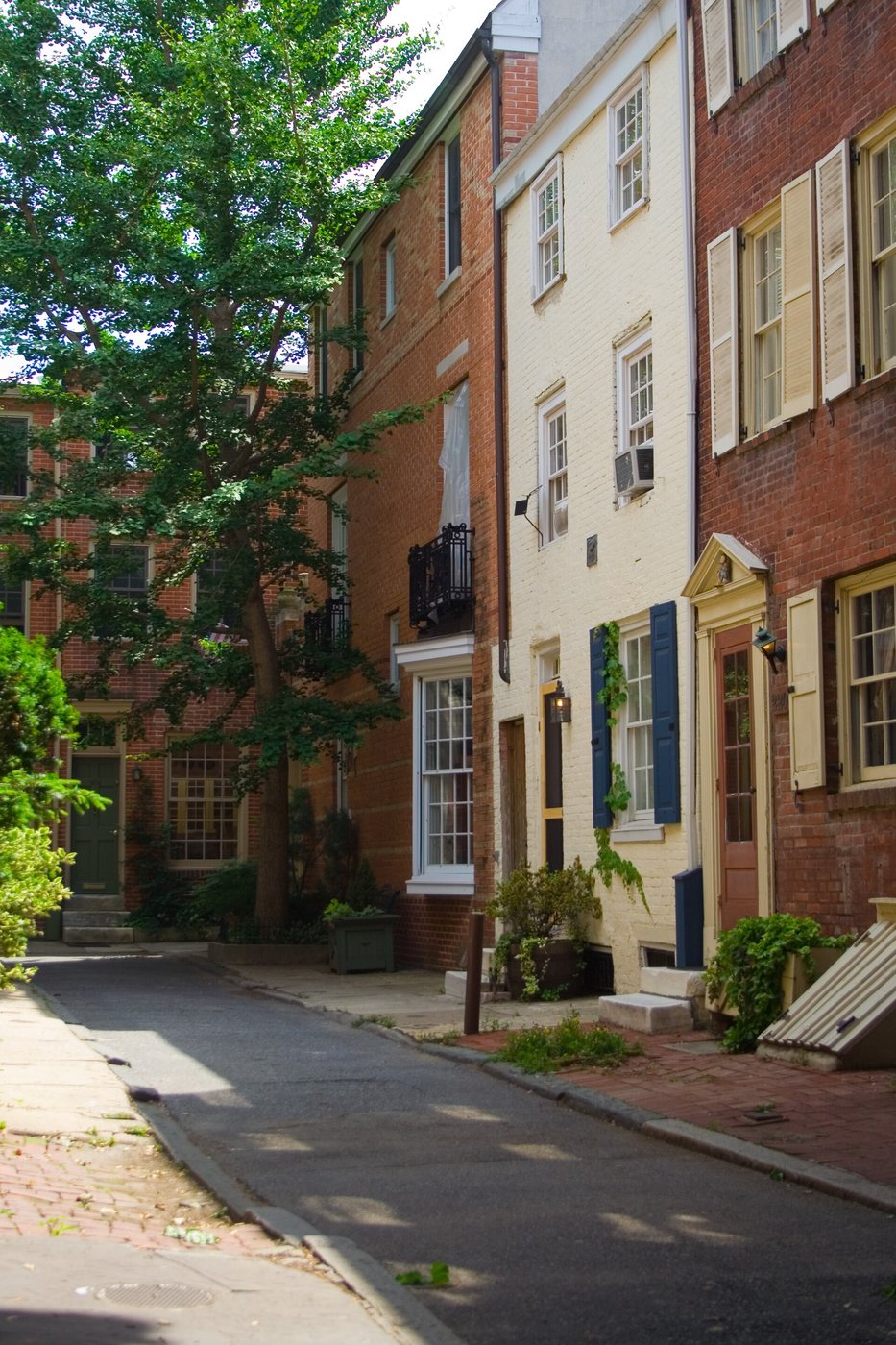
Other new buildings were more modest. Low-rise infill used scale, materials and placement to relate to the older fabric without necessarily copying every historical detail. This creates a district in which modern architecture is not confined to a separate zone; it is embedded among restored houses.
Pedestrian greenways add another layer. They establish routes and planted spaces within the neighborhood, connecting places in ways that differ from the original street-and-lot arrangement. The public realm itself was part of the renewal project, not simply a backdrop left unchanged while houses were repaired.
Preservation and displacement belong in the same account
Redevelopment altered the neighborhood’s population as well as its buildings. Black and Jewish residents were among those affected by displacement and changing housing conditions. A narrative focused entirely on rescued architecture can overlook these costs and imply that the district’s transformation benefited everyone equally.
This does not make the surviving buildings unimportant. It means their preservation should be understood together with the decisions that changed who could live nearby. The question is not only whether a facade was saved, but also what happened to the households, businesses and social networks associated with it.
Society Hill’s streets offer evidence of several kinds of continuity and rupture at once. An early doorway may stand beside modern infill, while a restored row faces towers from the urban-renewal era. Reading those elements together produces a more accurate account than imagining a complete colonial neighborhood carried intact into the present.