
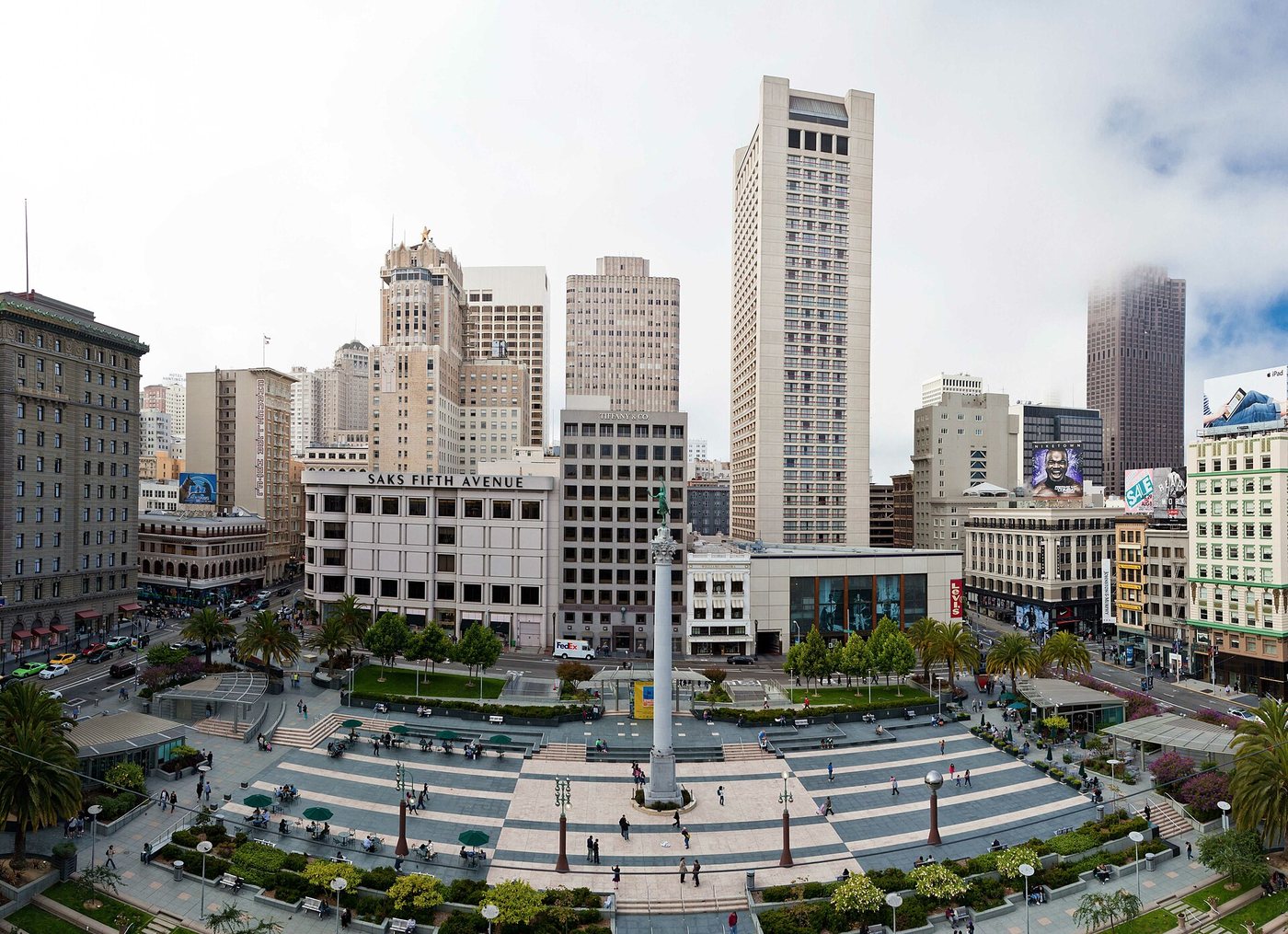
Union Square is both the name of a public plaza and a broader shorthand for nearby shopping, hotels and theaters. The distinction matters. The plaza is a specific piece of public ground, while the commercial district extends beyond its edges. Its history also reaches well below the paving, because an underground garage changed the square’s physical structure in the twentieth century.
Public ground before the present plaza
The site was reserved as a public park in 1850 under San Francisco’s first mayor, John Geary. It did not initially have the finished appearance associated with an established downtown square. The surrounding city and the public space developed together as transport and commercial activity expanded.
The name is often connected with support for the Union during the Civil War. The city’s own historical account treats the precise origin cautiously, while documenting major public gatherings, including mourning for Abraham Lincoln in 1865. Assembly has therefore been part of the square’s history alongside recreation and commerce.
A monument with a specific subject
The column at the center was dedicated in 1903 to commemorate Admiral George Dewey’s victory at Manila Bay during the Spanish-American War. A bronze figure of Victory crowns the monument. Its prominent position gives the square a vertical reference point, but the subject is a particular military commemoration rather than a general symbol of the city.
The monument has remained through later redesigns, so its age differs from much of the surrounding surface. A plaza can preserve a central object while changing paths, planting, seating and access around it.
A public space over another use
Construction of an underground garage began in 1941. Placing parking below the square responded to automobile demand around the commercial district while retaining public ground above. It also turned the plaza into a roof as well as an outdoor space.
That layered condition helps explain why urban squares are sometimes more engineered than they appear. Drainage, loading and structural requirements become part of landscape design when occupied space lies beneath it. Union Square’s role as a gathering place depends on infrastructure that most people passing through never see.
The surrounding buildings supply activity and enclosure, but entering the square does not require entering a shop. That independent public role is worth distinguishing from the district’s commercial identity.
.jpg)

