
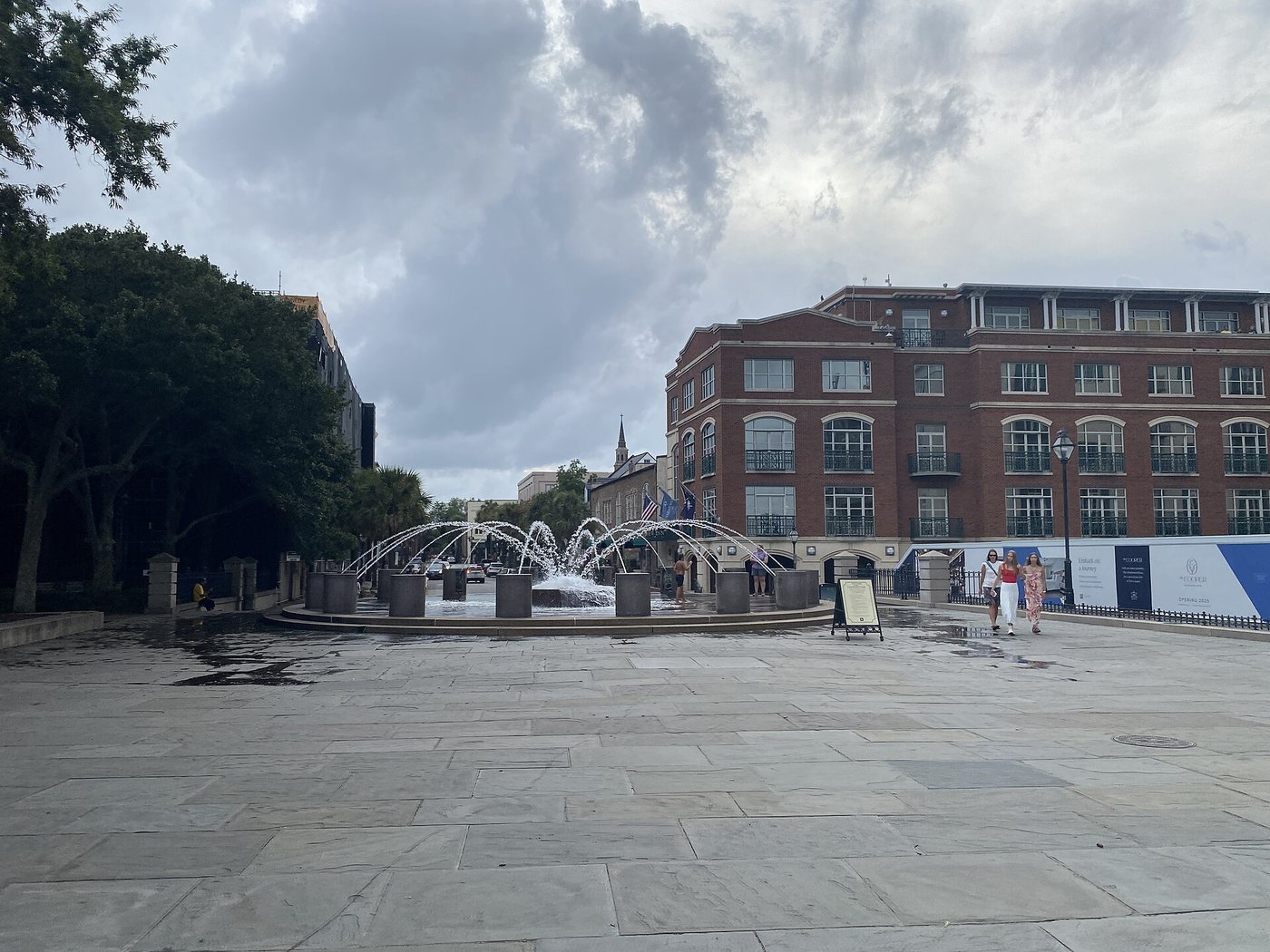
Joe Riley Waterfront Park is a relatively recent landscape within a city better known for much older buildings. Completed in 1990, it provides a public place to sit beside the harbor and move between the waterfront and nearby streets. Its success depends on a sequence of different spaces, not only the recognizable Pineapple Fountain.
A modern civic landscape
The Charleston Parks Conservancy identifies the park’s completion in 1990 and its later naming for former mayor Joe Riley. The park transformed the experience of this portion of the waterfront by making access and lingering central purposes of the site.
That modern date matters in a historic city. A public park can contribute strongly to the identity of Charleston without imitating an eighteenth-century garden. Its role is to connect the contemporary city with the water while providing places suited to everyday use.
The pier and the lawn offer different views
The park includes a pier with swings, planted and shaded areas, open lawn and fountains. These elements allow different degrees of contact with the harbor. A pier projects the visitor toward the water, while a lawn offers a broader space in which people can spread out. Shade creates another type of refuge along the route.
The two fountains give the landscape recognizable points, but they do not perform the same job as the pier or seating. A visit becomes richer when those features are understood as a sequence: arrival from the street, a place to pause, a view along the water and a route back into the city.
A short waterfront visit can be complete
There is no need to combine the park with every other Charleston waterfront destination. A brief circuit can include the pier and a section of the planted promenade, with time to sit and observe harbor activity. The city and conservancy’s current information should guide any expectations about water features or programmed events.
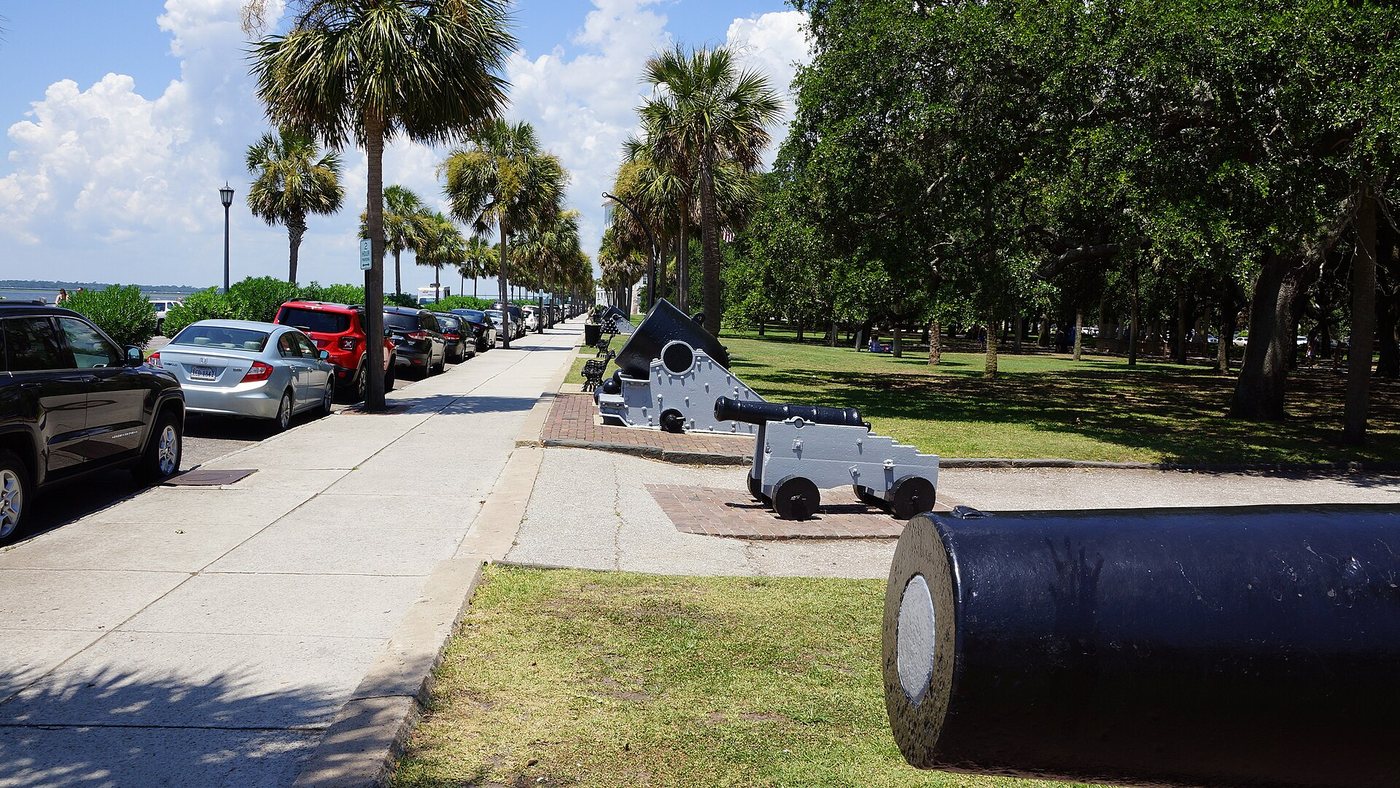
The park also makes a useful comparison with the Battery. Both offer public contact with the harbor, but their histories and spatial forms differ. Here the landscape was designed as a late-twentieth-century public amenity; at the Battery, a promenade developed along an engineered historic edge. Keeping those differences visible helps avoid treating all waterfront scenery as one interchangeable experience.
.jpg)
