
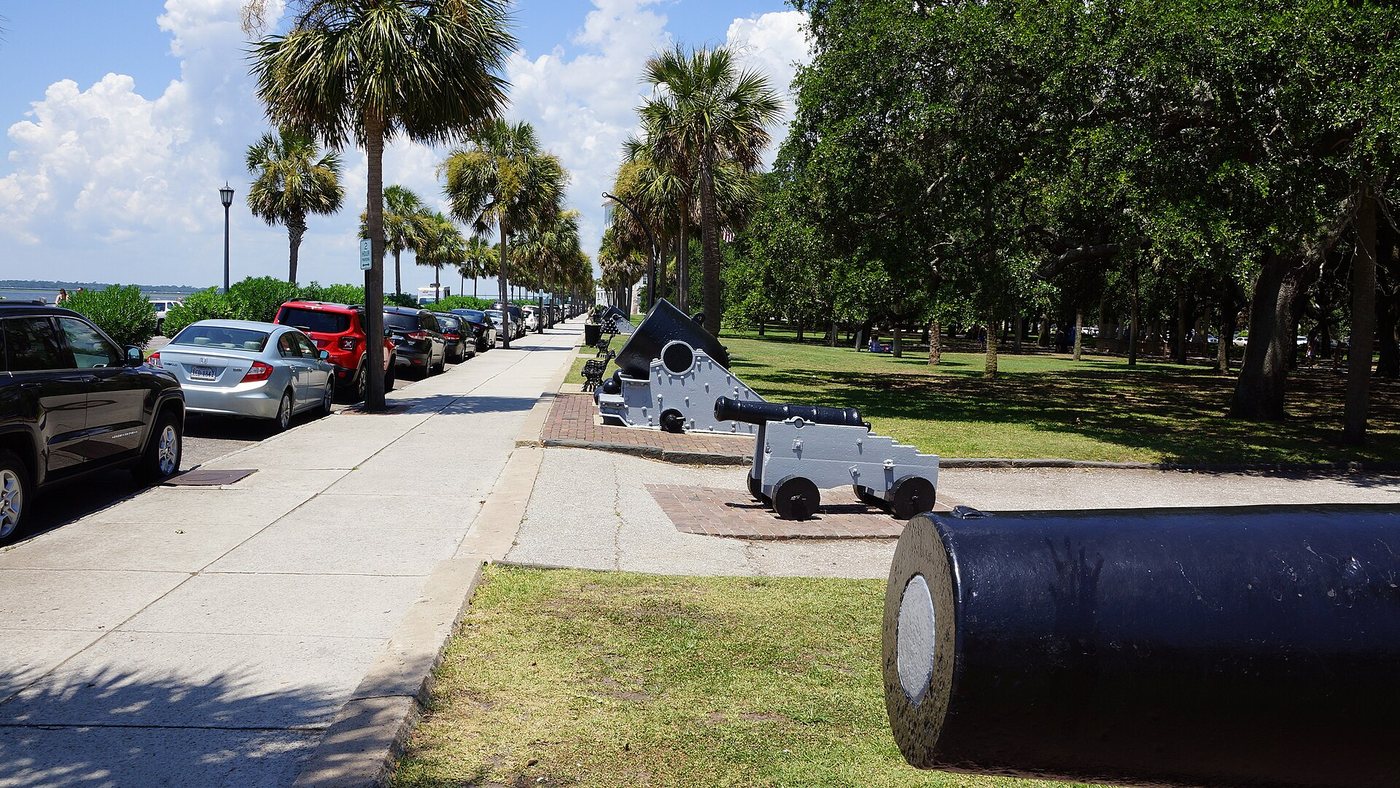
Charleston’s Battery combines a harbor outlook, seawalls and the adjoining landscape of White Point Garden. The view can appear natural and settled, but the edge was engineered and repeatedly altered. Its history is inseparable from the need to hold land against water while making the waterfront usable as public space.
High and Low Battery are stages in a longer project
The Charleston County Public Library’s historical research describes major seawall work in the early nineteenth century, including the High Battery in 1818. Later extension and rebuilding created a more continuous waterfront edge. Storms exposed weaknesses and prompted further changes in height and construction.
The terms High and Low Battery describe different portions of this built edge, not two unrelated parks. Walking the waterfront makes the changes in level and relationship to the street easier to grasp. A seawall is a section through land and water before it is a promenade surface.
White Point became a public landscape
The same library history places the creation of White Point Garden in the 1830s and connects its development with filling and reorganizing the waterfront. The park’s trees, paths and commemorative objects occupy ground shaped for civic use.
Historic American Buildings Survey documentation records the landscape as a historical ensemble. Its military associations and later monuments are different layers: a memorial placed in a park can refer to an earlier event without being a surviving object from that event. Dates on individual markers help separate commemoration from the history being commemorated.
A picturesque edge still performs work
The seawall’s public face can obscure its infrastructure role. It establishes the boundary between street, promenade and harbor, and its condition affects more than sightseeing. Repairs and flood-related projects are part of the continuing life of the place.
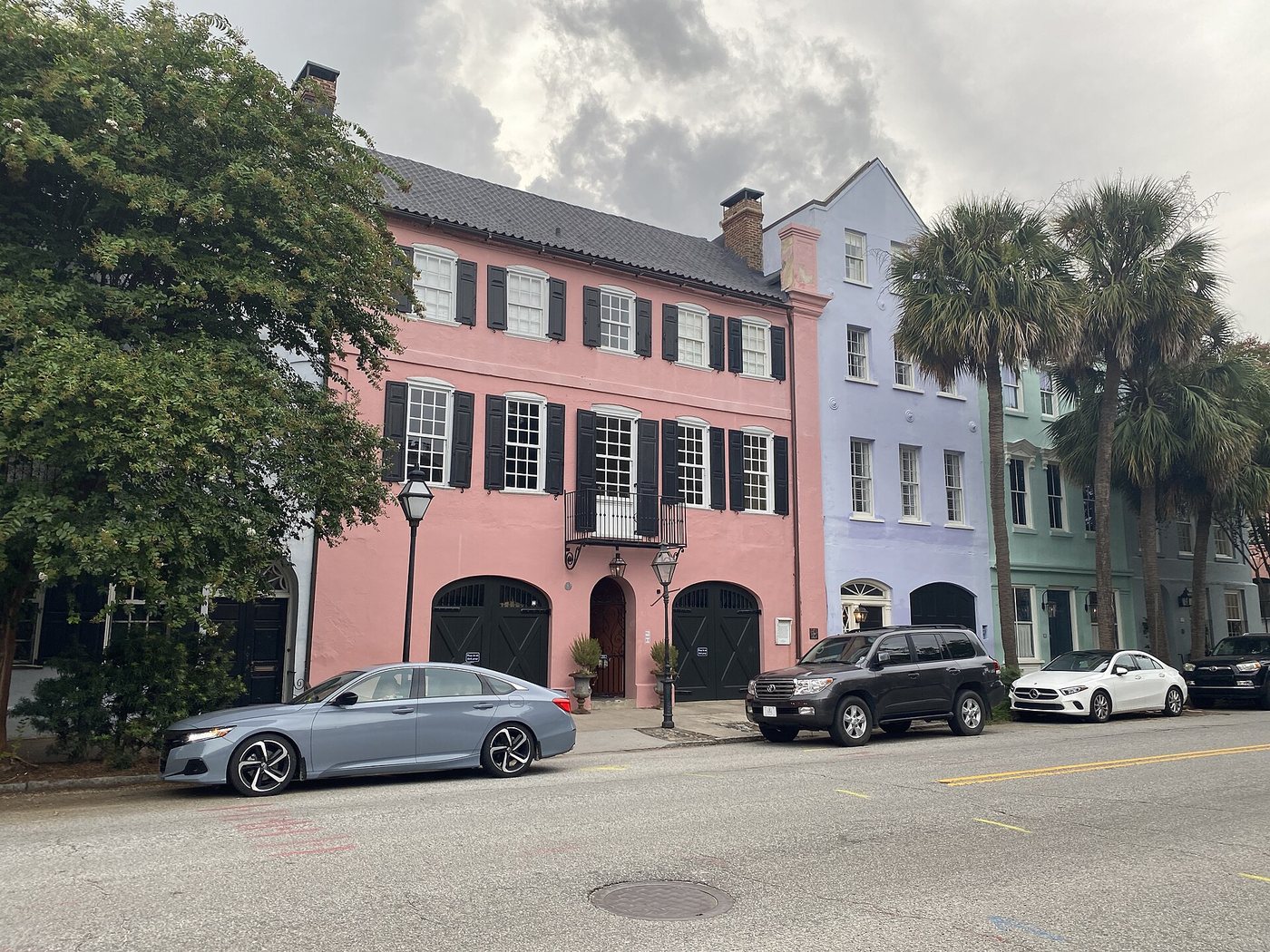
For an architectural visit, compare the wall’s relation to the road and adjacent buildings with the more open setting around the garden. The distance between a house and the water, the elevation of the walking surface and the width of the public edge all influence the experience. The grand waterfront houses are only one component of that arrangement.
Choose a route around the available public edge
A compact walk can combine part of the seawall with the garden, allowing both a long harbor view and a shaded interior route. Use current city information for any construction or access changes rather than assuming the entire historic alignment is open at all times.
The most revealing question is how the waterfront has been made stable enough for ordinary public use. The Battery’s appeal rests on that work even when the engineering disappears into the background of a photograph.

.jpg)
