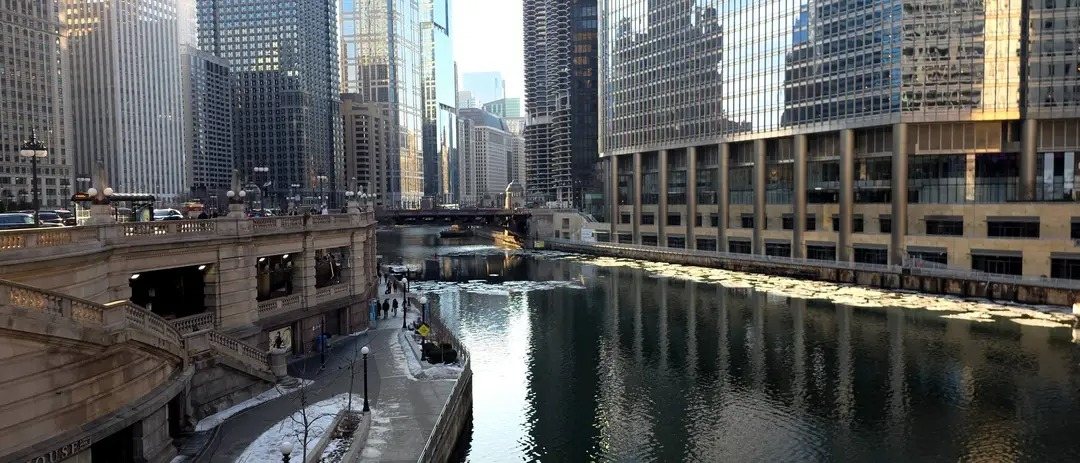
The Chicago Riverwalk changes the height at which the city is experienced. Streets cross above, buildings rise from the river’s edge and boats pass at close range. Walking along the south bank is therefore more than following a scenic path: it is a way to see the connections between water, bridges and the layered street system.
A sequence of outdoor rooms
The Chicago Architecture Center describes the newer western stretch as a series of civic rooms. The Marina, Cove, River Theater, Water Plaza, Jetty and Confluence each use the space between bridges differently. The names are useful because they express changes in purpose, but the actual design is more informative than the labels alone.
At the River Theater, broad steps connect street level with the river and create places to sit. Elsewhere, paths and seating bring people closer to the edge or make room for different activities. The bridges divide the experience into episodes, while passages beneath them preserve continuity along the water.
Sasaki, part of the design team, explains that the spaces were developed with different activities and landscape qualities in mind. This variety prevents the riverfront from becoming a single repetitive corridor. A narrow connection can lead to a wider place to pause, then return to a route under the next bridge.
Look at the city from two heights
Begin by identifying a street-level view, then compare it with the same part of the river from below. The proportions of buildings change, and the underside of a bridge becomes a visible part of the city. River traffic is no longer a distant detail at the bottom of a street vista.
The difference in level also affects route planning. Not every connection that appears close on a map is a step-free entrance. Choose a suitable access point using current official information, particularly if stairs are difficult. The broadest stair can be an architectural highlight without being the appropriate route for every visitor.
Boat services, seasonal concessions and programmed activities vary. The river itself remains a working transport environment, so a landing or operating area should not be treated as unrestricted seating. A short out-and-back between two known access points is often easier to understand than trying to combine every riverfront attraction in one walk.