
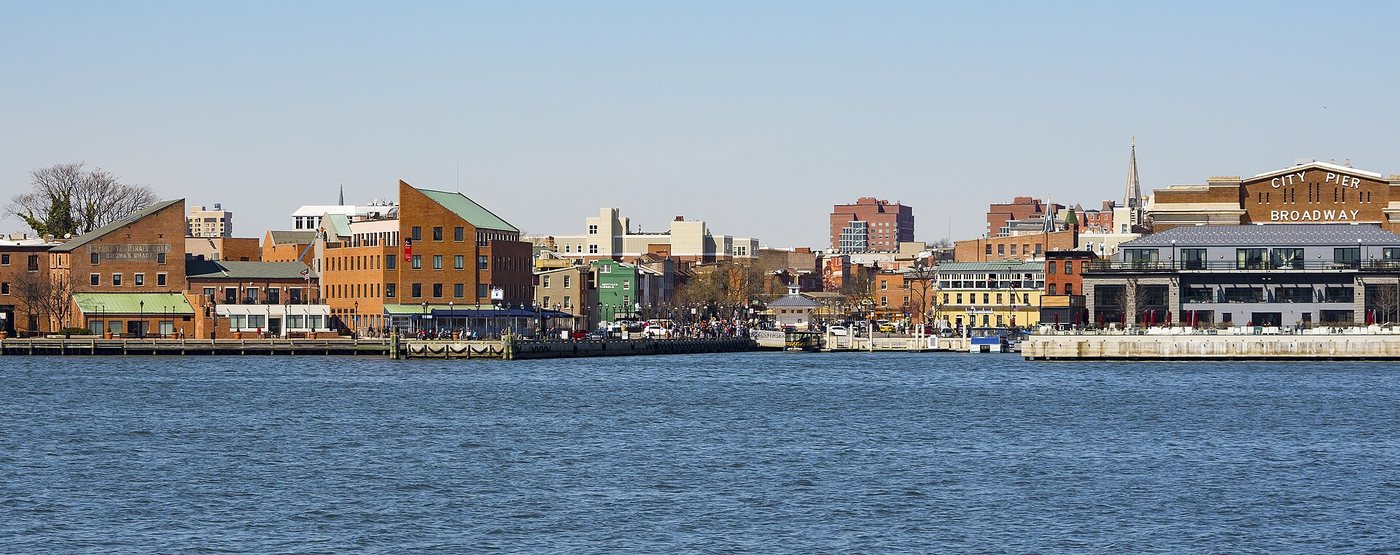
A port requires more than a quay. Shipbuilders need materials and workshops; crews need lodging and provisions; merchants need storage and connections inland. Fells Point can be read through that larger network of work, which helps explain why its residential streets belong to the maritime story as much as the waterfront does.
A deep-water district with many kinds of residents
The National Park Service identifies Fells Point as an early deep-water port and shipbuilding center. Its surviving buildings once accommodated merchants, seamen, shipbuilders, immigrants, and both free and enslaved African Americans. These groups occupied the same district under very different circumstances, and the neighborhood’s history cannot be reduced to an undifferentiated community of sailors.
During the War of 1812, Baltimore’s privateers used the port. These were privately owned vessels authorized to attack enemy shipping. That activity helps explain the district’s importance to the city’s wartime economy and the British interest in suppressing it.
The National Register documentation recognizes a district, not only a collection of exceptional individual buildings. Street patterns and the proximity of homes, businesses and waterfront work are part of what gives the area historical meaning.
Follow the relationship between street and water
Begin at the waterfront and turn into a nearby public street. The change in scale is revealing: the open harbor gives way to narrower spaces, individual doorways and commercial fronts. Short distances connected different kinds of work and domestic life.
Baltimore Heritage’s account of Fell Street uses named residents and occupations to explain particular houses. Such records complicate a purely architectural reading. A handsome row may have housed people whose work related to measuring timber, supplying ships or other ordinary maritime tasks, rather than only wealthy captains.
Look at the width of a building, its side access and the relationship between upper floors and ground-floor openings. These features can suggest how commerce and residence fitted together. They are clues for further research, not sufficient evidence to assign an exact occupation to every unlabelled house.
A living district with a changing waterfront
Restaurants and shops now attract many visitors, but their presence should not erase the older working geography. Nor should an old photograph be assumed to describe the present use of a pier or building. Waterfront access, private premises and service areas need to be read from current signs.
A compact walk can connect a harbor view, one residential block and a documented historic building. That combination shows how the neighborhood operated at several scales. It also leaves room to notice ordinary life rather than approaching the whole district as a stage set for maritime nostalgia.

.jpg)
