
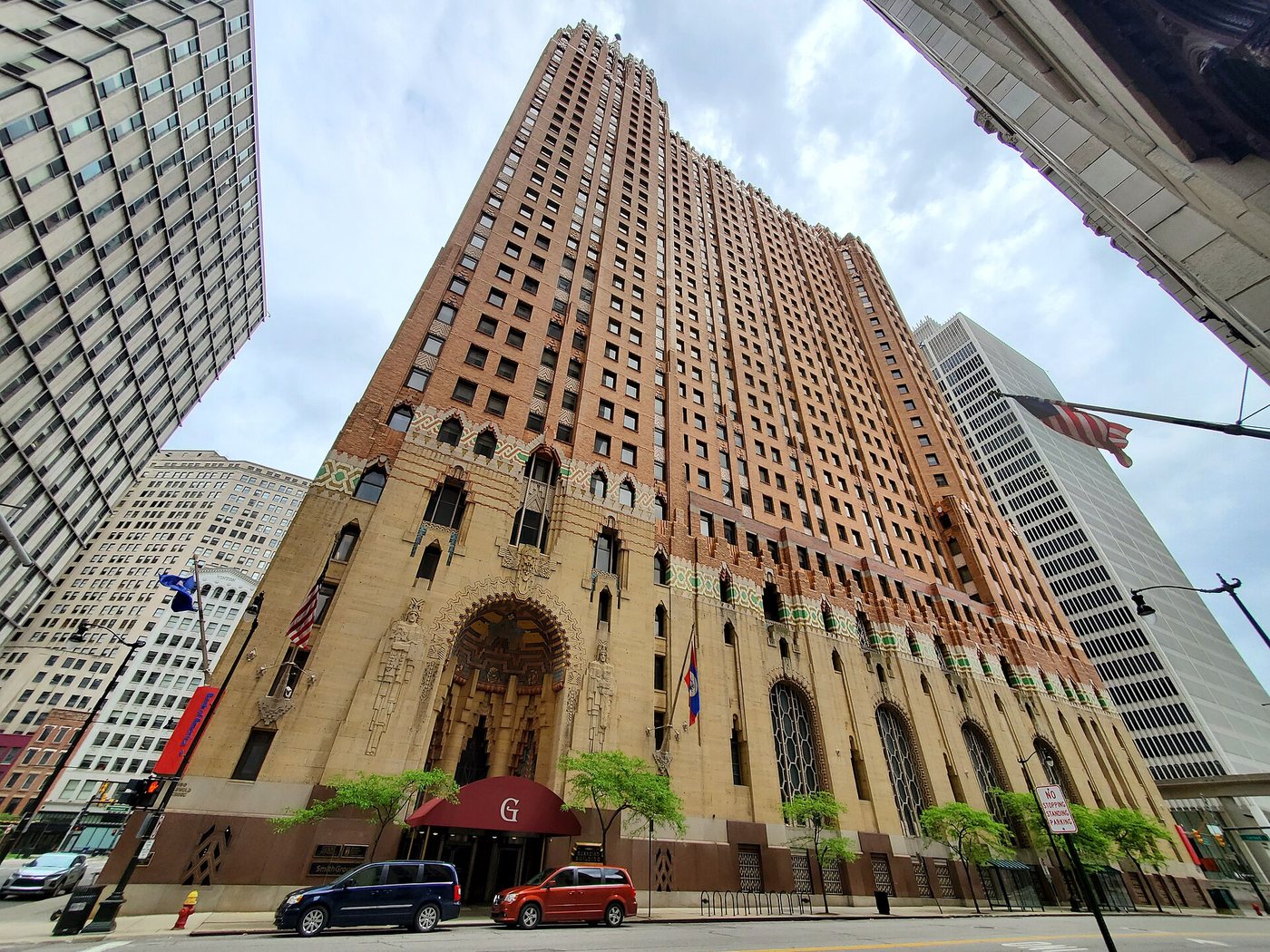
The Guardian Building’s orange-toned brick distinguishes it within downtown Detroit before any interior detail comes into view. Completed in 1929 for the Union Trust Company, it was designed by Wirt C. Rowland of Smith, Hinchman & Grylls. The building made financial ambition visible through color and craftsmanship rather than relying on height alone.
A tower designed to communicate confidence
The Detroit Historical Society places the commission within the prosperity of the 1920s. The banking institution wanted a headquarters that projected success. The market crash and subsequent banking difficulties quickly complicated that message, and the building passed through different names and occupants.
This contrast is part of its history. Monumental architecture can express an institution’s confidence at a particular moment without guaranteeing its future. The Guardian’s durability as a building exceeded the stability of the original business arrangement that commissioned it.
Material carries the ornament
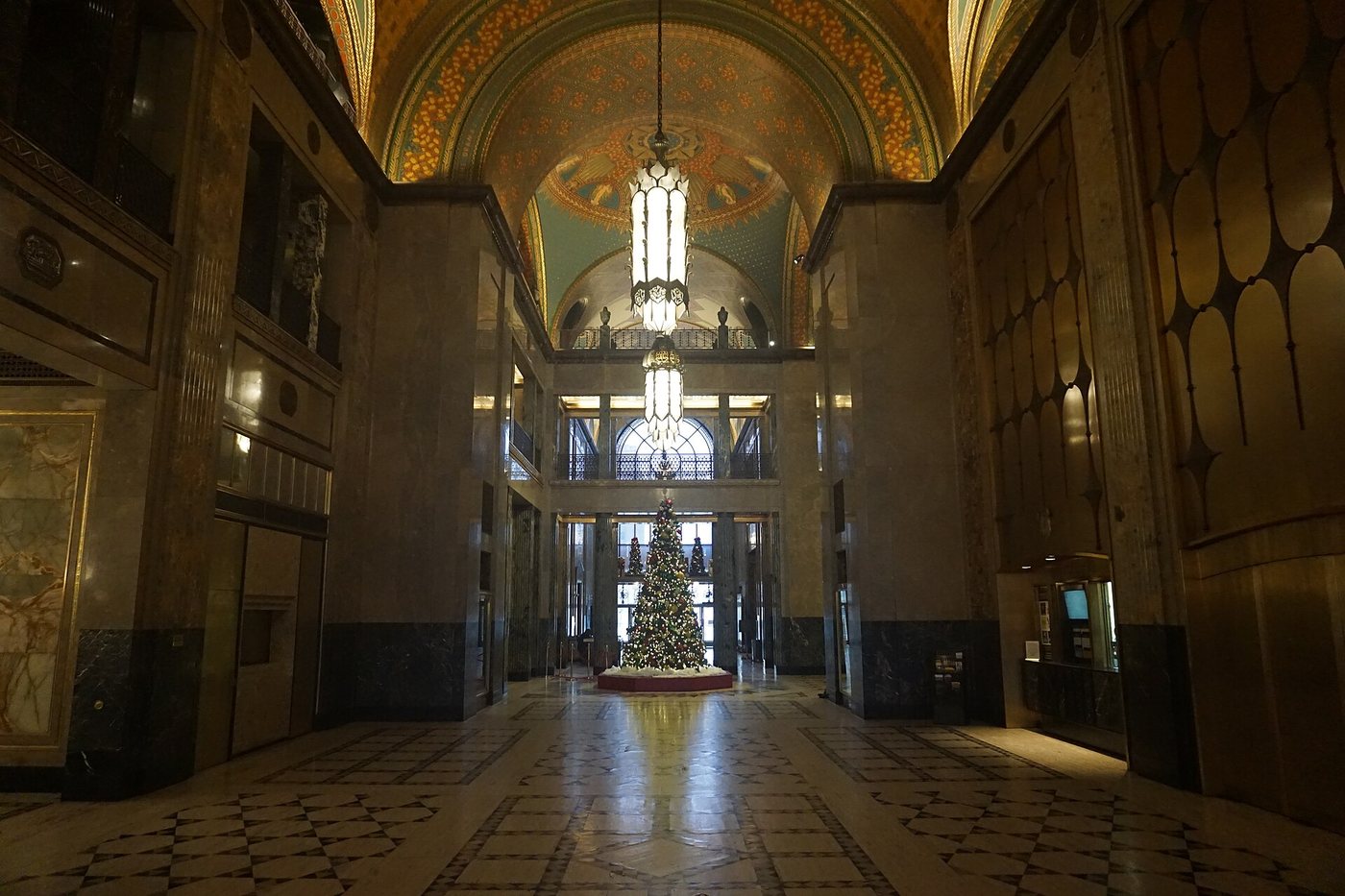
The entrance and lobby use a rich combination of tile, marble and metalwork. Pewabic, the Detroit ceramic studio, identifies its work at the building’s entrances. The Historical Society also records Rookwood tile and sculptural reliefs by Corrado Parducci.
These materials do more than decorate an otherwise neutral room. Color emphasizes surfaces and transitions, while repeated patterns help connect the visitor’s close view of a tile with the larger shape of an arch or vault. The entrance compresses attention before the interior expands it.
The exterior brick performs a related task at another scale. Its strong color makes the building read as a coherent mass from a distance, while detail becomes more apparent near the street. A single photograph of the ceiling cannot explain that progression from city block to doorway to interior.
A working building with a public-facing interior
Wayne County acquired the building in 2007, adding another institutional chapter to its history. The Guardian remains a place of work rather than a museum whose entire interior is arranged for unrestricted exploration. Use current building information or an authorized tour for access beyond public areas.
A short visit can still be substantial if it follows the relationship between facade, entrance and lobby. Look at how the materials change and how the route directs attention. The building’s significance lies in that coordinated experience: an office tower presents its practical function through an unusually elaborate public threshold.


.jpg)

