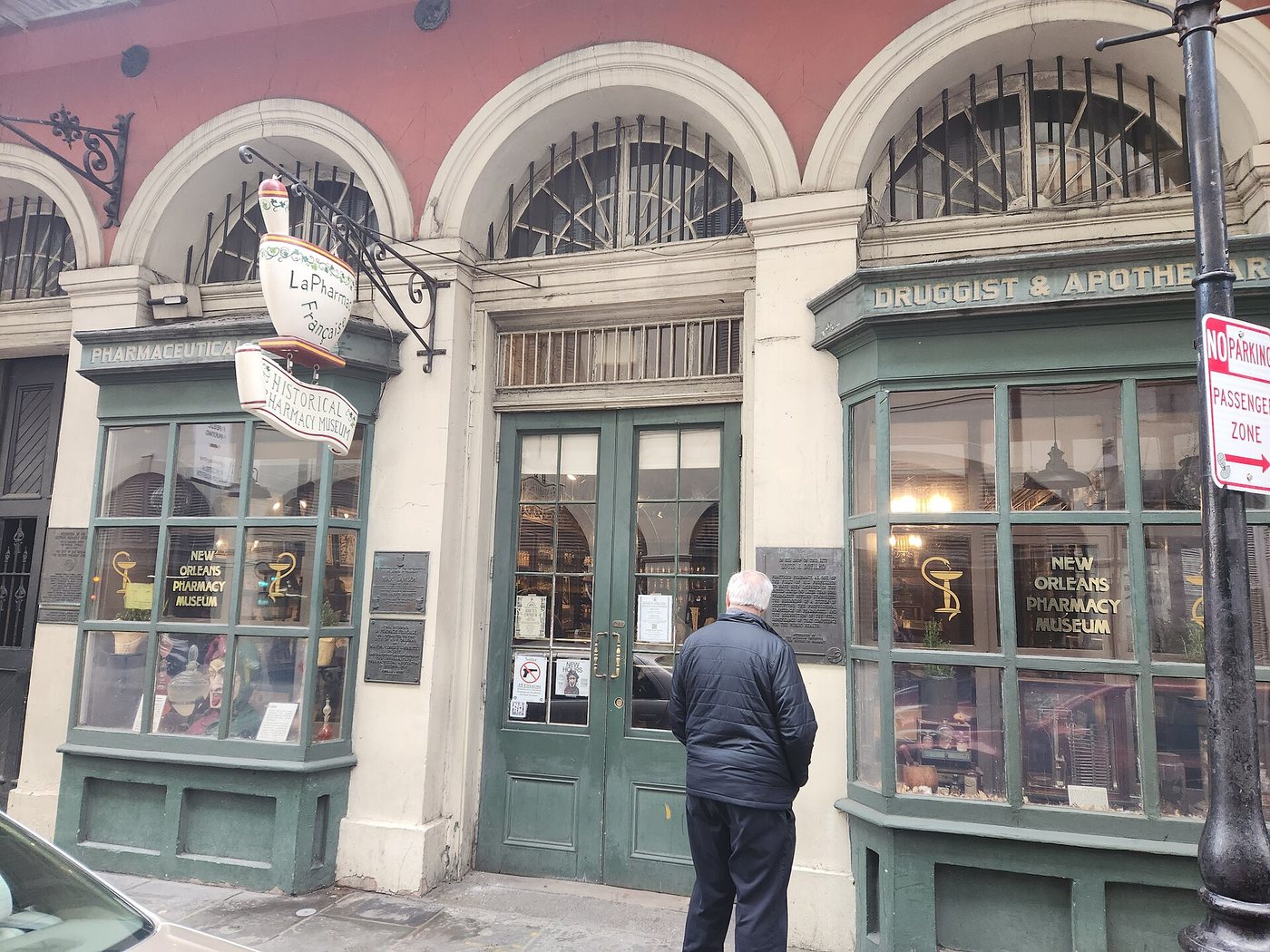
A pharmacy museum can look like a room full of mysterious bottles. At the New Orleans Pharmacy Museum, the building itself supplies an equally useful story. The narrow property once combined a public business with domestic space, and the museum carefully distinguishes objects associated with the original household from items assembled later.
The shop and the household
The building dates to 1822–1823 and was constructed for Louis J. Dufilho Jr., whom the museum identifies as the first licensed pharmacist in the United States. His pharmacy occupied the ground floor while the family lived above. In 1855 the property passed to Célestine Pauline Fleitas, wife of Dr. James Dupas; medical and pharmacy uses continued.
This vertical arrangement offers a way to read the site. The street-facing room brought customers into a commercial interior. Upper rooms belonged to a household. The courtyard and service areas supported work that was less visible from the public shop. Dufilho was an enslaver, and the property’s history included enslaved labor. The museum notes that a building containing quarters, a kitchen and stables no longer stands beside the courtyard.
An original room does not make every object original
The museum opened in 1950 with a collection drawn largely from other pharmacies. Its large display cabinets came from Max Samson’s pharmacy on Camp Street. They help explain pharmacy interiors, but they should not be mistaken for furniture that Dufilho necessarily used in this room.
By contrast, objects recovered during archaeological excavation of a courtyard privy in the 1980s provide evidence associated with the earlier occupants. The distinction is useful in any historic house museum: a period object, an object from the property and an original architectural feature can tell different kinds of stories. Look for labels that explain which connection is being made.
Follow a question through the displays
Rather than trying to memorize unfamiliar remedies, ask how a pharmacy organized knowledge and trade. Which objects suggest weighing or measuring? Which concern storage, preparation or presentation to customers? A bottle’s shape and label may explain the handling of a substance even when its medical claims are no longer accepted.
Do not treat historical preparations as instructions for present-day treatment. The useful comparison is between the pharmacy’s former working environment and the museum’s explanation of it. Moving from the street room toward the courtyard also shifts attention from commerce to the labor and domestic arrangements that made that commerce possible.