St. Louis Cathedral is easy to recognize across Jackson Square: three spires lift the church above the lower buildings beside it. That arrangement makes the cathedral an anchor in a larger civic scene. Its central position is as important as any single architectural detail, but the age of the institution and the age of the walls are different questions.
A sequence of churches, not one untouched building
The cathedral’s own chronology describes an early church lost to a hurricane in 1722, followed by a permanent church completed in 1727. That building burned in the great fire of 1788. A replacement associated with the Spanish colonial period was completed in 1794, after New Orleans became the seat of a diocese.
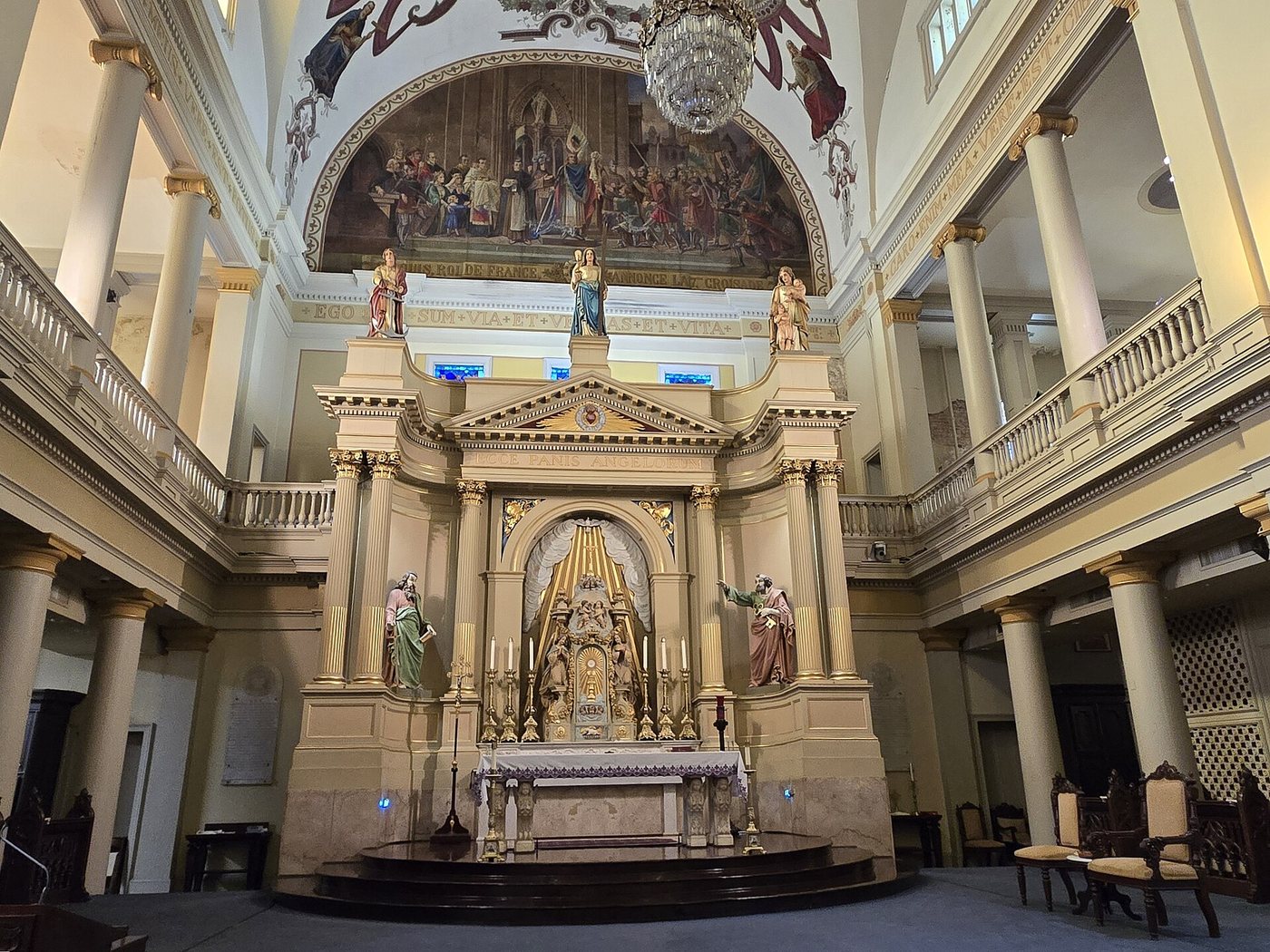
The decisive change to the present building came in 1849–1851. An enlargement became a much more extensive rebuilding after the central tower collapsed during construction. Little of the 1794 church survived that campaign. The cathedral was blessed in its rebuilt form in 1851 and received the title of minor basilica in 1964. These dates explain why a church with colonial roots can have a silhouette largely shaped in the nineteenth century.
Look at the whole composition before the details
Begin far enough away to see how the central spire, paired side spires and broad front establish a hierarchy. Then compare that vertical emphasis with the lower rooflines on either side. The square provides the breathing room that lets these relationships register. A close photograph of a doorway cannot explain the same urban effect.
As you approach, notice how the front becomes a series of openings rather than a flat symbol. Doors connect the ceremonial exterior to a working religious interior. A building can serve as a city emblem while still having a daily purpose that determines when and how it can be entered.
The evidence below the floor
Archaeological work reported by the University of New Orleans has investigated foundations beneath the cathedral floor. This is a useful corrective to judging age from appearance alone: an earlier building can survive as buried evidence even when its visible elevations have disappeared.
For a visit, separate three things in your notes: the church’s institutional history, the construction visible today and archaeological traces of predecessors. Check the cathedral’s own visitor information before arranging an interior visit, and treat services as worship rather than a performance attached to sightseeing. The exterior composition remains legible from the square even when interior access is limited.