
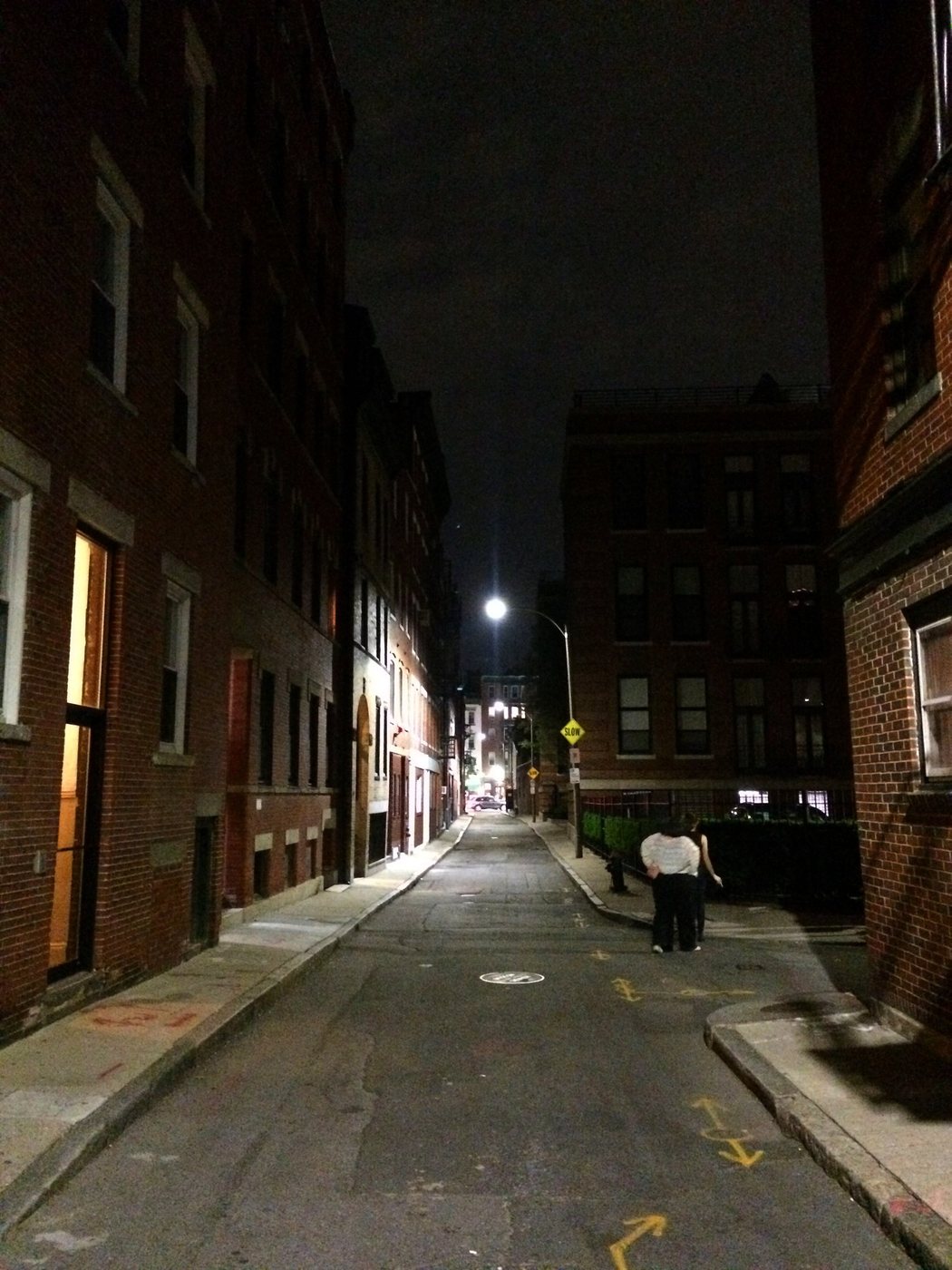
Boston’s North End is closely associated with Italian restaurants, but that identity is one chapter in a much longer neighborhood history. Its position beside the harbor helped make it a district of merchants, craftspeople, sailors and boarding houses. Later migrations changed its households and businesses without erasing every earlier layer. Reading the neighborhood through those overlapping uses gives a fuller account than treating it as an unchanging ethnic enclave.
A port neighborhood before the restaurants
The North End was one of colonial Boston’s principal neighborhoods. Waterfront work supported people with very different incomes and occupations: ship-related trades, merchants, laborers and families providing lodging. Streets and houses were tied to the movement of goods and people through the harbor.
The Paul Revere House offers a particularly clear example of a building outliving its most famous occupant. Built around 1680, it later accommodated other residents and commercial uses. Its subsequent life included immigrant housing and businesses. The house’s association with Revere is important, but it does not account for every period represented by the structure or the surrounding district.
Several migrations, not a simple relay
Irish migration increased substantially during the nineteenth century, particularly around the Great Hunger. Eastern European Jewish residents and businesses became another important part of the district, with Salem Street among the significant locations. Italian migration expanded toward the end of the century, including people from southern Italy and Sicily.
These changes should not be imagined as one population leaving on a single date and another arriving the next morning. Families, businesses and institutions overlapped. People found accommodation through relatives and acquaintances, established shops, joined religious communities and adapted existing buildings. A small storefront or a subdivided house could participate in several different migration stories over its lifetime.
The neighborhood’s Black history also predates the better-known nineteenth-century migrations. Research by the Paul Revere House examines free Black residents and connections with the Caribbean in the decades after the American Revolution. Surviving records are uneven, which makes careful research especially important. Absence from the familiar visitor narrative is not evidence that these residents were absent from the neighborhood.
Buildings changed along with households
Immigrant settlement often involved reuse rather than construction on an empty site. Houses became tenements; lower floors accommodated food shops, financial services and other businesses. The Revere House itself had commercial uses during its later history, illustrating how a building now interpreted as a colonial landmark also belonged to a working immigrant district.
That process changes how an old facade should be read. A doorway may belong to an early house, while a shopfront expresses a later economy. Preservation can make one period more visible than another. Restoring a building to an earlier appearance can help explain that period, but it may also remove physical evidence of subsequent residents.
Connection and separation
The North End’s relationship with the rest of Boston has changed as infrastructure changed. Earlier waterways and, much later, the elevated Central Artery helped define or reinforce its edges. The Rose Kennedy Greenway occupies the former highway corridor and creates a different connection with neighboring downtown streets.
The present district remains residential as well as commercial. Its migration history is therefore most usefully approached through buildings, institutions and documented lives, not through assumptions about the identity of anyone currently living there. Food is one route into that history, but housing, maritime work, worship and neighborhood organizing explain much more of how the North End became what it is.
_-_%22North_End_Nights%22.jpg)

