
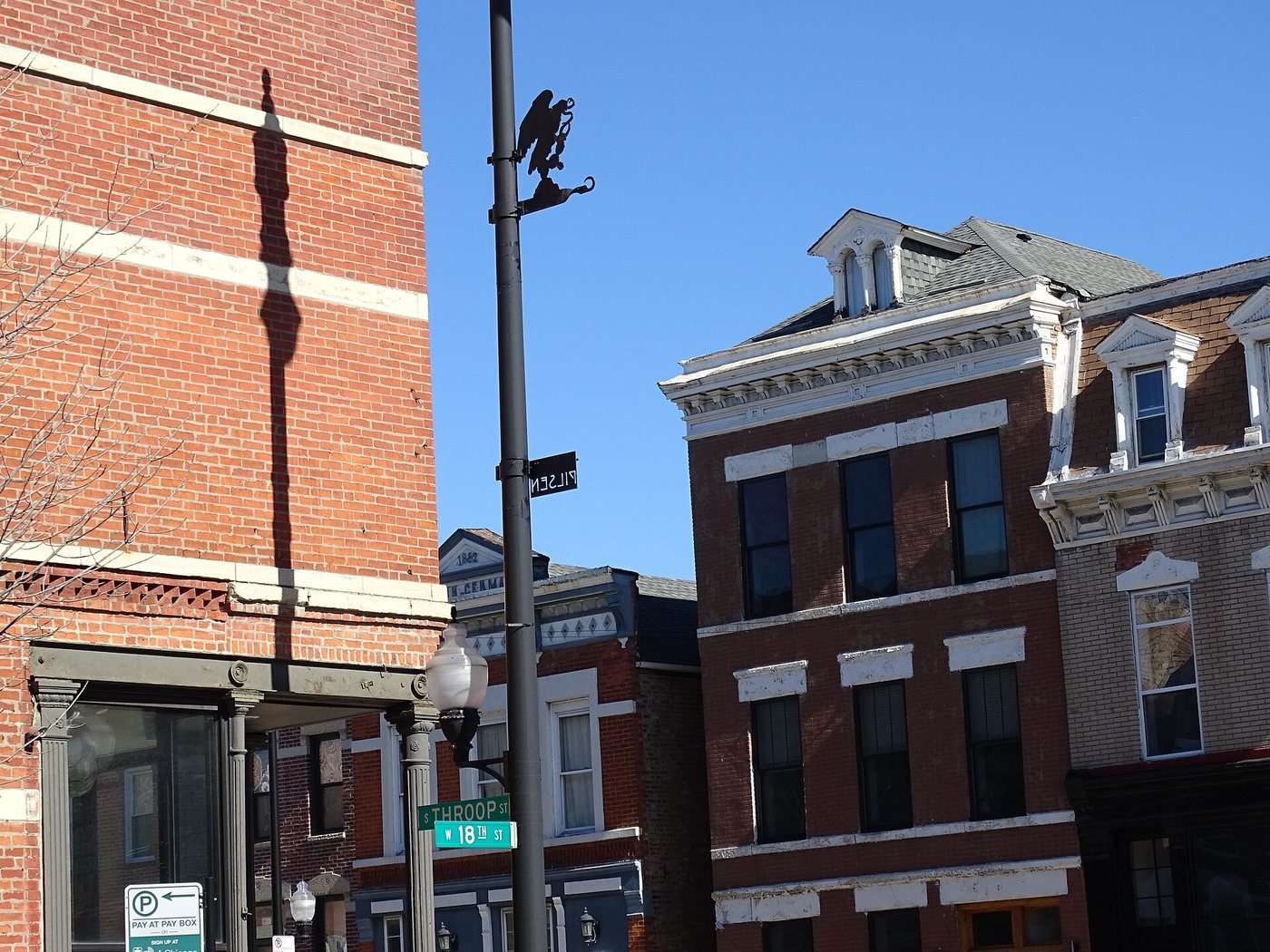
Pilsen’s public art is closely connected to Mexican and Mexican American cultural life in Chicago. Murals can address migration, education, faith, politics and community memory. Their location on neighborhood walls matters: they speak within a place where people live and work, rather than only to visitors arriving to look at them.
Start with the institutions behind the images
The National Museum of Mexican Art is in Harrison Park and provides a substantial point of entry to the neighborhood’s cultural history. Its collection and programming extend beyond a single style or period. The museum also offers a neighborhood mural guide, making it possible to connect works in public space with their artists and contexts.
A mural’s title, date and maker can change what a viewer notices. An image that seems purely decorative may refer to a particular migration experience or political event. Conversely, a work should not be assigned a political meaning solely because it appears in a neighborhood associated with activism.
Héctor Duarte, whose work is represented by the museum, is one example of an artist whose practice connects institutional and neighborhood settings. Looking up an artist’s own history is often more useful than treating every painted wall as an interchangeable expression of local color.
Look at the wall as well as the painting
The building carrying a mural may be a school, business, home or community institution. That setting affects who encounters the work and how it is used. A painting beside a daily route can become part of ordinary recognition, while a visitor may encounter it only once.
Public artworks can also change through weather, repair, repainting or the loss of a building. A guide records a particular moment; it cannot guarantee that every work remains unchanged. If the image and an older photograph differ, that may be evidence of an ongoing artistic or preservation history rather than a mistake in navigation.
Keep a neighborhood visit proportionate
Choose a small area and give a few works enough attention to read their details. A longer list of stops does not necessarily produce a fuller understanding. The museum’s material and artist information can supply context that is not visible on the street.
Keep entrances clear and photograph from public space. Residents are not part of a performance for visitors, and a mural does not make the adjoining property publicly accessible. Pilsen’s cultural life includes shops, organizations and domestic routines as well as art. Respecting those uses helps keep the visit connected to the neighborhood that gives the work its meaning.
.jpg)

.jpg)