
San Fernando Cathedral faces Main Plaza at the center of San Antonio’s early civilian settlement. The twin-towered front is often read as a straightforward sign of the church’s age. In fact, the institution’s founding and the architecture most visible from the plaza belong to different stages of its history.
A church for the civilian settlement
The cathedral identifies its founding with the Canary Island families who arrived in 1731. The church’s position beside the plaza connected worship with households, local administration and trade. It was part of the organization of the town, not an isolated religious retreat.
The National Park Service places San Fernando within the wider history of Main and Military Plazas. That context matters: the nearby presidio, civilian government and church exercised different kinds of authority. Their proximity made the center a place where those institutions interacted.
The nineteenth-century front changed the view
Beginning in 1868, an enlargement introduced new architectural elements, including the paired towers and a larger interior. This is the important distinction for an exterior visit. A religious community can have eighteenth-century origins without every visible wall or tower being eighteenth-century work.
The front’s vertical emphasis is especially clear across the open plaza. The two towers frame the central entrance and create a different effect from the long horizontal lines of many early colonial buildings. Looking at the church from both an oblique angle and directly across the square helps reveal that composition.
A cathedral remains a working place
San Fernando’s own account emphasizes worship, ceremonies and service to people in the surrounding city. Those uses continue alongside tourism. Visiting arrangements should therefore be checked with the cathedral rather than inferred from the presence of sightseeing groups outside.
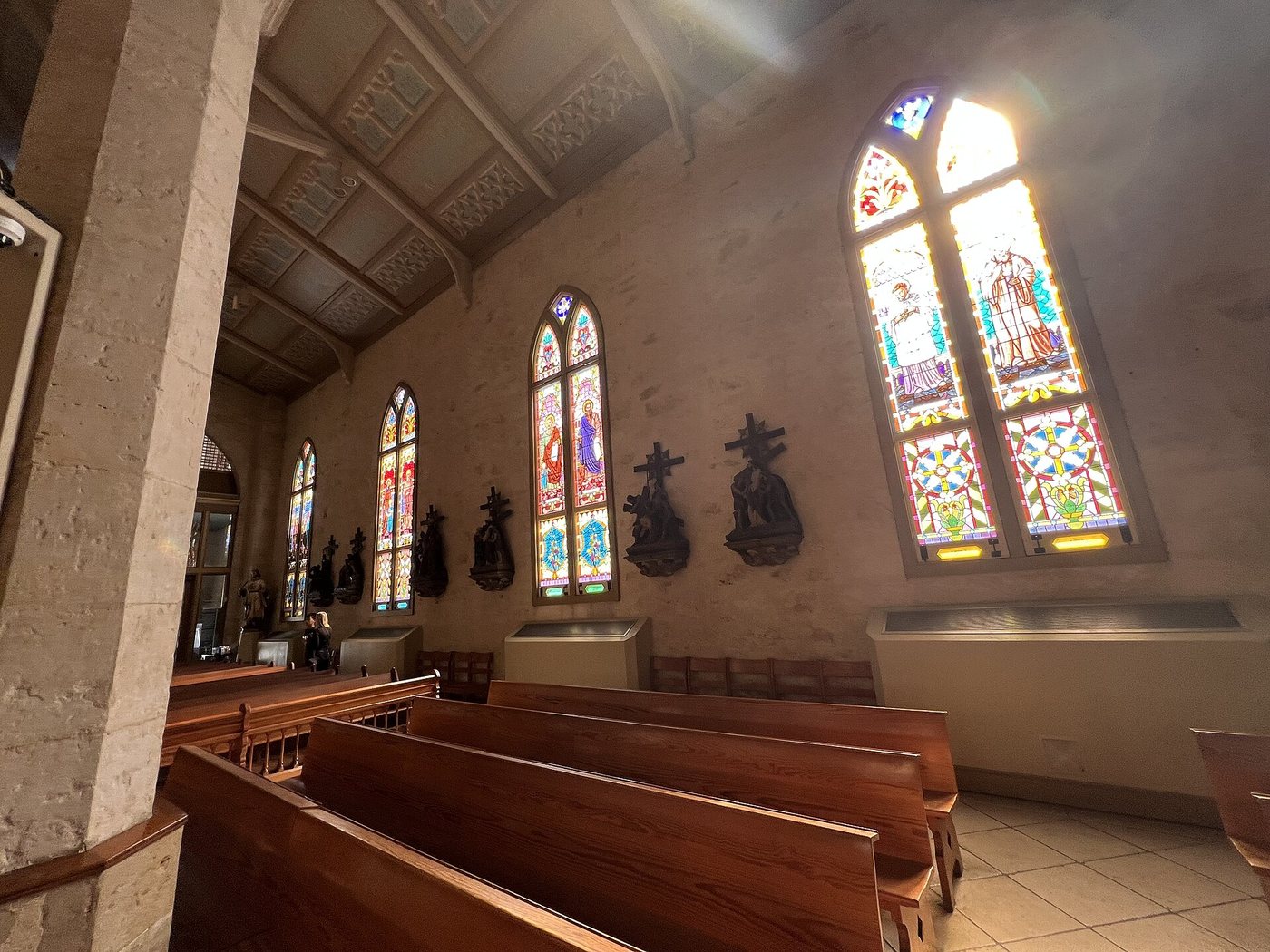
Inside, attention belongs first to the room’s religious organization: the route from entrance toward the altar and the spaces set aside for prayer. Outside, the church remains part of a public square used for many purposes. Keeping those two settings distinct makes it possible to appreciate the building as architecture without treating its congregation as part of a visitor display. Pairing the cathedral with a circuit of Main Plaza also shows how its role extends beyond the boundaries of its walls.
.jpg)