
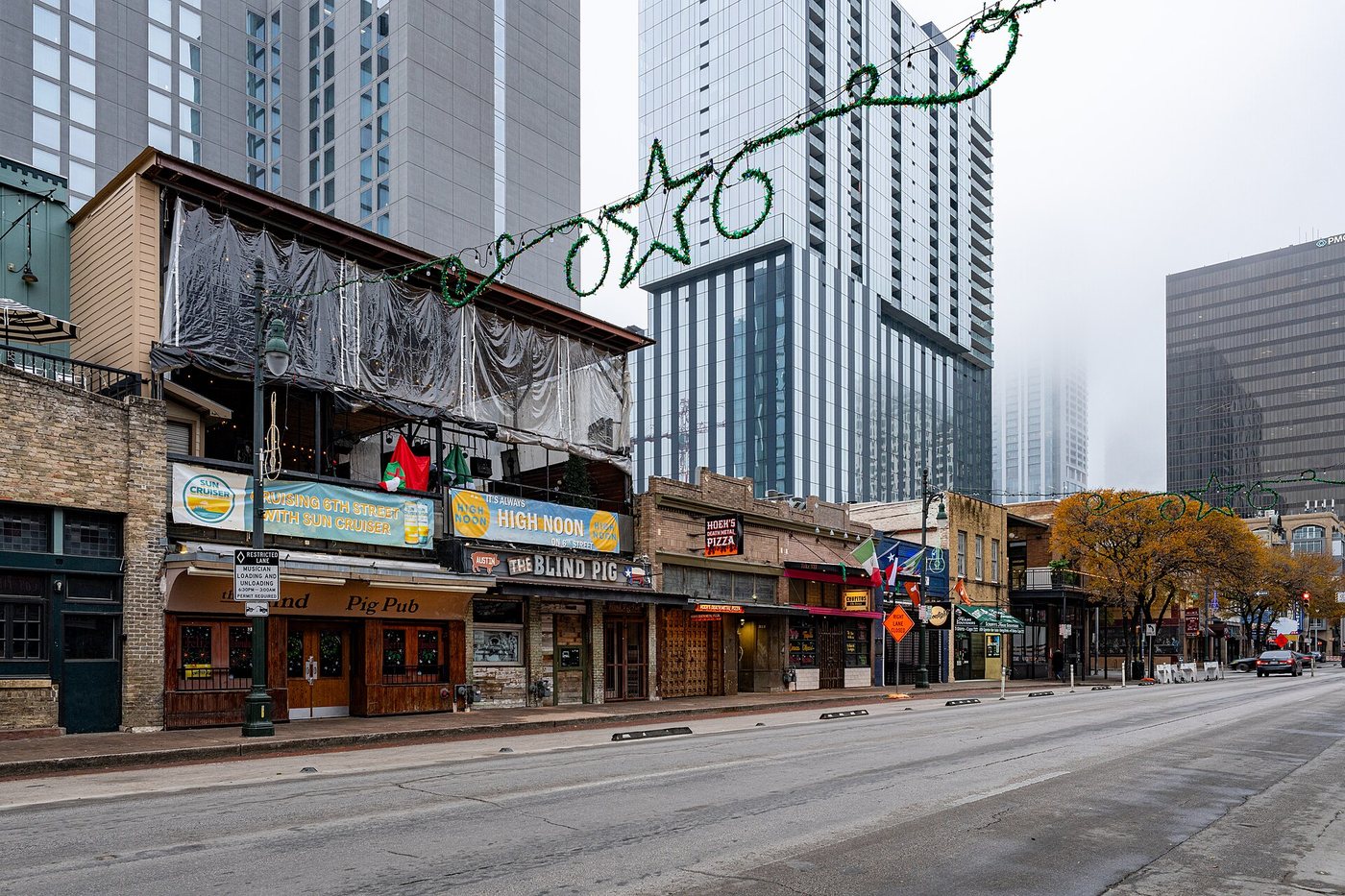
Austin’s Sixth Street contains different districts and experiences along its length. The historic downtown section has a concentration of older commercial buildings, while areas farther east or west have their own identities. For an architectural visit, define the stretch you mean before allowing the broad name Sixth Street to determine the route.
A commercial street before the entertainment identity
The official tourism history identifies the street’s earlier name as Pecan Street and describes the downtown historic district’s nineteenth-century commercial architecture. Shops, hotels and other businesses used relatively narrow frontages, producing a street wall composed of individual buildings rather than one continuous structure.
That pattern remains legible above the ground-floor signs. Upper windows, cornices, masonry details and differences in height can reveal separate construction campaigns even where several businesses now share similar uses. The upper stories often provide a clearer view of the older composition than an altered entrance at sidewalk level.
Buildings and uses change at different speeds
A durable facade can outlast several businesses. Conversely, a recognizable venue name may occupy an interior that has been substantially adapted. Keeping building history separate from business history prevents one from being used as evidence for the other.
The street’s current entertainment role affects how it is experienced, especially at night, but that role is only one layer. A daytime walk can make the proportions of doors, windows and rooflines easier to see. It can also show service entrances and ordinary maintenance activity that disappear from a nightlife-focused picture of the district.
The street is actively managed
The city’s East Sixth Street improvement district supports services within a defined area. Traffic arrangements and pedestrian controls have also changed over time. It would be inaccurate to describe the entire corridor as permanently pedestrian-only on the basis of a photograph taken during a closure.
For a short outing, choose a few blocks and compare both sides from legal crossings. Add a stop inside a business because you want to use that business, rather than assuming every historic-looking interior is a public exhibition. The lasting architectural question is how a fine-grained commercial street accommodates new uses while retaining the divisions and details that make its buildings individually readable.
.jpg)
.jpg)

.jpg)