The name Union Station can suggest that a visitor should arrive here to catch an intercity train. In St Louis, the historic complex now serves other purposes. Its architectural form preserves a record of railway travel, but the present use of a building should be established separately from the activity that created it.
A terminal built for a railway city
Theodore Link designed the station, which opened in 1894 and served numerous railway companies. The Romanesque architecture, large hall and clock tower gave the transport complex a monumental public face. Behind that face, the terminal had to organize the practical work of handling passengers, luggage and trains.
The difference between a ceremonial entrance and an operating railway is worth keeping in mind. A traveler’s experience included ticketing, waiting, finding a platform and boarding. The grand room was one part of a sequence that also relied on less decorative circulation and service space.
The station’s operator records the last Amtrak departure in 1978. The loss of the original transport role created a preservation problem: a building designed around large passenger flows needed new activities capable of supporting its scale.
Reuse changed the reasons for arriving
The complex reopened in 1985 after a major adaptation as a marketplace and hospitality destination. Later uses have continued to evolve, and the site now includes hotel and leisure attractions. These are stages in its reuse, not evidence that the railway terminal remained functionally unchanged.
A preserved hall can remain impressive while working differently. People may gather to meet, eat or attend an event rather than wait for a departure. Lighting, seating and visitor routes are consequently shaped by contemporary operations as well as historic architecture.
Compare the large openings and overall proportions with the smaller signs and entrances used by individual businesses. That contrast reveals the challenge of fitting many present-day destinations into a building that once announced one dominant purpose.
Visit the architecture on its own terms
Identify which parts of the complex you want to see before choosing tickets or reservations for particular attractions. Access to a hotel or paid experience should not be assumed from the public visibility of its exterior. The operator’s current information is the appropriate source for those arrangements.
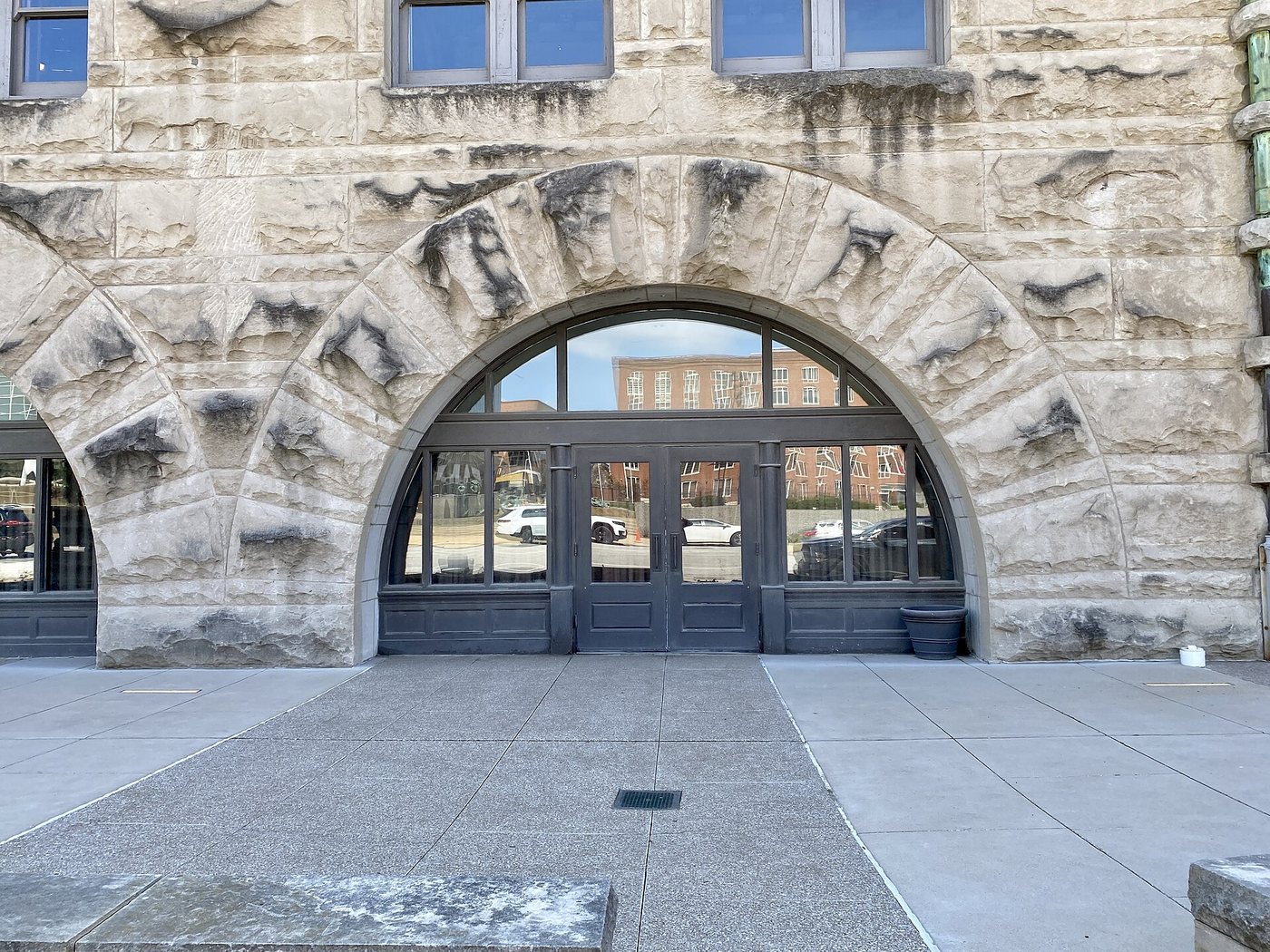
From public areas, study the relationship between the heavy masonry frontage, tower and large interior volumes. The building’s former role becomes legible through scale and circulation even where the original platforms no longer determine a visitor’s route.
If traveling by rail, confirm the current station listed on the ticket. The historic name is valuable evidence about St Louis’s past, but contemporary transport information determines where a journey actually begins.