
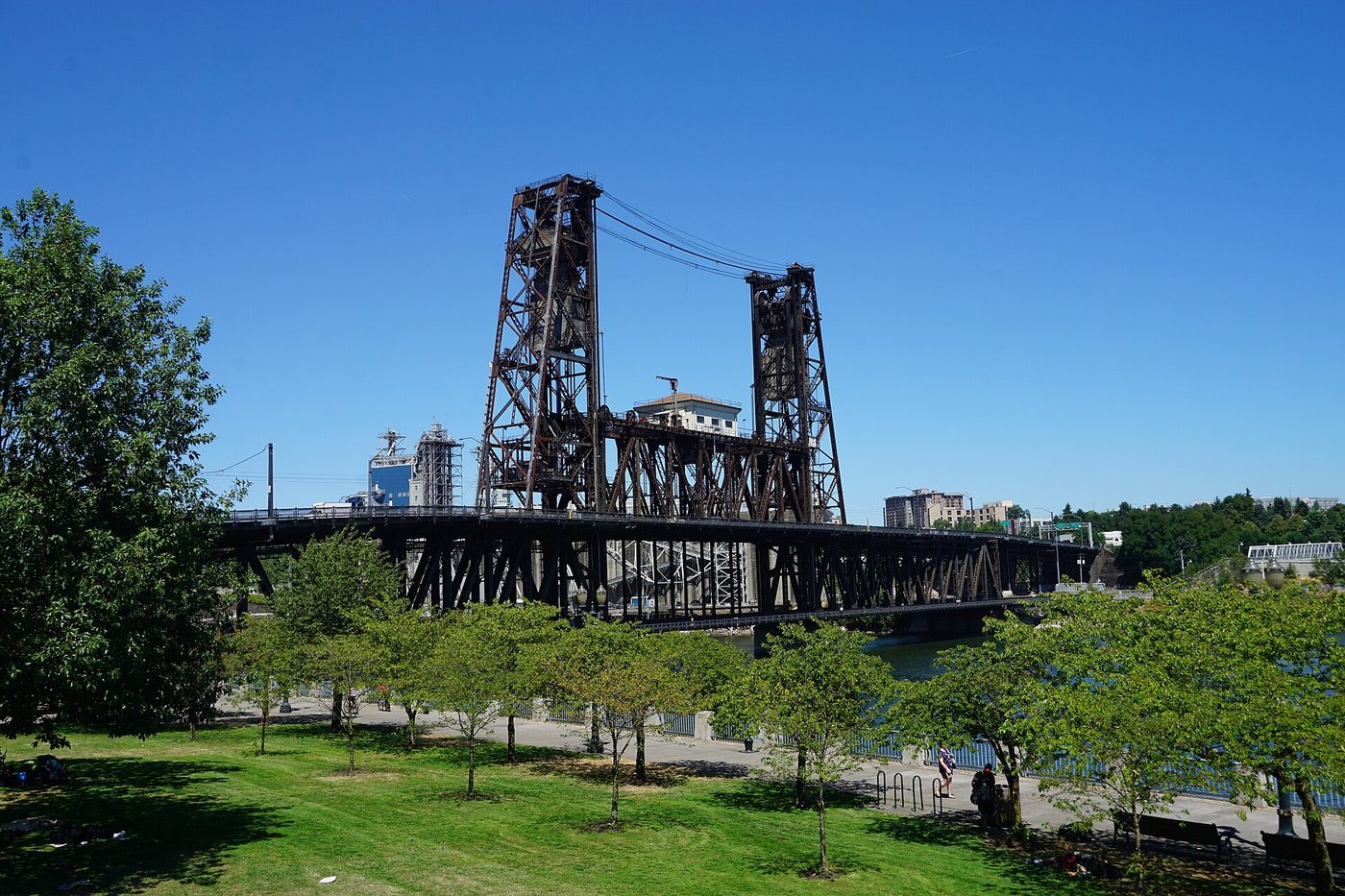
Governor Tom McCall Waterfront Park follows the west bank of the Willamette River through central Portland. Its lawns and paths occupy land once used by Harbor Drive, a road that separated much of downtown from the water. The park is therefore not simply preserved riverside greenery. It is the result of a major change in what the city expected its waterfront to do.
The road was reconsidered
Governor Tom McCall established a task force in 1968 to examine possibilities for replacing Harbor Drive with public open space. The road was removed in 1974, and the park was completed and dedicated in 1978. It received McCall’s name in 1984.
Those stages distinguish the idea from the physical project. Studying alternatives, removing transport infrastructure and constructing a landscape were separate actions. The park’s present simplicity can conceal the scale of the decision required to make it possible.
A long park has many entrances
Unlike a compact square, Waterfront Park relates to a sequence of downtown streets and bridges. A person can enter for a short section, cross toward the river or use the path as part of a longer journey. Its value comes partly from these repeated connections rather than from one principal gate.
The river edge also accommodates different activities, including walking, cycling, events and places to stop. These uses share space but do not always move at the same speed. The long form allows them to be distributed, while event installations can temporarily change circulation.
The river remains an urban working landscape
Bridges, boats and the opposite bank keep the Willamette’s transport and industrial history visible. The park does not turn the river into an isolated ornamental lake. Instead, it provides public ground from which the larger waterway can be encountered.
The transformation also illustrates a limit of the word “restoration.” Removing Harbor Drive did not restore a pre-settlement shoreline. It created a new civic landscape on a river edge already altered by urban development. The achievement was a change in public access and land use, not a return to an untouched natural condition.
The design continues to evolve
Portland launched a new design competition for the park in 2026, following community work on its future. That process concerns proposed changes rather than a completed replacement landscape. It shows that the 1970s decision did not settle every question about the waterfront permanently.
The park’s history is consequently a useful account of urban priorities being revised. A corridor once devoted to vehicles became a place where people could occupy the river edge. Its future depends on how that public role is maintained as use, infrastructure and environmental conditions change.
.jpg)


