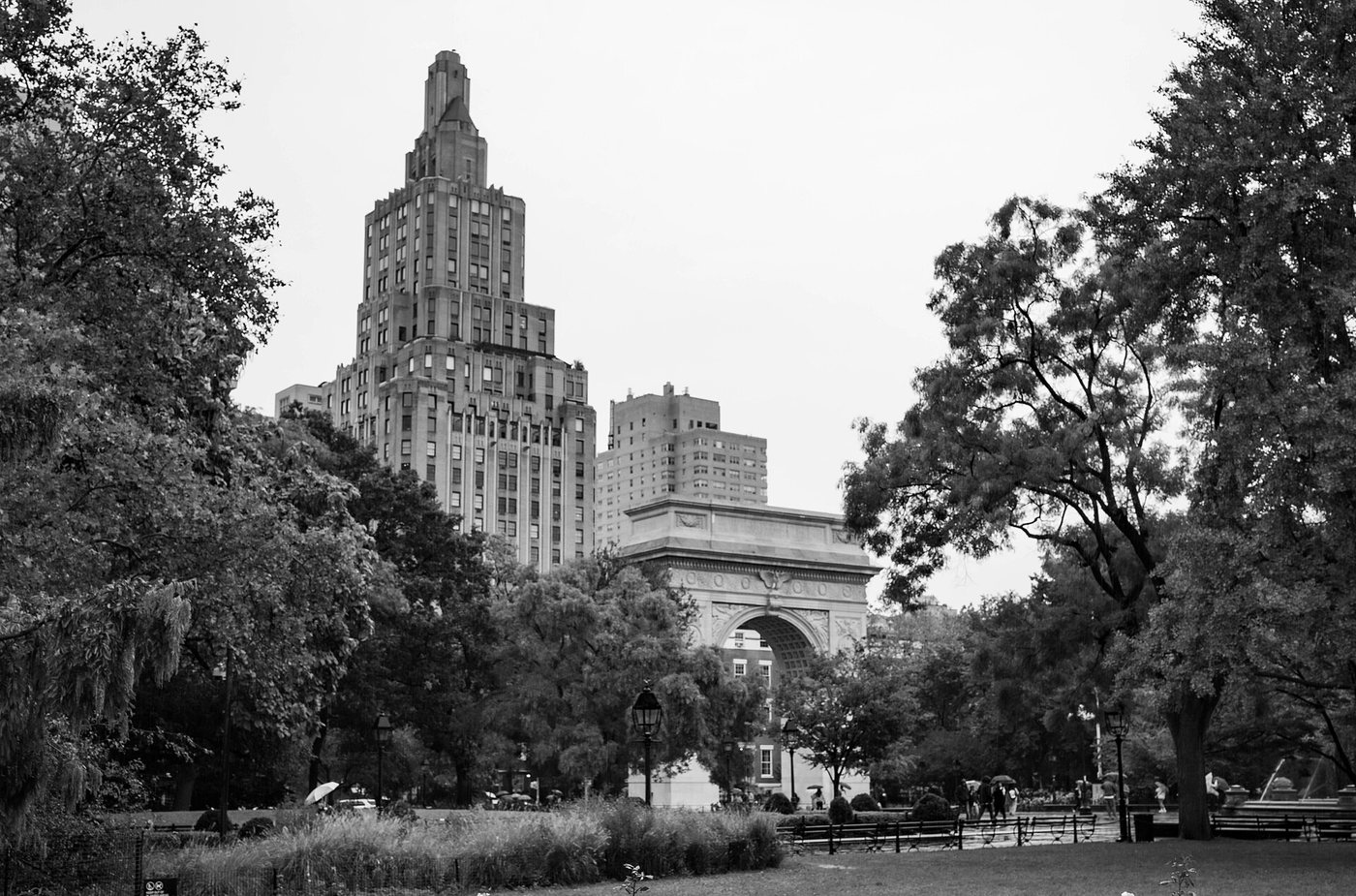
Washington Square Park can be understood as a place where a formal monument meets less formal public life. The arch marks the end of Fifth Avenue, while paths and gathering spaces spread into Greenwich Village. Looking only through the arch produces an orderly view; watching how people use the park reveals a much less rigid arrangement.
The landscape before the landmark
NYC Parks traces the site through several uses before its familiar appearance emerged. It was once marshy ground associated with Minetta Brook, then a public burial ground from the late eighteenth century into the 1820s. It subsequently became a military parade ground and a park. These were substantial changes in purpose, not different names for an unchanged lawn.
The burial history remains part of the place even where it is not visible. Archaeological work during park reconstruction encountered graves and related material; the city’s archaeological repository records that burials were protected in place. This is a reminder that an urban park can contain histories that planting and pavement do not announce.
The term potter’s field refers to a public burial ground for people without other provision for burial. It should not be used to turn those people into an anonymous curiosity. The land was part of a city’s response to poverty, disease and death before it became a well-known setting for leisure.
An arch that changed its surroundings
The temporary arch erected for the 1889 centennial of George Washington’s inauguration was followed by the permanent marble monument designed by Stanford White. Its dedication took place in 1895. Distinguishing the temporary structure, construction period and dedication helps explain why several dates appear in accounts of the same landmark.
The arch borrows the form of a triumphal entrance, but its current setting is a public park rather than a military gateway. It frames views along Fifth Avenue and provides a recognizable meeting point. At close range, carved decoration gives the large opening a finer scale; from farther away, the silhouette becomes the main feature.
Traffic once passed through the park area. Its eventual removal changed the relationship between the avenue and the landscape. A road alignment that had carried vehicles became a visual axis, while pedestrians could occupy the space more freely. The park’s history thus includes arguments over who and what should move through it.
Let the routes reveal the uses
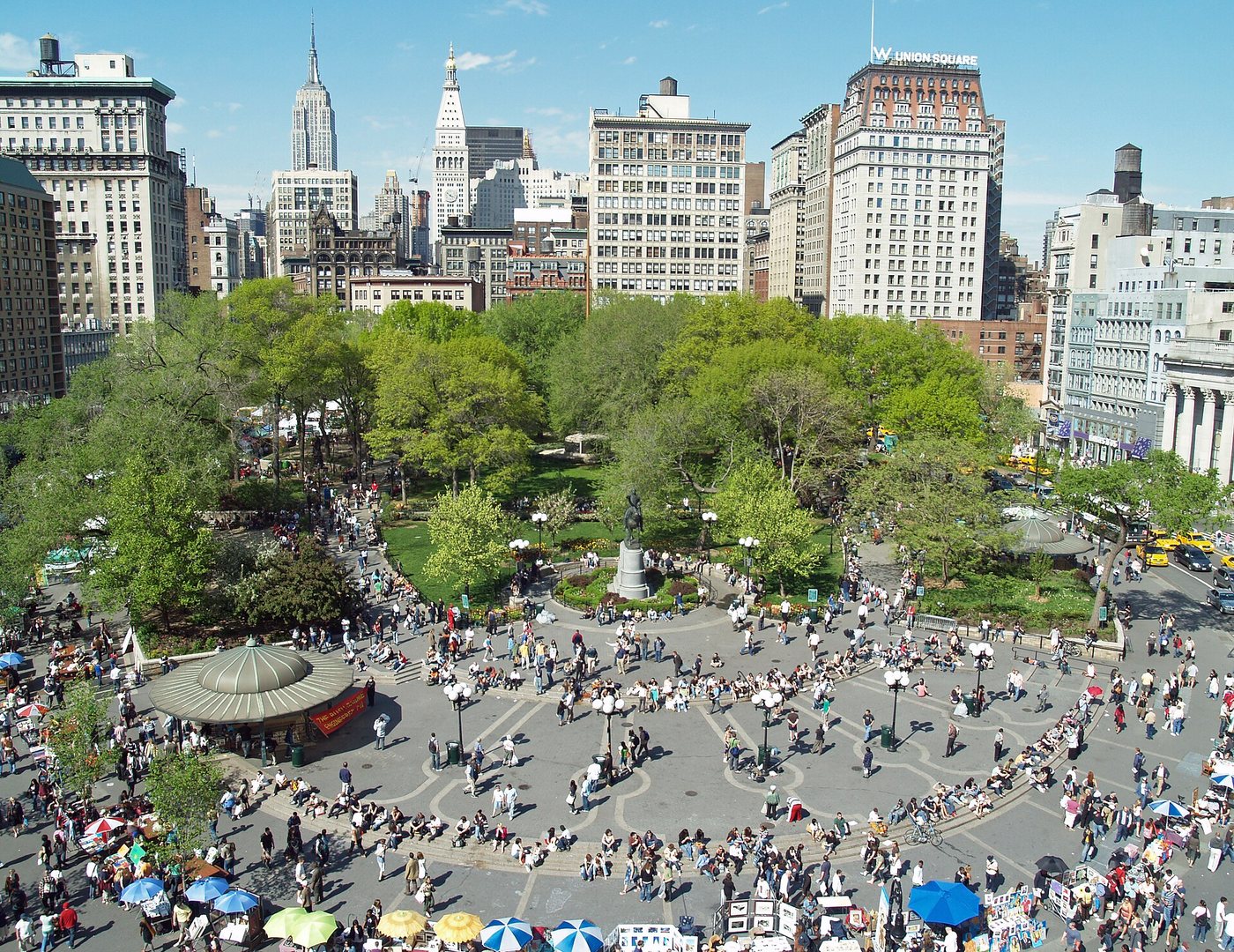
A circuit that includes the arch, fountain area and quieter paths shows several kinds of activity without requiring a long itinerary. Games, conversation, performances, dog areas and play spaces are different uses of public ground. Their coexistence is part of the park’s character, although the particular mix changes with weather, season and time of day.
Avoid assuming that an event or performer seen in a photograph will be present during another visit. The park is not a scheduled show. Its interest lies in how a stable arrangement of paths and landmarks accommodates changing people. For current facilities and notices, consult NYC Parks; for the deeper history, its archaeology and monument records offer a useful counterpoint to the familiar postcard view.