Astor Row is a short residential group on West 130th Street in Harlem. Its distinction lies partly in what sits between the houses and the sidewalk: front gardens, setbacks and wooden porches create a sequence of thresholds. The houses are a useful subject for a close look at street design, but their appearance should not be mistaken for a complete account of Harlem’s history.
Why the porches stand out
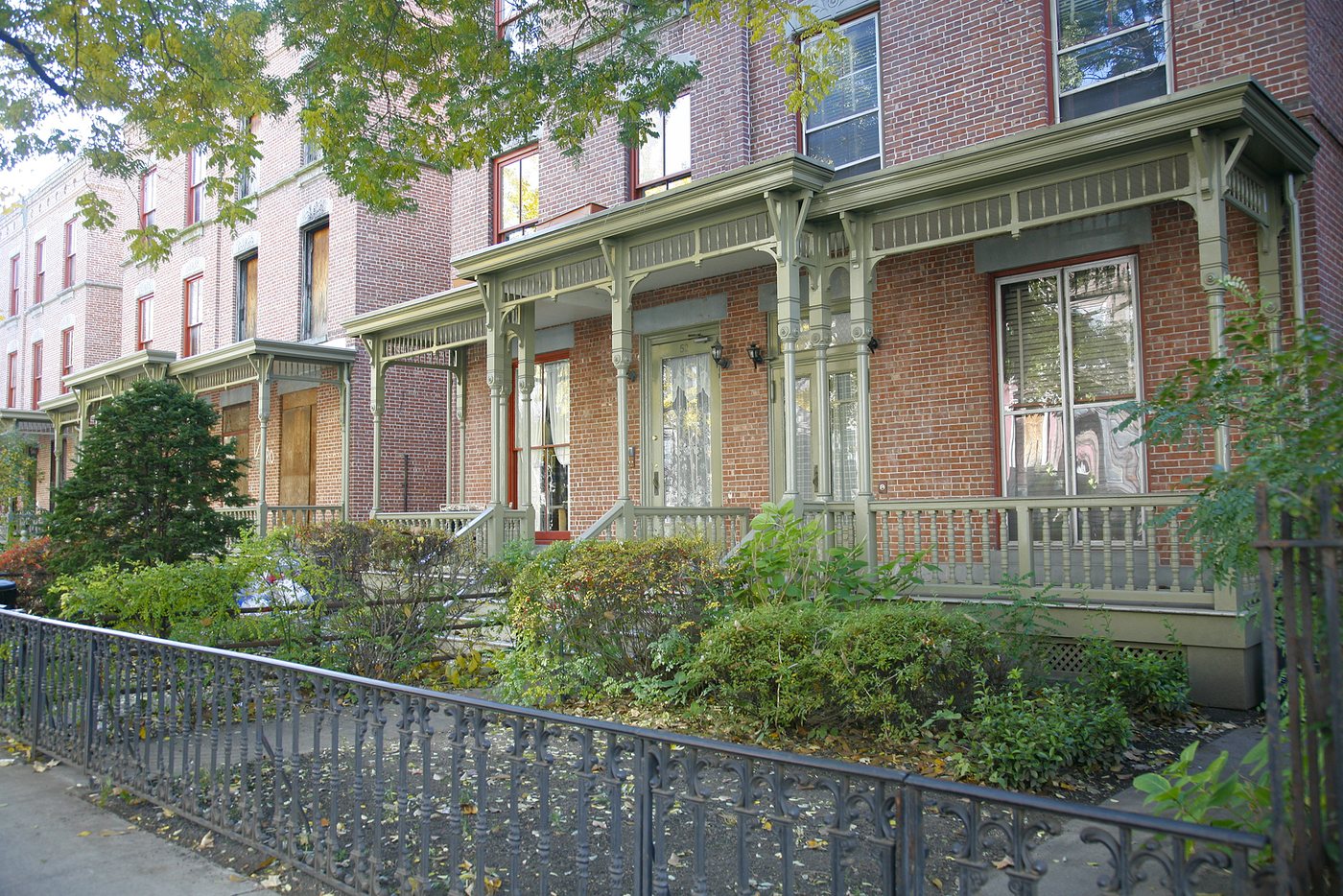
A Manhattan row house often presents a nearly continuous wall of facades to the street. Astor Row’s semi-detached arrangement creates a different rhythm. Spaces beside buildings and the open structure of the porches allow more light and visual depth at the front of the lots. The street feels less like a corridor bounded by solid walls.
A Manhattan Community Board 10 preservation report dates the houses to the early 1880s and identifies them as individually designated landmarks. The same report discusses restoration and rebuilding of their Victorian-style porches. The visible streetscape therefore includes the results of preservation work, not simply material that survived without intervention.
Compare a porch roof with the larger roofline above it. One shelters a small area for domestic use; the other completes the building. Posts, railings and steps bring the architecture down to the scale of a person approaching a door. Those features help explain why a modest row can be memorable without monumental height.
One block, several questions
The name links the development to the Astor family, but ownership and architectural design are only part of its story. A residential street also changes through the people who occupy it, maintenance decisions and the wider neighborhood’s economic conditions. An attractive facade cannot reveal all of that on its own.
View the houses from the public sidewalk and leave gates and porches to residents. A short visit can focus on repetition and difference: which parts follow a shared design, which show individual changes, and how the setback alters the relationship with the street. Treating Astor Row as a specific place, rather than as a picturesque substitute for Harlem, makes those observations more meaningful.